Tag Archives: Catch Shares

Managing Our Nations Fisheries 3 Conference: Take away messages

America’s fishing laws are generally working well to rebuild fish stocks, but there is still work to be done to make sure that our sustainable fisheries are sustainable for fishermen. That was the takeaway message from the recent gathering of the nation’s top fisheries advisors, scientists, members of regional councils and the eNGO community who gathered in Washington DC for the “Managing Our Nations Fisheries 3” conference on May 7-9. The conference convened to discuss how concepts, policies, and practice of fishery sustainability can be advanced to make the system work better for fishermen and fishing communities. It provided a forum for information exchange and an opportunity to hear a wide range of perspectives on the sustainability of fish stocks and ecosystem, and the fishing communities that depend on them.

This conference is an important exercise because it gives the entire fishing community (managers, fishermen, NGOs, industry etc.) the opportunity to think broadly about what’s been happening on the water and apply it to big policy issues that need to be resolved, clarified or improved. Among the issues identified during the conference:

  1. Recreational fishermen would like more representation and consideration in fisheries management decisions
  2. Forage fish protection is a topic being heavily studied by NGO groups
  3. Regional councils are interested in innovating around the 10 year rebuilding timelines mandated in the 2006 Magnuson law.
  4. Fishing stakeholders are interested in pursuing American seafood certification to assure economic stability for domestic fisheries
  5. A central theme reiterated by scientists, fishery stakeholders and NOAA is that accurate and timely data information is essential to making informed management decisions. NOAA and councils need to work more closely with fishermen and innovate solutions for data poor fisheries.

In the United States, catch shares have brought stability and sustainability to fisheries once in turmoil from overfishing. From the Gulf of Maine to the Gulf of Mexico and all the way to the Bering Sea, fishermen have more stable and flexible businesses and fisheries are recovering from years of overfishing.  If you add our neighbors to the north, Canada, there are 15 catch shares that have shown significant improvements in the stability of jobs, revenues and increased safety.  All over the world fishermen are learning from the work that American fishermen and fishery managers have done to save our nation’s fisheries. Read More »

Posted in Catch Shares, NOAA | Also tagged , , , | Comments closed

Department of Labor Finds Fishing is (once again) the Deadliest Job

The U.S. Department of Labor released its final statistics on job fatalities in 2011 today.  Fishing was once again the deadliest occupation, with a fatality rate 36 times that of the national average. Fishing is consistently the most dangerous American occupation, year after year, which is surprising to many people who do not fish or are not close to the industry.

NPR produced this compelling visual based on the last numbers the Department of Labor released in 2012 on job fatalities:

Bureau Of Labor Statistics Deadliest Jobs 2011

Source: Bureau Of Labor Statistics
Credit: Jess Jiang and Lam Thuy Vo /NPR

There are many factors that impact fishing safety including the rules that are put into place to address overfishing. The National Marine Fisheries Service (NMFS) is in the process of revising the fishing safety provision in the Magnuson Stevens Act.  It’s important that the provision be strengthened so that new rules to make fisheries sustainable do not compromise safety.  Unintended consequences may sometimes result from some approaches to control fishing, such as imposing very short fishing seasons, limiting crew size, or the length of vessels.

One way to improve fishing safety is by choosing fishery management plans that do not result in fishing derbies–or a ‘race to fish’—where safety is compromised by an economic incentive to race against other fishermen and the clock to catch as many fish as possible, even in stormy weather. Catch shares are proven to keep fishing within limits and also can also positively impact safety in multiple ways, such as by reducing the pressure to fish in bad weather because  fishermen have more freedom over when to fish in a catch share. Catch shares are not an ideal solution for every fishery, but they should be kept in the toolbox of options for fishery Councils—especially if they can potentially help decrease the risk for fishermen.

Making fishing a significantly less deadly profession is going to take a variety of measures. It’s no small task because fishing is inherently dangerous, but it shouldn’t be any more dangerous than it has to be.  It’s time for fishing safety advocates, fishermen and conservationists to stand together to ensure safety is being considered in the formation of management plans.


Posted in Catch Shares, Fishing Safety | Also tagged , , , , | Comments closed

'Fish on Fridays': Gulf of Mexico Grouper

Grilled Grouper

Grilled Grouper over Arugula & orange salad. Photo credit: Food Network/Emeril Lagasse

Grouper are delicious fish that are harvested in both the South Atlantic and Gulf of Mexico. In the Gulf of Mexico, these fish are managed under a catch share program, where species like red and black grouper have healthy populations. John Schmidt, a fisherman in the Gulf of Mexico who fishes for grouper, tells us about his experiences in the fishery and how it has changed for the better under a catch share. Finally, we are sharing a delicious and healthy recipe for grilled grouper over an arugula and orange salad.

Gulf of Mexico Grouper/Tilefish IFQ Program

The Grouper-Tilefish IFQ program was implemented in January of 2010. Prior to this program, commercial grouper and tilefish were managed with limited access fishing permits, trip limits, size limits, closed seasons and catch limits. These management measures resulted in overcapitalization of the fishery and subsequent early closures. Fishermen were going bankrupt and fish stocks were depleted. Since the fishermen have been operating under a catch share in this fishery, the stocks are rebuilding, discards of dead fish are down, the race to fish has been eliminated, and fishermen are able to grow their businesses in an industry that was previously struggling.

Meet a Fisherman: John Schmidt

John Schmidt starting spearfishing recreationally in the Gulf of Mexico over 25 years ago and later started his own commercial fishing business. He remembers seeing an abundance of large fish when he first started, and also recalls that grouper (primarily gag grouper) became overfished and very scarce by 2006. When he started his business in 2004, many fishermen were going out of business because the fishery was so depleted. He started the business anyway because he had a passion for fishing and he loved providing Americans with fresh seafood. He had faith that a better management system would be implemented, “Management was out of control. Fish weren’t nearly as fresh, seasons were getting shorter, there were gluts on the market, restaurants and wholesalers were using imported or falsely labeled grouper to fill the demand. Something had to change.”

Now, he is proud to be a part of a fishery that is rebuilding and has a future. “I’m proud to have a fishing business that is sustainable and has integrity. I love to provide fresh domestic seafood to Americans year round. The futures of our businesses are great for the first time in our lifetime.”

Species: Gulf of Mexico Red Grouper

Red Grouper is caught in recreational and commercial fisheries in the Gulf of Mexico and South Atlantic regions of the United States. Most grouper populations are healthy or rebuilding under catch share management in the Gulf of Mexico region. You can purchase fresh Gulf grouper under the GulfWild program, which improves seafood traceability by attaching a unique tag to each fish so that it can be traced back to the captain and location of capture. Grouper is prized by seafood consumers and restaurants for its firm, lean flesh with a mild flavor. It is extremely versatile and can be prepared in a variety of recipes.

Try this recipe for grilled grouper over an arugula and orange salad adapted from an Emeril Lagasse recipe in Emeril’s New New Orlean’s Cooking book.


Grilled Grouper over Arugula & Orange Salad

Ingredients:

For the fish:

1 (3.5-4 pound) grouper, fillets removed with scales intact

4 tablespoons melted butter

3 cloves minced garlic

1 tablespoon finely grated parmesan

1 tablespoon Creole seasoning

4 tablespoons olive oil

¼ cup finely chopped fresh herbs such as tarragon, thyme, basil or chives


For the salad:

2 cups arugula

2 cups baby spinach

½ red onion, thinly sliced

1 orange, supremed

2 tablespoons Dijon mustard

1.4 cup orange juice

1 tablespoon white wine vinegar

½ cup extra virgin olive oil

Salt and freshly ground black pepper


Directions:

For the fish:

Preheat your grill to medium-high

Combine melted butter, garlic, parmesan, creole seasoning and olive oil. Whisk ingredients to combine.

Place fillets of grouper on the grill, scale side down. This method ensures that the fish stays moist while grilling and makes the scales easier to remove. Brush fillets with melted butter mixture. Be generous!

Grill the fish for 3 minutes with the cover closed, and then re-brush with butter mixture. Repeat this process for a total of 12-15 minutes until fish is firm and opaque in color. In the last minute of cooking, sprinkle fish with fresh chopped herbs.

Remove and serve immediately over the salad.

For the salad:

Combine spinach, arugula, orange segments and onion in a large bowl.

Make the dressing in a separate bowl by whisking together the Dijon mustard, orange juice and vinegar. Slowly add the olive oil while whisking until emulsified. Season with salt and pepper to taste.

Posted in Gulf of Mexico, Seafood | Also tagged , , , , , , , | Comments closed

‘Fish on Fridays’: Black Sea Bass, Virginia Beach Style

Black Sea Bass

Black Sea Bass

If you’ve been to an upscale Manhattan seafood restaurant, chances are you’ve seen Black Sea Bass on the menu. New York chefs drive the bulk of the demand for this tasty Atlantic fish, but you don’t have to be a fancy New York City chef to put Black Sea Bass on the table.  Sea bass fished off the coast of Virginia, Maryland and Delaware is caught sustainably under a catch share program which ensures that catch limits are not exceeded and fish populations can maintain healthy numbers. It is important to note, however, that not all sea bass caught on the Atlantic coast is sustainably managed, so it is best to ask your chef or seafood vendor where the fish was caught to ensure you are supporting fishermen who are fishing sustainably.

This week’s ‘Fish on Fridays’ post features VA black sea bass, currently managed under an ITQ system. Jack Stallings and his partner at Virginia Beach’s Coastal Grill have shared their technique for frying sea bass whole and serving it with scallion butter.

Meet a fisherman and restaurant owner: Jack Stallings

Stallings has been a commercial, hook and line Black Sea Bass fisherman for years. He remembers fishing for it long before it was under Virginia’s IFQ (catch share) program, when the competition was fierce and fishermen were restricted to quarterly quotas that glutted the market and lowered the price they’d get for their catch. Once the IFQ went into effect in 2004, he said, he could pick and choose when to fish, going out when he knew demand (and prices) would be highest, and when he was sure the fish would be biting.

“We know when the trawlers are catching a lot of fish and when they’d be landing,” he said. “We can work in between their landings. We know when prices are low, so we can save our quota for other times, when prices are higher.”

But Stallings doesn’t fish as much as he used to. Now that he’s 65 and semi-retired, he spends more of his time focused on the restaurant he co-owns. Black Sea Bass is only one of many species they cook up for their customers; he’s quick to note that it’s more popular in New York than it is in Virginia Beach.


Black Sea Bass:

One of four species jointly managed by the Atlantic States Marine Fisheries Commission and the Mid-Atlantic Fishery Management Council, Black Sea Bass can be fished year round, though it is harder to catch during the summer spawning months. It is a flaky, white fish when cooked that is used in chowder, fried, grilled or stuffed. It can be found near the rocky bottom of the ocean and has stiff dorsal fins that should be handled with care. Stallings said his restaurant serves it with the fins still on.


Fried Black Sea Bass at Coastal Grill

Ingredients:

Whole fresh black sea bass

Corn starch

Scallion Butter:

3 Fresh scallions, chopped

1 stick butter, melted

1 teaspoon vegetable oil


Instructions:

For the scallion butter:

Sauté the scallions in vegetable oil. Add to the melted butter.


For the fish:

Scale, gut and remove the gills from the fish. Leave on the head, the tail and the fins.

Make three vertical cuts in each side of the fish to allow it to cook evenly. Then roll in corn starch. Shake it by the tail to remove excess starch, and then, still holding it by the tail, dip it into a fryer “for as long as you dare,” or about five seconds. This makes the fins stand out.

Then “turn it loose” into the fryer and cook for three to four minutes. Remove from fryer, let it drain and set it on the plate.

Drizzle with scallion butter and serve.


Posted in Catch Shares, Mid-Atlantic | Also tagged , , , , , , | Comments closed

Ending Overfishing is Vital to Our Future: A Reminder as Congress Reviews the Magnuson-Stevens Act


photo credit: cliff1066™ via photopin cc

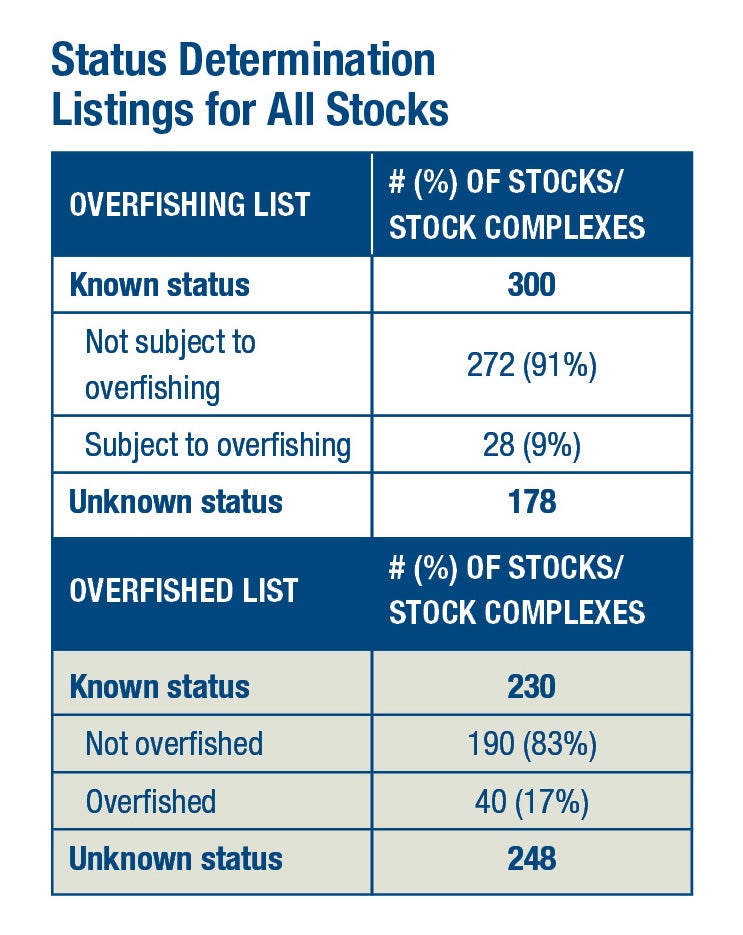
Congress is about to embark on a review of what has worked and what hasn’t in a law widely regarded as having halted overfishing in many American fisheries.  Though we have made progress here in the United States, overfishing is wreaking havoc on the world’s oceans and the mismanagement of our fisheries is the chief cause.  Recent peer reviewed science estimates that 64% of global fisheries are depleted below the levels required to sustain production.

Overfishing can lead to the loss of important species that can upend the balance of critical ocean food webs leading to the further degradation of our ocean.  To save the ocean, we must end overfishing.

One of EDF’s missions is to rebuild global fisheries with the best possible solutions that serve both fishermen and fish so that future generations can enjoy sustainable seafood, fishermen can continue to fish profitably, and our seas are healthy and abundant.  Peer reviewed and published scientific evidence and our decades of experience have shown that catch shares are one of the best solutions for rebuilding depleted fisheries both in the United States and globally.

In the United States, catch shares have brought stability and sustainability to fisheries once in turmoil from overfishing. From the Gulf of Maine, to the Gulf of Mexico all the way to the Bering Sea, fishermen have more stable and flexible businesses and fisheries are recovering from years of overfishing.  If you add our neighbors to the north, Canada, there are 15 catch shares that have shown significant improvements in the stability of jobs, revenues and increased safety.  All over the world fishermen are learning form the work that American fishermen and fishery managers have done to save our nation’s fisheries.

Catch shares have not been a silver bullet in this effort.  In some cases, setting catch limits and aggressive enforcement can be enough to make sure a fishery is sustainable, but in many cases catch limits alone produce derby fishing, where fishermen race to fish in short, unsafe seasons, make very little money, and often lose their businesses – all while the health of the fishery continues to fail.

Science-based catch limits are the bedrock of any catch share program.  Catch shares give fishermen an economic incentive to stay within those limits, practically guaranteeing an end to overfishing.  The Gulf of Mexico commercial red snapper fishery has been managed under a catch share for more than five years. Before the catch share, fishermen were often exceeding their catch limit and racing in derby seasons that continued to get shorter and shorter. These derbies were unsafe, sometimes unprofitable and were doing nothing to help rebuild the fishery. Read More »

Posted in Catch Shares | Also tagged , , , , , | Comments closed

‘Fish on Fridays’: Gulf of Mexico Red Snapper, a tasty sustainability success story

Gulf Wild Red Snapper

Gulf Wild tagged Red Snapper. GulfWild allows the consumer to trace their fish back to the boat and captain who caught it

Welcome to a blog series on sustainable, locally sourced seafood for Lent! This week, we are featuring Gulf of Mexico red snapper which is managed under the Gulf of Mexico Commercial Red Snapper IFQ program. We are also presenting a delicious recipe for snapper tacos from Chef Chris, the head chef at Yaga’s in Galveston.

Meet a Fisherman: Bubba Cochrane

Bubba Cochrane is a commercial fisherman and business owner in Galveston, TX. He began his career as a deck hand and saved enough to purchase a permit and boat of his own. His business is doing well now, but he remembers when red snapper were on the brink of collapse. At that time, he was restricted to fishing in just the first 10-15 days of each month, in a derby-style competition in which everyone got on the water at the same time and tried to catch as many fish as possible.

He told National Geographic, “A derby is really stressful – you’re worried about the weather or if you get sick or even hurt,” he said. “And it means you miss a lot of birthdays and holidays with your family, because when fishing is open you’d better be on the water.”

Cochrane was skeptical of the IFQ program until he went to a workshop and learned he could buy or lease additional quota if he didn’t have enough. Now, his business is doing well and he hopes that one day, his son will follow in his footsteps. “Catch shares taught me about stewardship. I know what sustainability means and I believe in it,” said Cochrane. “There’s a future for the fishery.”


The Gulf of Mexico Commercial Red Snapper IFQ program:

Gulf snapper are so popular that overfishing once threatened to devastate this species, reducing it to just 4% of its original population. Attempts to control the problem by shortening the fishing season year after year failed. Then in 2007, fishermen voted to introduce an Individual Fishing Quota (IFQ), a type of catch share, which put this species on the road to recovery. Since 2008, the fishing season has been extended to year-round, fishing quotas have been steadily rising and revenues have gone up, allowing fishermen to once more make a good living without harming the stock.

Some have even found creative ways to use the fishery’s new sustainability to market their catch. Gulf Wild, a registered program of the Gulf of Mexico Reef Fish Shareholder’s Alliance, allows consumers to track the fish they buy back to its supplier, so they can see who caught their snapper, what part of the Gulf it came from, the name of the ship’s captain, and even the port where it was landed. The program assures consumers that they are eating truly sustainable seafood. Check out mygulfwild.com for more information on how the program works and where to buy Gulf Wild fish.


Red Snapper:

Red snapper, with its firm texture and sweet, nutty flavor, is one of the most popular white fish on the market and can be found all over the world, though most are harvested in the Gulf of Mexico or Indonesia. We are advocating that you purchase the locally caught Gulf snapper, however, and support local fishermen like Bubba!

Care to cook some snapper? Try this recipe for fresh snapper tacos.


Chef Chris’ snapper tacos: 

Ingredients:

1/2 Gal sour cream
3 green onions, chopped
1 yellow onion, chopped
1/2 C capers
1 C white wine
1 lime, juiced
2 T mayonnaise
1 T black pepper
1 T salt
1 T blackening seasoning

Instructions:
Sauce: Combine above ingredients in a bowl & set aside.

2 8oz red snapper fillets, cut into 3oz strips
1 T salt
1 T pepper
1 T chili powder
1 T garlic powder

Combine seasonings and coat snapper with the mixture. Cover bottom of sauté pan with olive oil & cook fish until white and flaky.

Assemble tacos with corn tortillas, shredded cabbage, chopped cilantro, sautéed snapper, and prepared sauce. Layer two or three corn tortillas for stability.

Posted in Catch Shares, Gulf of Mexico, Seafood | Also tagged , , , , , | Comments closed

Fishermen and Chefs United: Keep Catch Shares On The Table

Left to Right: EDF National Policy Specialist Melissa Carey, Former Senator Slade Gorton III, Former Representative  Robin Tallon & Representative Chellie Pingree.
Photo Credit: David Hills

This week more than 100 fishermen, chefs and seafood distributors from around the country gathered in Washington, D.C. to talk with members of Congress about sustainable fishing and the need to keep catch shares in the tool box for our nation’s fisheries managers.

Recently, some in Congress have attempted to take catch shares off the table for fishery managers; limiting regional councils’ ability to make the best decision for their fishermen.

Catch shares help eliminate overfishing and restore fish stocks by dividing the total scientifically approved allowable catch among the fishermen and ending short seasons and derbies. Catch shares have been proven to recover fish populations, increase compliance with catch limits, reduce waste, stabilize revenue and increase business efficiency.

In more than 115 meetings, the fishermen and chefs stood together to make it clear that catch shares are working, they are making American fisheries more sustainable and they have had positive impacts not only on fishermen, but the seafood industry.

Chef Rick Moonen of rm Seafood in Las Vegas delivered a letter to Congress signed by chefs from around the country, including Eric Ripert, Mario Batali, Hugh Acheson, Kerry Heffernan, and Susan Spicerjust to name a few.

Guests at NOD 2013 congressional reception enjoy sustainable seafood recipes provided by celebrity chefs. Photo Credit: David Hills

Read More »

Posted in Catch Shares, Fishermen Voices, Policy | Also tagged , , , , , , , | Comments closed

‘Fish on Fridays’: Sustainable Fish Choices for Lent

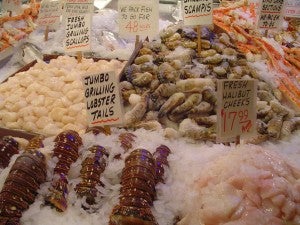
Pike Place Seafood Market

Pike Place Seafood Market
Photo Credit: Joey Brookhart/Marine Photobank

During this season of Lent, millions of people are replacing meat with fish on Fridays.  And as they shop for seafood more frequently, many are also striving to avoid eating fish caught in a manner that further depletes the world’s fish stocks. With 87 percent of the world’s fisheries already fully or overexploited, buying sustainably caught seafood has become increasingly important to consumers.

Today, the best way to ensure you are buying sustainable seafood — and supporting American fishermen and fishing communities — is to buy from a US fishery managed under a system known as a “catch share.” Catch shares reduce overfishing by enforcing annual catch limits and increased monitoring, while granting fishermen a guaranteed share of the catch and greater flexibility in how they run their businesses.

They also provide consumers with more fresh, high-quality seafood. When all the fish have to be caught within the space of three days, as previous management required, it causes a glut on the market and most of those fish must be frozen. Longer fishing seasons mean fresh fish can be caught and sold year-round for consumers to enjoy.

So as you shop for your fish each Friday this Lent season, consider picking up some naturally sweet and lean Alaskan halibut, known for its firm, flaky texture. Or how about some sablefish, also known as “black cod” or “butterfish,” which is rich in omega 3 fats? It can be smoked, grilled or pan roasted. The popular Gulf red snapper is delicious when roasted with fresh herbs and vegetables, or perhaps your family would enjoy some mid-Atlantic golden tilefish, oven roasted with a bit of olive oil and sea salt? Next week give Virginia striped bass (rockfish) a try, rubbed with Cajun seasoning and blackened.

Want more ideas? Every Friday during Lent, we will be posting about sustainable seafood choices from catch share fisheries. Each week we will highlight a species, a fisherman and/or fishing community working hard to ensure a fresh and sustainable product, and a recipe to inspire you. We want to bring you closer to the fish you eat, and ultimately to the marine ecosystem that depends upon responsible consumer choices for its continued survival.


Posted in Catch Shares | Also tagged , , , , | Comments closed