




EDFish

Maintaining fishery accountability while reducing costs for fishermen

No Overfishing Guaranteed LabelThe Pacific Fishery Management Council took a significant step last week when they voted for the first time to move forward with a formal process to scope, set performance standards and eventually implement electronic monitoring for the West Coast Groundfish Individual Fishing Quota (catch share) fishery.  Why is that important?

The West Coast catch share program is now in its third year of operation, and one of its chief characteristics is that it is “100% Federally Monitored – No Overfishing Guaranteed.” An authorized third-party observer who tracks the catch and ensures that all fish are accounted for accompanies each groundfish trip. West Coast fishermen are committed to the full accountability provided by observers, but they are struggling under the added costs that the federal monitoring requirement places on them. Electronic monitoring is seen as a way to save on costs, increase fishermen’s ability to time their trips to weather conditions and market opportunities, and improve safety.

That’s why EDF has been working with fishery managers, fishery enforcement personnel and NMFS to encourage development of cost-effective ways to gradually replace human observers with onboard cameras and supporting software systems. Last week’s Council vote was a milestone, and EDF joins with West Coast fishermen in thanking Council members for taking this well-considered and vital step.


Posted in Monitoring, Policy | Tagged , , , , , | Comments closed

EDF's Fishing Game Highlighted on RARE Blog

Originally posted in Rare Dispatches, Author: J.M. McCord

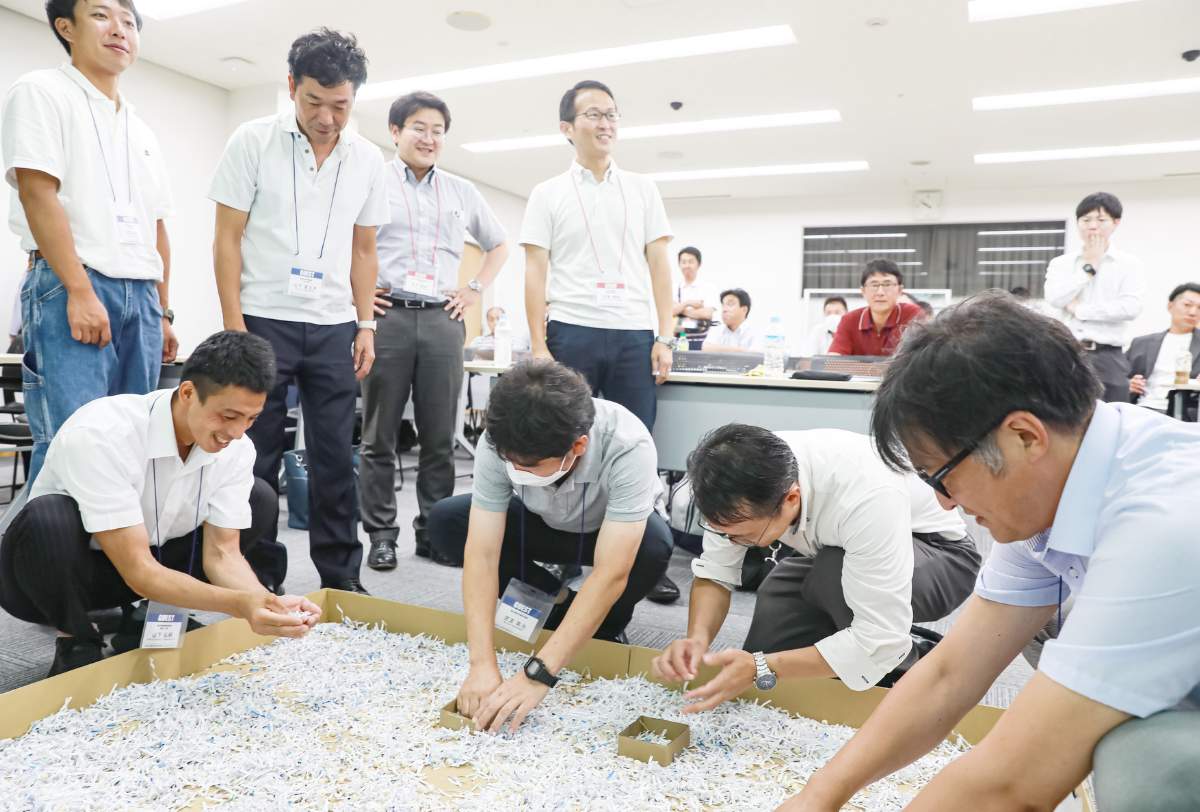
Fishers in Loreto, Mexico, play Go Fish! with different-colored candy representing juvenile and adult fish

Ulises Mendez, Rare program manager in Mexico, waited for the cackles to subside before asking the fishers what they had learned. The fishers had just completed a candy-grabbing game designed to expose the benefits of good fishery management.

Environmental Defense Fund (EDF) first exposed Mendez to the game during a workshop a couple years ago. Many versions of the game exist involving a variety of props and customizations. The essential elements are:

1 A proxy for the ocean — “In our regional training we did the fishing game in a pool,” says Sarilani Wirawan, Rare senior program manager in Indonesia. “The more water, the more fun.” Typically, a table will do.

2 Fish stand-ins — any material available will suffice, ranging from rocks, peanuts and shells to goldfish cut-outs or action figures, but the most popular option is candy. Mendez used multi-colored candy to represent different types of fish such as juveniles and adults.

3 Some versions also include props for different fishing gear or plates for no-fishing areas. The specifics can be tweaked for relevance to a region’s laws and threats.

“Participants always learn new insights into sustainable fisheries management, fisheries economics or the fishing industry in general.” -Ashley Apel of EDF. 

In Loreto, Mexico, Mendez had fishers use spoons and tongs for nets and hook-and-line fishing because those are their primary fishing methods. Many of Rare’s projects on sustainable fishing, including those managed by Mendez, use the game to highlight how working together and different management tools increase long-term benefits for fishers.

Mendez took the Loreto fishers through three rounds of the game:

Round 1 Anarchy — in a fixed amount of time, say 60 seconds, fishers had open access to candy (fish) on the table (ocean). They emptied the ocean very quickly.

Round 2 One Management tool — for example, the fishers could only take adult fish and were fined, in candy payments, for taking juveniles.

Round 3 Rights and reserves — the rules are adapted for additional management layers such as user rights and no-fishing zones. Essentially, Mendez tweaked the rules so fishers created a candy-land territorial user right for fisheries with a no-fishing zone (TURF-reserve).

The game got a huge laugh out of the salt-stained and sun-weathered men. Even though they are savvy fishers and know the consequences of overfishing, they could not believe they hoarded all the candy. “Participants always learn new insights into sustainable fisheries management, fisheries economics or the fishing industry in general,” says Ashley Apel of EDF.

Mendez discovered that fishers who play the game conclude they should play a role in enforcement. Fishers do not need to depend on authorities, rather they can apply sanctions internally against their fishing cooperative members who do not follow the rules of “Go Fish!”

Posted in Catch Shares, Mexico | Comments closed

Sound Fisheries Management is No Fluke


Summer Flounder

photo credit: Michael McDonough via photopin cc

Recently a US Senate subcommittee held a hearing entitled “Developments and Opportunities in US Fisheries Management,” with testimony by federal, regional and state officials that focused on the need for collaboration in fisheries management and decision-making based on sound science.  More than two and a half hours of testimony and questioning by Senators focused on the role of science and the Magnuson Stevens Act in effective management of our nation’s fisheries, especially summer flounder or “fluke.” 

New York and New Jersey have long been embroiled in an interstate conflict over what New York Senator Chuck Schumer has called “our decades long fight to bring fairness, flexibility, and accountability into the management of summer flounder.”  To that point, a reoccurring theme in the testimony was that effective fisheries management requires high quality data and regular stock assessments.  This notion was also echoed at a House Natural Resources Committee hearing a week earlier.

What is clear in the early hours of debating MSA’s reauthorization is that stakeholders across the board are focused on a common top priority – simply, good science is fundamental to good management.  This reality is at the core of the interstate summer flounder battle, with NY arguing that the use of outdated data has led to an unequal allocation of fish between states.

Fluke is an important species.  Managed jointly by the Atlantic States Marine Fisheries Commission and the Mid-Atlantic Fisheries Management Council, the 2012 stock assessment indicated that it is not overfished and that overfishing is not occurring.  Fishery managers have allocated 60% of the fluke harvest to the commercial fishery and 40% to the recreational fishery.  While the commercial quota is allocated between the states based on historical commercial landings (a common practice), the recreational harvest targets are assigned proportionally to the states based on estimated harvest data in 1998 using a data collection method called the Marine Recreational Fisheries Statistics Survey (MRFSS).  Herein lies the cause of conflict.  MRFSS is antiquated and is actively being replaced. It is considered largely unreliable by anglers up and down the East Coast and limited in efficacy by managers, and 1998 was 15 years ago.  I’m willing to bet the characteristics of the fleet and the fishery have also changed significantly over that time. Read More »

Posted in Mid-Atlantic, Monitoring, Science/Research | Tagged , , , , , , | Comments closed

Who caught tonight's seafood dinner?

Jason DeLaCruz, a fisherman with Gulf Wild, holds grouper caught in the Gulf of Mexico. Fishermen provide detailed tracing information for the fish to market them to high-end chefs and retailers. Photo by Rich Taylor.

In E&E Greenwire today, reporter Allison Winter writes about a seafood label called Gulf Wild, which puts a barcode on fish from the Gulf of Mexico’s catch share program. Consumers can use that barcode to find out where exactly the fish was caught and the name of the fishermen who landed it. Fishermen involved in Gulf Wild also sign a “conservation covenant” and consumers can feel better knowing that the catch share program has successfully ended commercial overfishing. In addition, fishermen are no longer required, as they were under the old regulations, to toss good fish overboard if they accidentally catch it on the wrong day.

The article also discusses how catch shares have played a role in increasing seafood traceability for chefs and ultimately consumers:

“Some fishermen in the program also credit a new management system for creating the opportunity to start the program… One result, according to those involved with the fishery, is that fishermen have been more willing to cooperate with each other and have the time and incentive to fish more carefully and find new ways to market their fish.”

“(Catch share) advocates — including chefs, some environmental groups and fishermen involved in the programs — say they create a stable environment for fish and fishermen and a steadier supply for the market. Rick Moonen, a renowned chef and advocate for sustainable seafood, is among them. Moonen supports catch shares for the environmental benefits but said his business also benefits with better-quality fish. Fishermen in a catch share can work more slowly and try to get a premium for fish that were handled carefully.

‘Sometimes, with other fisheries, you end up with a beat-up fish, and as a chef you're thinking, this sucks," Moonen said. "I would rather pay another dollar a pound and get a better fish. Boom, there you go, catch shares make that possible.’”

Read the full article here

Posted in Catch Shares, Gulf of Mexico, Seafood | Tagged , , , , , | Comments closed

Fish on Fridays: Pacific Rockfish

Rockfish Ceviche. Photo Credit: Josephine Svendblad

Spring is officially here and it’s time to start transitioning from warm soups to cooler, fresher dishes. There is nothing better than a spring ceviche to get the season started off right.  Check out the Pacific rockfish ceviche recipe below, meet the fisherman who reels in that catch and learn about the sustainable fishery helping to produce your tasty, traditional, South American meal.


Meet a fisherman: Rob Seitz

Rob Seitz first began fishing as a teenager with his grandfather, for halibut and salmon in the icy waters of Alaska. Several times Rob thought about leaving the fishing industry due to the many regulations and instability but his love for “the catch” and providing Americans with fresh and sustainable seafood made him reconsider. Two years ago, he moved to Morro Bay to participate in the West Coast Groundfish IFQ program. The flexibility of the catch share program has given Rob the ability to trawl year-round and deliver a fresh and 'live' product to consumers. Under the new program, Rob also has more time to innovate. He and his wife are working on marketing their own seafood products.


The Pacific IFQ Groundfishery:

Fishermen and fishing communities in California, Washington and Oregon have been operating under the IFQ system for 60 commercially important species of groundfish since 2011. In the first year of this program, West Coast fishermen discarded 80% fewer fish than in the previous year, and their revenues reached $54 million—42% higher than the previous five-year average (2011 NOAA Report).

Environmental Defense Fund has worked for years alongside fishermen, fishery managers and leaders at NOAA Fisheries to develop solutions that reduce costs for the trawl fleet while maintaining critical program components like 100% catch monitoring. The West Coast IFQ fishery is the most accountable fishery in the contiguous United States today. A new seafood label developed by EDF and Central Coast Seafood in California recognizes the commitment of the West Coast groundfish fleet to full accountability. The label, which reads “100% Federal At-Sea Monitoring: No Overfishing – Guaranteed”, distinguishes 100% monitored products. This label recognizes the commitment that West Coast fishermen have made to sustainable fishing, and gives consumers the ability to choose a catch share fish over a less sustainable product. Currently, a grocery store can’t distinguish catch share-caught rockfish, sole, cod, sablefish, or other groundfish from fish from less well-regulated fisheries. The new label gives vendors, restaurants, and individuals the power to vote for catch shares and accountability, by purchasing 100% monitored products.


Rockfish:

Pacific rockfish are generally found in the north Pacific and are the most common near-shore fish on North America’s West Coast.  These fish are mild, nutty and sweet in flavor. Their meat is lean and medium to firm in texture, with a fine flake. From crispy-frying these fish whole, to steaming and serving with vegetables, rockfish can be cooked and enjoyed using just about any method. In fact, these fish are also popular served raw in sushi, ceviche and tartare. Check out the recipe below, adapted from "Jo's" Nutty Kitchen Blog, to enjoy your rockfish South American style.

  Read More »

Posted in Pacific, Seafood | Tagged , , , , , | Comments closed

EDF presents analysis of illegal fishing to the Mexican Senate

EDF was recently invited by the Fisheries Committee of the Mexican Senate to present a study on Illegal fishing in Mexico that we have developed with the Mexican Institute of Competitiveness (IMCO) and other partners. Three of the five Senators who make up the Committee were present: the Chair – Sen. Francisco Lopez Brito (PAN, Sinaloa), the Secretary – Sen. Oscar Rosas González (PRI, Campeche), and Sen. Ernesto Ruffo (PAN, BC). Also in attendance was the General Director and several staff from National Fisheries Institute of Mexico (INAPESCA), as well as representatives from fishermen´s associations from both the industrial and small-scale fleets.

This is the first time EDF attended one of the monthly public meetings of the Committee. Pedro Zapata (EDF de Mexico Director) and Rodrigo Gallegos (Director for Global Warming from IMCO) made remarks and presented key conclusions from this study, which we hope will open up a constructive dialogue on this critical and complex issue. A few of the main points presented follow:

  1. The Mexican fishing sector has consistently lost competitiveness over time, as reflected by its stagnant economic returns and catch volumes, even as the size of the fleet continues to increase (mostly in the small-scale sector). The fisheries sector has decreased consistently as a percentage of GDP, of which it now represents less that 0.06%.
  2. Part of the reason for this loss of competitiveness is the modest economic impact of fisheries in Mexico, which result in very little activity in the value chain, i.e. gear and equipment sales, processing, transport, etc… Mexican fisheries generate roughly 30 additional cents for every dollar of fish caught and sold back into the economy, far from the world´s average, which is closer to 3 dollars of additional economic activity.
  3. One of the reasons for this complex problem is the high level of illegal fishing, which, by our estimates, represents roughly 60% of total production in México. Other recent estimates place the number closer to 100%.
  4. Illegal fishing is driven by many factors, but one of the main causes is a highly complicated and obscure regulatory framework that is difficult to understand. There are so many laws and rules that fishermen often find themselves fishing illegally without realizing it. As the law stands now, there are more than 255 different ways to fish illegally. A fisherman can have the right gear, fish in the right season, for the right species, but in an area that is legally off-limits, or he can be in the right area at the right time of year but fail to land the fish in the right place. This over-regulation complicates the jobs of both fishermen and regulators.
  5. Predictably, corruption (mostly in the form of bribes to get permits or to avoid punishment) plays an important role and has fueled the increase of illegal fishing. This phenomenon, present in many areas of public policy in Mexico, is boosted by a combination of a complex institutional framework, overwhelmed authorities and very ineffective control measures. Read More »

Posted in Mexico | Tagged , , , , | Comments closed

'Fish on Fridays': Gulf of Mexico Grouper

Grilled Grouper

Grilled Grouper over Arugula & orange salad. Photo credit: Food Network/Emeril Lagasse

Grouper are delicious fish that are harvested in both the South Atlantic and Gulf of Mexico. In the Gulf of Mexico, these fish are managed under a catch share program, where species like red and black grouper have healthy populations. John Schmidt, a fisherman in the Gulf of Mexico who fishes for grouper, tells us about his experiences in the fishery and how it has changed for the better under a catch share. Finally, we are sharing a delicious and healthy recipe for grilled grouper over an arugula and orange salad.

Gulf of Mexico Grouper/Tilefish IFQ Program

The Grouper-Tilefish IFQ program was implemented in January of 2010. Prior to this program, commercial grouper and tilefish were managed with limited access fishing permits, trip limits, size limits, closed seasons and catch limits. These management measures resulted in overcapitalization of the fishery and subsequent early closures. Fishermen were going bankrupt and fish stocks were depleted. Since the fishermen have been operating under a catch share in this fishery, the stocks are rebuilding, discards of dead fish are down, the race to fish has been eliminated, and fishermen are able to grow their businesses in an industry that was previously struggling.

Meet a Fisherman: John Schmidt

John Schmidt starting spearfishing recreationally in the Gulf of Mexico over 25 years ago and later started his own commercial fishing business. He remembers seeing an abundance of large fish when he first started, and also recalls that grouper (primarily gag grouper) became overfished and very scarce by 2006. When he started his business in 2004, many fishermen were going out of business because the fishery was so depleted. He started the business anyway because he had a passion for fishing and he loved providing Americans with fresh seafood. He had faith that a better management system would be implemented, “Management was out of control. Fish weren’t nearly as fresh, seasons were getting shorter, there were gluts on the market, restaurants and wholesalers were using imported or falsely labeled grouper to fill the demand. Something had to change.”

Now, he is proud to be a part of a fishery that is rebuilding and has a future. “I’m proud to have a fishing business that is sustainable and has integrity. I love to provide fresh domestic seafood to Americans year round. The futures of our businesses are great for the first time in our lifetime.”

Species: Gulf of Mexico Red Grouper

Red Grouper is caught in recreational and commercial fisheries in the Gulf of Mexico and South Atlantic regions of the United States. Most grouper populations are healthy or rebuilding under catch share management in the Gulf of Mexico region. You can purchase fresh Gulf grouper under the GulfWild program, which improves seafood traceability by attaching a unique tag to each fish so that it can be traced back to the captain and location of capture. Grouper is prized by seafood consumers and restaurants for its firm, lean flesh with a mild flavor. It is extremely versatile and can be prepared in a variety of recipes.

Try this recipe for grilled grouper over an arugula and orange salad adapted from an Emeril Lagasse recipe in Emeril’s New New Orlean’s Cooking book.


Grilled Grouper over Arugula & Orange Salad

Ingredients:

For the fish:

1 (3.5-4 pound) grouper, fillets removed with scales intact

4 tablespoons melted butter

3 cloves minced garlic

1 tablespoon finely grated parmesan

1 tablespoon Creole seasoning

4 tablespoons olive oil

¼ cup finely chopped fresh herbs such as tarragon, thyme, basil or chives


For the salad:

2 cups arugula

2 cups baby spinach

½ red onion, thinly sliced

1 orange, supremed

2 tablespoons Dijon mustard

1.4 cup orange juice

1 tablespoon white wine vinegar

½ cup extra virgin olive oil

Salt and freshly ground black pepper


Directions:

For the fish:

Preheat your grill to medium-high

Combine melted butter, garlic, parmesan, creole seasoning and olive oil. Whisk ingredients to combine.

Place fillets of grouper on the grill, scale side down. This method ensures that the fish stays moist while grilling and makes the scales easier to remove. Brush fillets with melted butter mixture. Be generous!

Grill the fish for 3 minutes with the cover closed, and then re-brush with butter mixture. Repeat this process for a total of 12-15 minutes until fish is firm and opaque in color. In the last minute of cooking, sprinkle fish with fresh chopped herbs.

Remove and serve immediately over the salad.

For the salad:

Combine spinach, arugula, orange segments and onion in a large bowl.

Make the dressing in a separate bowl by whisking together the Dijon mustard, orange juice and vinegar. Slowly add the olive oil while whisking until emulsified. Season with salt and pepper to taste.

Posted in Gulf of Mexico, Seafood | Tagged , , , , , , , , | Comments closed

EDF on FOX News: "Fish Smarter, Not Harder"

Kate Bonzon, Director of EDF’s Catch Share Design Center, recently appeared on the “Down to Earth” segment of KION Central Coast FOX News to discuss the serious issue of overfishing and the value of fishing smarter, not harder.

“The problem in the past is that regulations have actually worked against fishermen because their incentive was to go out and fish as much as they could, as fast as they could,” said Bonzon who leads our research on designing sustainable fishery management programs.

Bonzon was joined on the program by Joe Pennisi, a third generation West Coat fisherman who catches groundfish and David Crabbe, a Pacific Fishery Management Councilman and longtime commercial fisherman. Pennisi fishes smarter, not harder under a sustainable fishing program called catch shares. The West Coast catch share program gives him a secure privilege of the total catch and the ability to trade or sell their quota. And with this privilege, he has the time and flexibility needed to operate a more efficient and profitable business.

“If for some reason I have a break down, or maybe there is a lot of bad weather, I can trade some of my fish on the auction side, the other fishermen can buy it and they can trade with me,” explained Pennisi.

Watch the news program or visit our Catch Share Resources page to learn more about how these systems are restoring the world’s fisheries back to health.

Posted in Catch Shares, EDF Oceans General, Pacific, Seafood | Comments closed