









Electronic Monitoring and Accountability in the Chesapeake Proves Effective
Posted: in Mid-Atlantic, Science/Research
Written By

Share
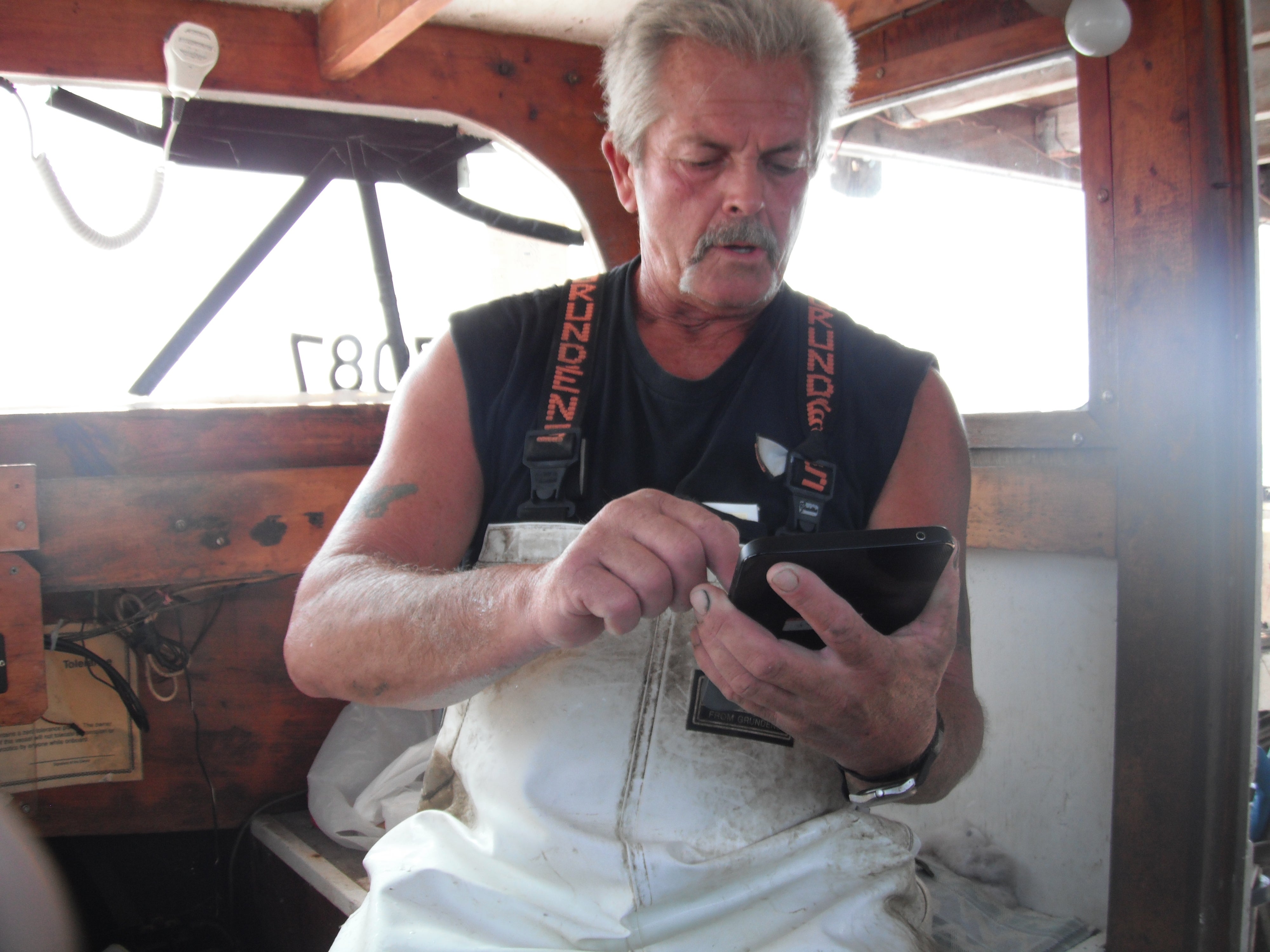
Photo Credit: Ward Slacum
Discussion about innovation, trends and shortfalls in fisheries monitoring tends to focus on large, off-shore fisheries in New England, Alaska and the Pacific. Those regions are home to multi-species fisheries, with complex biological interactions, and are targeted by large boats that result in sizeable discards of “non-target” fish. Monitoring technologies, both human and electronic, are essential to reduce this waste. Smaller scale fisheries, however, have just as much need for improved electronic monitoring and accountability measures.
Not surprisingly, blue crab is the most valuable fishery in the Chesapeake Bay. And it’s about as complex as they come. More than 7,000 watermen deploy small boats from thousands of waterfront access points and are regulated by three different management jurisdictions, all of which use antiquated reporting systems.
As reported on this blog before, commercial crabbers in Maryland have tested mobile technologies, like smart phones and tablets, to report and verify daily harvest. In 2012 and 2013, volunteers used these various technologies and provided constructive feedback to Maryland’s Department of Natural Resources (MDNR) to improve its monitoring and reporting system. Overall, participants in the two-year pilot are pleased with mobile technology tools and the web-based reporting platform, which along with dockside spot checks, have improved reporting accuracy and timeliness, according to fisheries managers. As part of the 2013 pilot, fisheries managers offered limited regulatory flexibility for pilot volunteers in order to encourage participation and demonstrate how improved accountability can lead to streamlined regulations.
In Virginia, crabbers are embracing electronic harvest accountability, thanks to participants in Maryland’s first pilot who traveled to Virginia to discuss their experiences and success. Since then, Virginia’s Blue Crab Industry Panel has partnered with Virginia Sea Grant, EDF and Virginia’s Marine Resources Commission (VMRC) to alert Virginia watermen about how to utilize an existing web-based reporting platform. In only a few months, VMRC noted an increase in online-based reports from watermen.
Without the efforts of the commercial crabbing industry in both states, accountability improvements may not have been made. Chesapeake watermen are proving that they are problem solvers by nature, are invested in their fishery and willing to adopt new measures to modernize harvest reporting.
As crabbers in both Maryland and Virginia demonstrate success with electronic monitoring and harvest accountability, there is little doubt that such measures will spread to other fisheries within the Chesapeake Bay and surrounding states. And that’s good for watermen who save time and gain flexibility; fisheries managers who can make more informed and timely decisions; and scientists who receive more reliable data.