EDF Health

EDF outlines steps for EPA to strengthen its plan to assess risks to frontline communities

Maria Doa, Senior Director, Chemicals Policy

This week Environmental Defense Fund (EDF) filed comments on EPA’s plan to assess the risks to frontline communities from nearby releases of chemicals to the air and water. The EPA’s proposal is an improvement from the previous administration, which failed to follow the requirements of the Toxic Substances Control Act (TSCA) and consider air and water releases and other significant exposure pathways for residents in “fenceline” communities near manufacturing or disposal facilities.

As we made clear in our comments, however, the agency’s planned screening approach is too narrow in scope and would underestimate the real-world risks faced by many communities.

Residents of these frontline communities often face exposure from multiple sources or higher levels of exposure than the general population, or both combined. Failing to consider the full scope of these risks could hamper EPA’s ability to craft protective rules that reduce the risks those living near industrial facilities.

We outline several areas where EPA can strengthen its screening approach Read More »

Also posted in Air pollution, Public health / Tagged , , , , , | Authors: / Comments are closed

Civil rights complaint draws attention to the discriminatory impacts of common lead pipe replacement practice

Jennifer Ortega, Research Analyst, Environmental Health

This past Wednesday, Rhode Island’s Childhood Lead Action Project (CLAP) led a coalition of groups in submitting a civil rights complaint to the Environmental Protection Agency (EPA) against the Providence Water Supply Board (Providence Water), pursuant to the Civil Rights Act of 1964.

The administrative complaint highlights the discriminatory effects that can result when utilities require customers to share the cost of replacing the lead pipes that feed into their homes. The complaint was submitted as part of CLAP’s larger Lead-Free Water RI campaign, which calls “for an equitable, statewide plan for full, free lead pipe replacements for all Rhode Islanders.”

In the complaint, CLAP, South Providence Neighborhood Association, Direct Action for Rights and Equality, National Center for Healthy Housing, and EDF allege that the water utility’s process of replacing lead service lines (LSLs) — the lead pipes that run from the water main to the water meter in homes — has a disparate impact on Black, Latinx, and Native American residents in violation of Title VI of the Civil Rights Act of 1964 and EPA’s implementing regulations. Read More »

Also posted in Drinking water, Lead, Public health / Tagged , , , | Comments are closed

Flint area residents raise the bar on environmental justice concerns

Ugbaad Ali, Community Environmental Health Tom Graff Fellow

We all deserve to live in a healthy and vibrant community, yet many residents of Flint, Michigan, are overburdened by a lifetime of toxic exposures and environmental injustice. Recently, a coalition of environmental justice groups and community organizers in Flint used their combined power to organize against the siting of a new hot mix asphalt facility.

The Stop Ajax Asphalt Coalition was formed to protect neighboring communities from further environmental harm. The Coalition, which includes residents from Flint and Genesee Township, St. Francis Prayer Center, C.A.U.T.I.O.N, Environmental Transformation Movement of Flint, Flint Rising, Greater Holy Temple Church, Michigan United, R. L. Jones Community Outreach Center Campus, and Mi JustUs, submitted extensive comments and generated hundreds of public comments to contest the state’s permitting of a hot mixed asphalt facility by Ajax Materials Corp. near homes, schools, and parks.

Historically air permit decisions have been made in isolation, ignoring the cumulative impact from surrounding exposure sources. After hearing from the Coalition, the regional office of the Environmental Protection Agency (EPA) – which serves Michigan and five other states – weighed in with a letter that recommended Michigan’s Department of Environment, Great Lakes and Energy (EGLE) “conduct a cumulative analysis of the projected emissions from all emission units at the proposed facility, fugitive emissions from the proposed facility, and emissions from nearby industrial facilities, to provide a more complete assessment of the ambient air impacts of the proposed facility on this community.” It concluded that “because of the environmental conditions already facing this community, and the potential for disproportionate impacts, the siting of this facility may raise civil rights concerns.”

The U.S Department of Housing and Urban Development’s (HUD) regional office also  raised serious civil rights concerns in a letter to EGLE, highlighting that the proposed location is near two HUD-assisted communities housing low-income families of color – and expressing concern that EGLE failed to engage HUD on a decision that could impact HUD-assisted residents.

“This isn’t a defeat for the citizens of Flint.
We’re just getting started.”
– Anthony Paciorek, Michigan United (ABC News)

Despite the public comments and federal agency letters, EGLE approved the air permit, but with tightened requirements. The Coalition remains concerned about the siting of the facility and is committed to challenging the state to require additional measures to protect their community. Read More »

Also posted in Air pollution, Civil rights / Tagged , , , | Authors: / Read 1 Response

Loosening industry’s grip on EPA’s new chemicals program

Richard Denison, Ph.D., is a Lead Senior Scientist.

[I delivered a shorter version of these comments at the September 22, 2021 webinar titled “Hair on Fire and Yes Packages! How the Biden Administration Can Reverse the Chemical Industry’s Undue Influence,” cosponsored by Public Employees for Environmental Responsibility (PEER), NH Safe Water Alliance, and EDF.  A recording of the webinar will shortly be available here.  The webinar, second in a series, follows on EPA whistleblower disclosures first appearing in a complaint filed by PEER that are detailed in a series of articles by Sharon Lerner in The Intercept.

The insularity of the New Chemicals Program – where staff only interact with industry and there is no real engagement with other stakeholders – spawns and perpetuates these industry-friendly and un-health-protective policies.

I have closely tracked the Environmental Protection Agency’s New Chemicals Program for many years.  Reluctantly, I have come to the conclusion that the program does not serve the agency’s mission and the public interest, but rather the interests of the chemical industry.  Despite the major reforms Congress made to the program in 2016 when it overhauled the Toxic Substances Control Act, the New Chemicals Program is so badly broken that nothing less than a total reset can fix the problems.

Revelations emerging through responses Environmental Defense Fund finally received to a FOIA request we made two years ago, and through the disclosures of courageous whistleblowers who did or still work in the New Chemicals Program, confirm what I have long suspected, looking in from the outside.  The program:

  • uses practices that allow the chemical industry to easily access and hold sway over EPA reviews and decisions on the chemicals they seek to bring to market;
  • has developed a deeply embedded culture of secrecy that blocks public scrutiny and accountability;
  • employs policies – often unwritten – that undermine Congress’ major reforms to the law and reflect only industry viewpoints; and
  • operates through a management system and managers, some still in place, that regularly prioritize industry’s demands for quick decisions that allow their new chemicals onto the market with no restrictions, over reliance on the best science and protection of public and worker health.

Many of the worst abuses coming to light took place during the Trump administration, and it is tempting to believe the change in administrations has fixed the problems.  It has not.  The damaging practices, culture, policies and management systems predate the last administration and laid the foundation for the abuses.  Highly problematic decisions continue to be made even in recent weeks.

I am encouraged by recent statements and actions of Dr. Michal Freedhoff, Assistant Administrator of the EPA office that oversees TSCA implementation.  They clearly are moves in the right direction.  But it is essential that the deep-rooted, systemic nature of the problem be forthrightly acknowledged and forcefully addressed.

Let me provide some examples of each of the problems I just noted.  Read More »

Also posted in Health policy, Health science, Industry influence, PFAS, Public health, Regulation, TSCA reform, Worker safety / Tagged , , | Authors: / Comments are closed

Beyond paper: PFAS linked to common plastic packaging used for food, cosmetics, and much more

Tom Neltner, Chemicals Policy Director, Maricel Maffini, consultant, and Tom Bruton with Green Science Policy Institute. 

Update August 11, 21 – Added FDA’s Response to FOIA.

Results from an Environmental Protection Agency (EPA) investigation into PFAS-contaminated pesticides have much broader, concerning implications for food, cosmetics, shampoos, household cleaning products, and other consumer products, as well as recycling. This investigation, first announced earlier this year, found that fluorinated high-density polyethylene (HDPE) containers used for pesticide storage contained a mix of short and long-chain per- and polyfluorinated alkyl substances (PFAS), including PFOA, that leached into the product. From what EPA can tell, the PFAS were not intentionally added to the HDPE containers but are hypothesized to have been produced when fluorine gas was applied to the plastic.

Since EPA released its investigation, we have learned the disturbing fact that the fluorination of plastic is commonly used to treat hundreds of millions of polyethylene and polypropylene containers each year ranging from packaged food and consumer products that individuals buy to larger containers used by retailers such as restaurants to even larger drums used by manufacturers to store and transport fluids.

The process of polyethylene fluorination was approved by the Food and Drug Administration (FDA) in 1983 for food packaging to reduce oxygen and moisture migration through the plastic that would cause foods to spoil. The fluorination process forms a barrier on the plastic’s surface and it also strengthens the packaging.

Fluorination of plastic leading to the inadvertent creation of PFAS may be another reason these ‘forever chemicals’ show up in many unexpected places. This significant source of PFAS contamination needs to be addressed. Much remains to be resolved as FDA and EPA actively investigate this new source of PFAS; however, preventive steps need to be taken quickly, especially since other PFAS-free barrier materials are available as alternatives.

Growing evidence links PFAS to a wide range of serious health effects – from developmental problems to cancer.

Read More »

Also posted in FDA, Health science, PFAS, Regulation / Tagged , , | Authors: / Comments are closed

Momentum is building to fund lead pipe replacement across the country: New video

Joanna Slaney, Legislative Director and Sam Lovell, Communications Manager. 

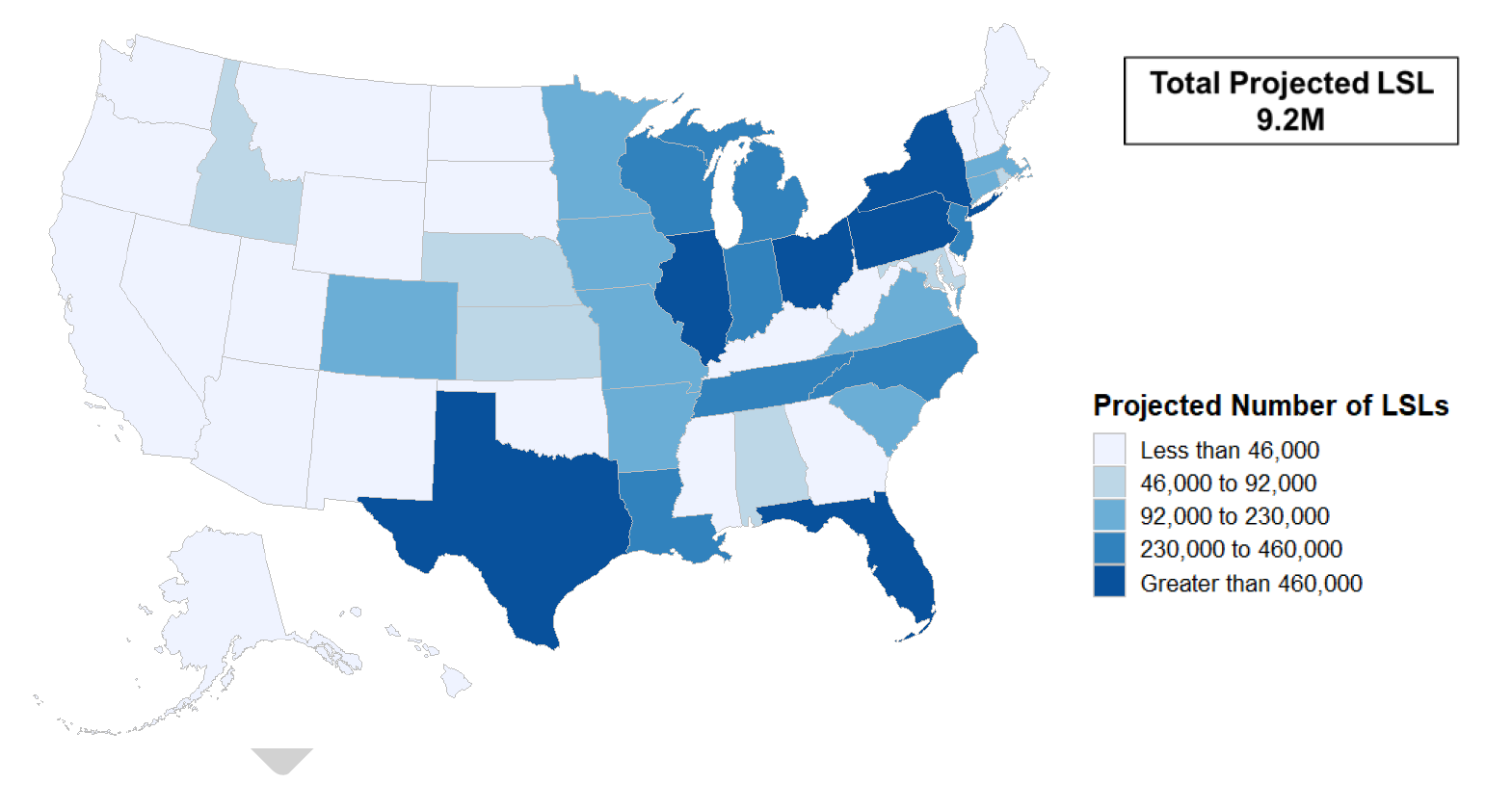
As Congress pursues infrastructure legislation, it’s clear that replacing lead pipes is a priority issue. This is welcome news for our health, the country’s infrastructure, and the economy. We are glad to see the attention on this issue from Congress and from the Administration with the inclusion of funding to fully replace lead pipes in the President’s American Jobs Plan.

And it’s no wonder there is growing interest in this initiative, the latest polling from the Navigator shows support for funding lead pipe replacement at 83% nationally – including 73% of Republicans, 80% of Independents, and 91% of Democrats. This echoes earlier polls which have found similar overwhelming bipartisan support

As EDF has written before, a $45 billion investment in lead pipe replacement over ten years would:

  • Protect public health by enabling water systems around the country to quickly begin eliminating the LSLs to protect residents.
  • More than pay for itself. Fully replacing lead service lines across the country would yield more than $205 billion in societal benefits over 35 years — a 450% return on the investment – due to prevented heart disease deaths from adult lead exposure.
  • Permanently upgrade infrastructure by facilitating critical upgrades to water distribution systems in a way that protects residents from increased lead in their drinking water when the LSL is disturbed.
  • Reduce disparities by enabling utilities to fully replace LSLs, thereby resolving equity concerns that utilities currently face in replacing the lead pipe on private property.
  • Create jobs for the plumbers and contractors who will perform the LSL replacements. This is shovel-ready work that involves construction and plumbing crews conducting the replacement.

With bills in both the House and the Senate focusing on funding lead pipe replacement, it’s important we keep pushing to ensure the federal government follows through on getting the lead out of our drinking water. 

See EDF’s new video that explains why lead service line replacement is important, and why it’s a no-brainer for the federal government to invest in.

Also posted in Health policy, Lead, Public health / Tagged , , , , | Authors: / Comments are closed