Climate change solutions
We deliver game-changing environmental solutions that have a real impact for people around the globe.

Building resilient land and water systems that allow people and nature to prosper in a changing climate.
 Last month I spent some time in Bentonville, Arkansas, at Walmart’s semi-annual “Sustainability Showcase,” a celebration of the company’s progress in implementing environmental initiatives.
During the showcase, Walmart CEO Doug McMillon invited the executives of major Fortune 500 companies in attendance to share their insights on sustainability – and I was inspired. On stage were the CEOs of Cargill, Kellogg, as well as Dr. Mehmood Khan, Vice Chairman and Chief Scientific Officer, Global Research and Development for PepsiCo.
I was struck by how open and bold these CEOs were in recognizing the need and their responsibility to help solve major environmental challenges such as climate change and water pollution. McMillon, for example, started the discussion by explaining that 20 percent of lakes in Minnesota are not drinkable, a situation that “touches people personally every day.”
Here’s my take on the top two agricultural highlights – and why I’m more confident than ever that sustainable farming initiatives will improve water and air quality across the U.S. (more…)
 Earlier this week, a former sustainability executive with McDonald’s delivered a wake-up call for environmental groups, listing “5 ways that NGOs stunt sustainability.” In this article, Bob Langert explains the ways that nonprofits are failing to help companies turn sustainability commitments into on-the-ground results. In the context of sustainable palm oil, he notes:
“You can’t just go after big brands and expect them to manage a supply chain that has them seven stages removed, starting with the smallholders, to mills, then plantations, to storage facilities, refineries, ingredient manufacturers and then product manufacturers, then into a final product a retailer sells, such as ice cream, a granola bar or shampoo — with palm as a minute ingredient.”
He’s right – sustainability in supply chains, especially in agriculture, is incredibly complex. So how can environmental groups effectively champion sustainability progress throughout global supply chains, from the C-suite to crop fields? Here are three ideas. (more…)
Public sector funding for agricultural research is flat lining. While public dollars used to be the primary source of support for ag research, that is no longer the case. Today, the private sector spends as much on agricultural research as the government does, according to USDA. Long-term growth in funding for ag research is also higher in the private sector.
As a recent DTN story noted, “Some skeptics say the need for public research is overblown, that private companies — seed, chemical and machinery — already provide a large pile of dollars.”
Are the skeptics right?
Public and private ag research funding don’t always have the same goals, and they play very different, but equally important roles. Here’s an overview of what each sector contributes, how they relate, and why we need to continue advocating for and supporting investments from both sectors – as well as public-private partnerships. (more…)

I once dreamed of pursuing a career in public radio and becoming the next Cokie Roberts. Not surprisingly, my life took me in a much different direction. The catalyst was a two-year Peace Corps stint in biodiversity-rich Ecuador that led me towards a career in conservation. But I never steered too far from my agricultural roots, and today my farming life has come full circle.
I grew up on a small farm in rural Ohio, surrounded by fields, woods, wetlands and a menagerie of animals. My grandfather lived next door and every day I’d tag along with him and help vaccinate the chicks, collect eggs, bale hay, and feed the cows.
Thanks to the responsibilities he gave me as a young child, I feel a special connection to the farmers I work with today as they face pressure to increase their yields without polluting the water supply or surrounding ecosystem.
Here’s my agricultural story, and why I believe that a new program called NutrientStar will positively impact both farmers’ businesses and the surrounding ecosystem. (more…)
For the first time ever, ranchers are able to enroll in a habitat credit exchange program to earn revenue for activities that protect and enhance habitat for the greater sage-grouse.
The state of Nevada and federal agencies today announced the approved use of the Nevada Conservation Credit System to protect the grouse’s sagebrush habitat on public lands.
This program will create a robust mitigation market that will bring greater certainty and transparency to the state’s agriculture and energy industries, ultimately allowing both sage-grouse and the economy to flourish.
About the Nevada Conservation Credit System
The Nevada Conservation Credit System is an advanced approach to protecting habitat for the greater sage-grouse that ensures impacts are fully offset in a way that helps create net benefit. It does so by creating new incentives for industries to avoid and minimize impacts, and for private landowners and public land managers to preserve, enhance, and restore habitat. (more…)
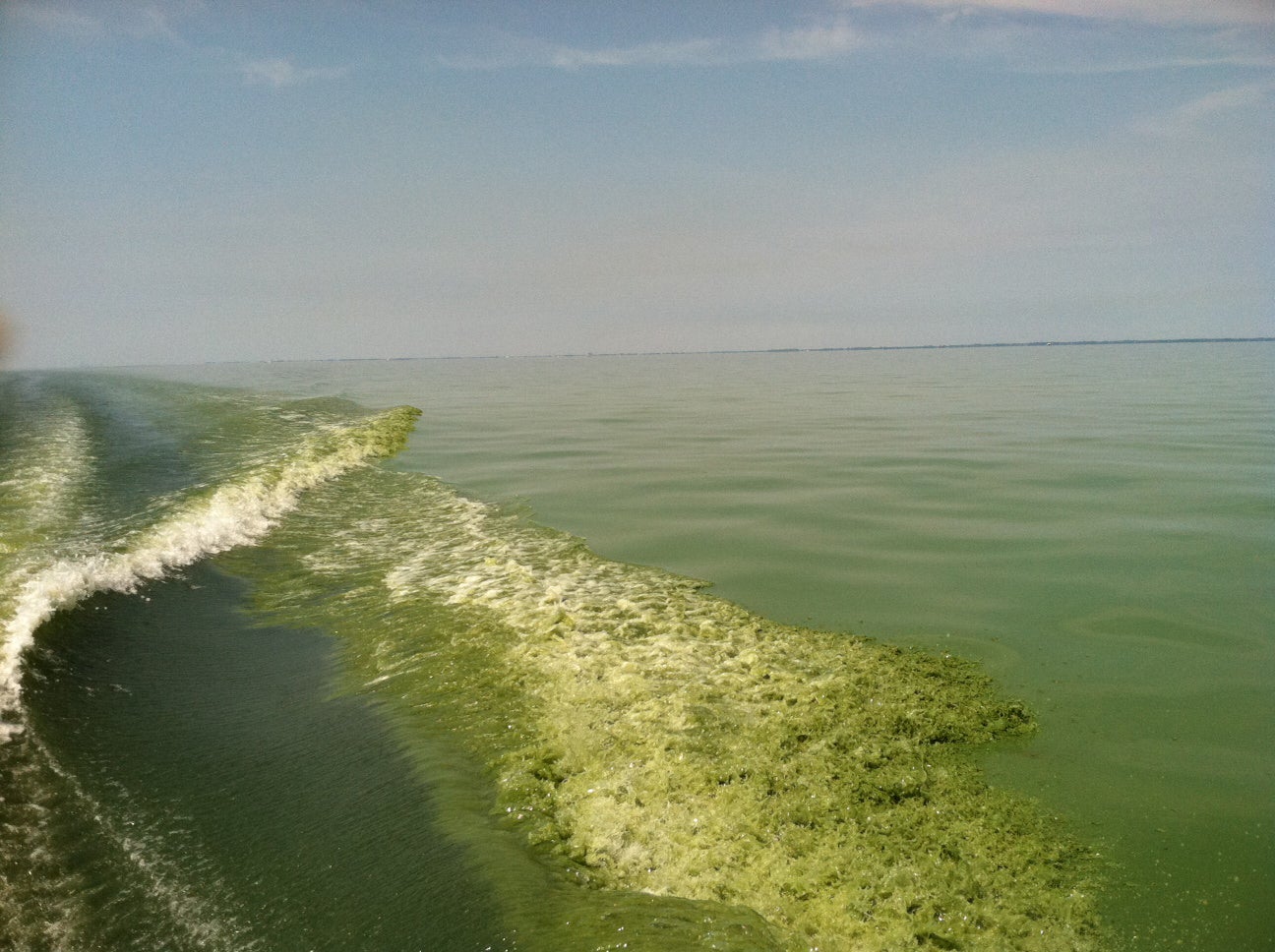
A University of Michigan study released late last month implies that in order to meet the U.S. and Canadian governments’ 40 percent phosphorous reduction target for Lake Erie by 2025, farmers will need to significantly ramp up their conservation efforts.
Some of the stories covering this study focused on the more drastic measures called for, such as converting thousands of acres of productive cropland to grassland. But I’m optimistic that we can indeed work with farmers to meet this goal by 2025, without having to impact production so drastically – we can do so through targeting.
Targeting refers to directing conservation dollars and practices to places on the landscapes where they’ll be most effective. In Ohio, that means targeting the areas delivering the highest amount of nutrients into Lake Erie.
Here’s the background on targeting, what the research says, and why targeting should be even more finely tuned and amplified at scale in order to accelerate on the ground environmental improvements. (more…)
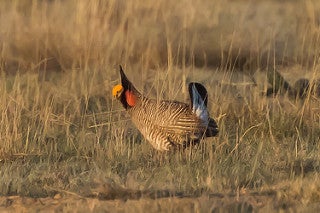
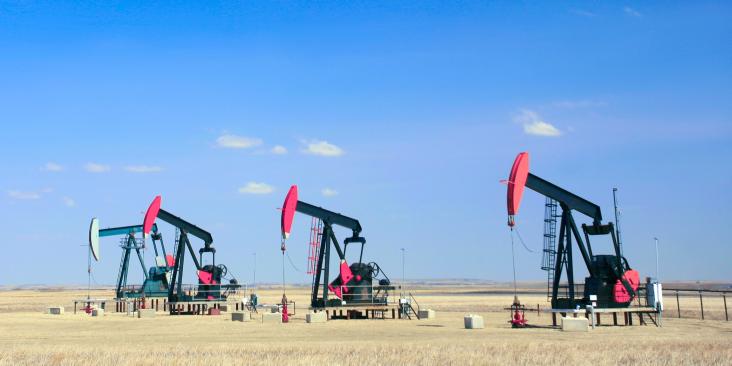
Recent media reports have touted population rebounds for the lesser prairie-chicken – up 25 percent from last year. That’s great news for the bird, which was nearly wiped out in recent years as booming oil and gas industries encroached on the bird’s range across Texas, Kansas, Oklahoma, Colorado and New Mexico.
The U.S. Fish and Wildlife Service listed the bird as “threatened” in March 2015, at the same time that the five states embarked on a conservation plan of their own. The plan was officially assembled and endorsed by the five members of the Western Association of Fish and Wildlife Agencies (WAFWA).
Now that bird numbers are up, WAFWA is claiming success – attributing the chicken’s rebound to effective implementation of their Lesser Prairie-Chicken Rangewide Conservation Plan (RWP). Certainly that program has provided some benefit, but the key question is whether the program has been a big enough boost to set the lesser prairie-chicken on a path to recovery. (more…)

The corn supply chain is a complex, ever-changing, and often unpredictable system. Measuring the environmental impacts of grain production can be just as complex and daunting – especially with thousands of players involved.
Understanding corn’s environmental footprint is fundamental to generating solutions that help farmers improve efficiencies and reduce fertilizer losses and hold companies accountable for meeting and measuring the success of their sustainability goals.
That’s why EDF partnered with the University of Minnesota’s Northstar Initiative for Sustainable Enterprise to develop a feed grain transport model that estimates emissions from grain farming. Northstar is a program within the university’s Institute on the Environment, which has deep expertise in the complex agricultural supply chain and is able to connect the dots between products on the shelves and their environmental impacts. As I’ve blogged before, EDF believes this kind of increased transparency is good for consumers and businesses themselves.
I asked Jennifer Schmitt, Ph.D, lead scientist of the NorthStar initiative, to elaborate on the team’s research and on the importance of data collection and measurement in agriculture.
(more…)
Environmental Defense Fund’s efforts to improve sustainable farming practices through the grain supply chain received another boost, thanks to a USDA Regional Conservation Partnership Program (RCPP) grant of $500,000 in North Carolina.
The award supports EDF’s collaboration with Smithfield Foods, the world’s largest pork producer, and brings in university and grower organization partners. In 2014, Smithfield’s hog production division made a commitment to engage 75 percent of its grain sourcing acres, or about half a million acres, in sustainable farming practices by 2018. These practices reduce fertilizer losses to the water and air, thereby improving water quality and cutting greenhouse gas emissions.
In 2015, through a sustainability program called MBGro, Smithfield helped farmers plant cover crops, use efficient nitrogen sensors, and employ other conservation practices on nearly 100,000 acres in the Southeast. Earlier this year, the company announced the expansion of its sustainable grain program to its Midwest sourcing region with ag retailer United Suppliers.
And now, the RCPP project officially kicks off this week – and will directly engage producers to expand conservation practices in agriculture. Here’s what it entails. (more…)
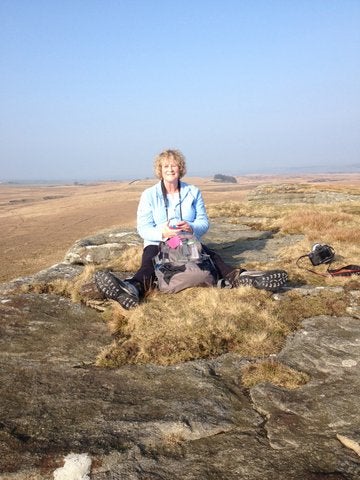 “It’s the hydrology, stupid!” a colleague once joked about the thrust of my career. I couldn’t agree more. I study what’s working and what’s not across agricultural landscapes — the Midwest corn belt is a current focus — and believe that the fundamental changes we’ve made to the land by draining it, removing native vegetation and altering the water flow have caused many of the environmental issues the region faces today.
I’m intrigued by agriculture, where people and nature intersect across vibrant landscapes to provide tangible benefits to individuals, local communities, and the surrounding ecosystem. My job, which allows me to indulge that fascination on a daily basis, requires me to simultaneously think like a scientist and an environmental advocate, a dual role that I first started to cultivate growing up in rural England. (more…)