Climate change solutions
We deliver game-changing environmental solutions that have a real impact for people around the globe.

Building resilient land and water systems that allow people and nature to prosper in a changing climate.
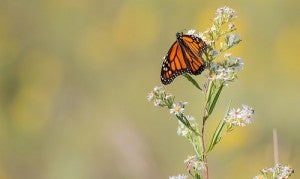
Virtually every farmer and rancher in America has room for conservation on their land. But deciding whether or not to enroll acres in a conservation program requires just as much business sense as deciding which crops to grow on other acres. It’s a matter of cost and return on investment.
My team and I traveled to Nebraska earlier this month to meet with a few corn and soybean farmers to get a sense of what the costs and benefits might be of dedicating some acres – namely marginal lands with low crop productivity, as well as roadsides and field edges – to growing milkweed habitat for the monarch butterfly. What we found was that there is no one-size-fits-all approach. (more…)
 A team of researchers spent seven years dissecting, analyzing and reporting on California’s nitrogen cycle, and the results are eye-opening.
Nearly 2 million tons of nitrogen are imported into the state each year. Almost a quarter of it is lost through leaching into groundwater – with runoff from cropland accounting for nearly 90 percent of this leaching. Excess nitrates in drinking water can cause health problems when consumed by at risk populations. Four percent of the state’s nitrogen is lost to the atmosphere as nitrous oxide, a potent greenhouse gas 300 times more potent than carbon dioxide.
But the California Nitrogen Assessment (CNA), released by UC Davis’ Agriculture Sustainability Institute, also provides a never before seen level of detail on nitrogen movement in the state. There’s no silver bullet for reducing environmental impacts while keeping growers profitable. Yet information is power and the more we know, the more we can tailor and prioritize solutions.
The UC Davis team investigated various political, social and economic ideas for reestablishing our state’s nitrogen balance. Two of the most promising solutions for California agriculture to address what the CNA calls “critical control points” include enhancing fertilizer efficiency and expanding carbon markets for agriculture. (more…)
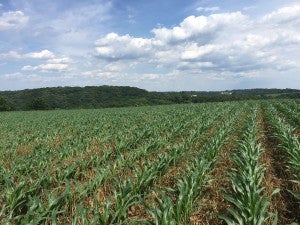
For the fourth year in a row, a nationwide farmer survey found a boost in soybean and corn yields following the planting of cover crops. That’s in part why cover crop usage increased 350 percent from 2008 to 2012 among the farmers surveyed.
Cover crops are also great for the environment, since they help keep excess nutrients in the field and out of waterways. Yet only around 2 percent of all U.S. farmland uses cover crops, an alarmingly low figure.
That leaves a ton of room for improvement, which could result in huge environmental gains – and a new business opportunity for ag retailers.
Ag retailers that offer expertise on and sell cover crops to their famer customers can get in on this rapidly growing trend. And in so doing, gain customer loyalty and stand out from competitors. (more…)
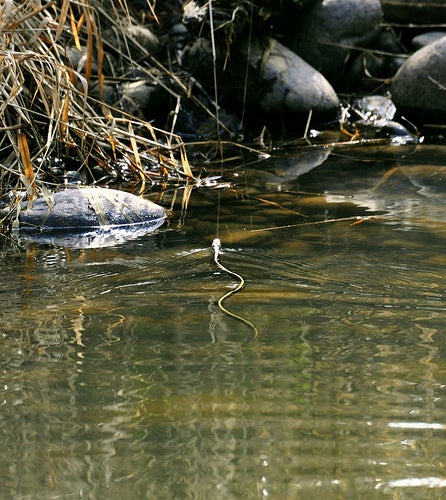
Enter the giant garter snake. The giant garter snake is an aquatic species native to California and a federally-listed “threatened” species that largely persists today – along with many other critters – in the vast acreage of Central Valley rice fields and water distribution canals.
In the past, seasonal floods would transform California’s Central Valley into a great inland sea of floodplain habitats teeming with fish and wildlife, including the giant garter snake.
Over time, development of the flood and irrigation systems that enabled the Central Valley’s $17 billion agricultural economy has led to the destruction of 95 percent of the region’s historic wetlands, putting countless California wildlife at risk of extinction.
For example, ongoing flood system operations and maintenance activities—required to protect farms and communities in the floodplain—continue to disrupt giant garter snake habitat. What’s more, when drought or fallowing reduces water deliveries to rice growers, the snake’s remaining habitat can dry up.
We need a better way to protect and restore habitat for wildlife like the giant garter snake, before it’s too late.
Clang. A knot of rusted chains pulls shut the driveway gate, bringing it closed with a final smack against a worn fence post. Just like that, my Sunday afternoon visit to our family farm in Clarksville, Missouri ends. After a quick trip home to Saint Louis, it’s time to catch a flight to Washington, D.C. for my internship.
But not before my dad asks, “Do you want to see downtown?”. I laugh, but agree to check it out. “Downtown” is a relative term in Clarksville – a quiet river community with fewer than 500 residents.
The streets slope down to the shoreline, where historic buildings meet the Mighty Mississippi. A few barges float nearby, unperturbed by the currents that pull toward the Gulf of Mexico. It’s a calm day on the river. I spot a sign emblazoned with a familiar red and white Army Corps castle. Just ahead, a concrete arm extends across the channel. (more…)
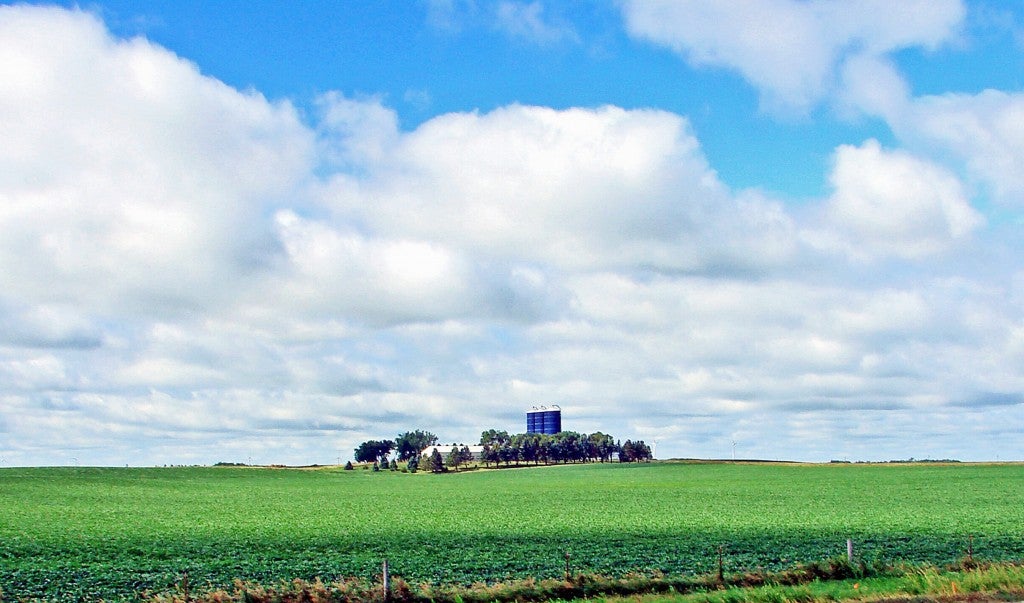
The results are in, so food companies take notice: American consumers are educating themselves on our food system, and they’re increasingly asking for sustainably produced foods. That’s a key takeaway from the International Food Information Council (IFIC) Foundation’s new report on consumer attitudes toward food.
It’s an exciting trend, since what we buy sends a signal across the supply chain for farmers to grow ingredients in ways that protect our natural resources, and for food companies to source sustainably grown products. Sustainably produced food also supports food security, which is essential to our continued prosperity.
Yet sustainably grown products are almost always more expensive to produce than their unsustainable counterparts, which is why many farmers require a premium for changing their production practices to reduce environmental impacts.
To improve air and water quality and protect farmers’ livelihoods, sustainability can’t just be a luxury. Sustainable food production has to become business as usual.
Here’s why we’re well on our way to meeting that goal.
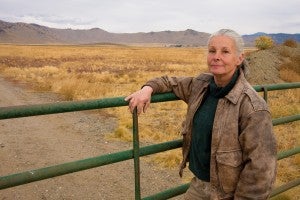 Nearly one-third of U.S. farmers are women, yet their contributions aren’t well known. The Rise of Women Farmers and Sustainable Agriculture, a new book from the University of Iowa press, aims to change this.
Women are diversifying agriculture – not only demographically, but also in terms of production practices. Within the next two decades, they “may own 75 percent of transferred farmland” according to the American Farmland Trust, with enormous implications for American agriculture. From innovative business models to a deep focus on stewardship, women are changing the face – and future – of farming.
As their numbers grow, women farmers are finding and building support networks. Last year, for example, the USDA’s Agriculture Deputy Secretary Krysta Harden announced the creation of the Women in Agriculture Mentoring Network. The book argues that more needs to be done to unlock the full promise of these new farmers.
Dr. Carolyn Sachs, a professor in Penn State’s College of Agricultural Sciences, is the lead author of the book. I sat down to discuss the agricultural transformations underway, how to create opportunities for new farmers and the implications for land stewardship.
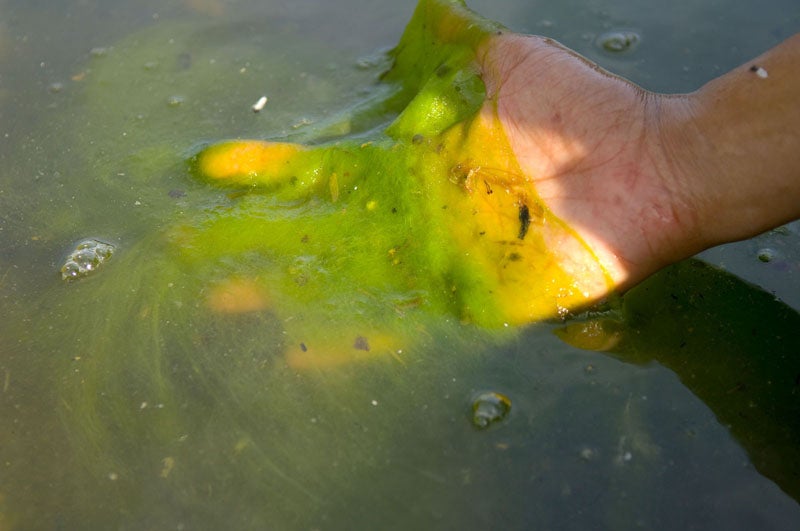
For a month now, South Florida Atlantic beaches have been blanketed by a sickly green, toxic algae sludge that has kept tourists away and caused local businesses to lose millions.
Florida has a bigger headache this summer than most states, but algae blooms are hardly unique.
Last week, more than 100 people were sickened from toxic algae in a Utah lake largely fed by agricultural runoff and treated sewage water. And just two summers ago, an outbreak in Lake Erie forced the City of Toledo to close off its water supply for nearly half a million residents.
Agricultural runoff also means wasted money for farmers, who can spend approximately half of their input costs on fertilizer.
There are ways to reduce the runoff that contributes to water quality problems and kills marine life, year after year. Algae blooms can be minimized and maybe even prevented if we scale up existing efforts to improve fertilizer efficiency and soil health – practices that can also save farmers money and boost their yields.
Two initiatives and private-sector partnerships are making real headway in doing just that. And if these efforts are replicated at scale, they could have a national – and even international – impact. (more…)
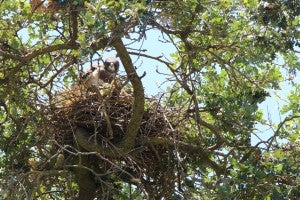
The Golden State is well known for its robust and diverse agricultural output, even during times of drought. In 2014, California’s farms, ranches and nurseries turned out $54 billion worth of everything from oranges to rice, and milk to nuts.
Our farms and ranches are less renowned for the rich wildlife habitat they also provide, in some cases for threatened species like the Swainson’s hawk and giant garter snake, which have long struggled with the disappearance of their historic habitat in open grasslands and tule marshes.
The Swainson’s hawk population in California used to be close to 17,000 mating pairs. Today, that number is closer to 2,000. And the giant garter snake has faced the loss of 95 percent of its historic Central Valley wetland habitat. In both cases, landscape conversion and fragmentation, in addition to land management practices such as rodent control, have steadily worn away the suitable habitat for these species.
Fortunately, many species are adapting to these landscape changes and, with wildlife-friendly practices, are able to thrive on productive California farms and ranches. Farms like Davis Ranch. (more…)
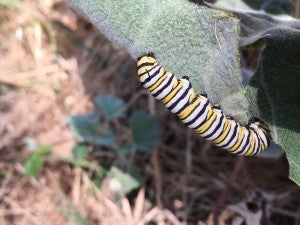
The western population of monarch butterflies is in steep decline, according to a recent study released by the Xerces Society, having fallen 74 percent in the past two decades, from roughly 1.2 million in 1997 to fewer than 300,000 butterflies in 2015.
Studies have documented the drop in eastern populations over the past several years, but this is the first time we’ve been able to understand the risks to the western population, which resides west of the Rocky Mountains.
The population is struggling because of development around the forested groves where they spend winters along the California coast and in Mexico, and because of pesticide applications that kill vital milkweed habitat. These threats and the population decline are significant, having the potential to influence a U.S. Fish and Wildlife Service decision in coming years if the situation fails to turn around soon.
I’ve feared for many years that the monarch might reach the point that it will require protections under the Endangered Species Act – a last resort that signals a dire state for the iconic and beloved species. But a recent trip to California gave me great hope that it’s not too late to change the monarch’s trajectory. (more…)