








From Data to Action: EDF’s First Year Advancing Methane Solutions in Central Asia
Written By

Share
Summary
- Central Asia is an important frontier for methane action, with significant emissions but substantial opportunities to deliver climate and economic benefits through rapid reductions.
- EDF is building on the first year of engagement in Uzbekistan to strengthen measurement capabilities, partnerships and policy foundations needed to accelerate methane action across the region.
By Hanling Yang and Aaron Feng
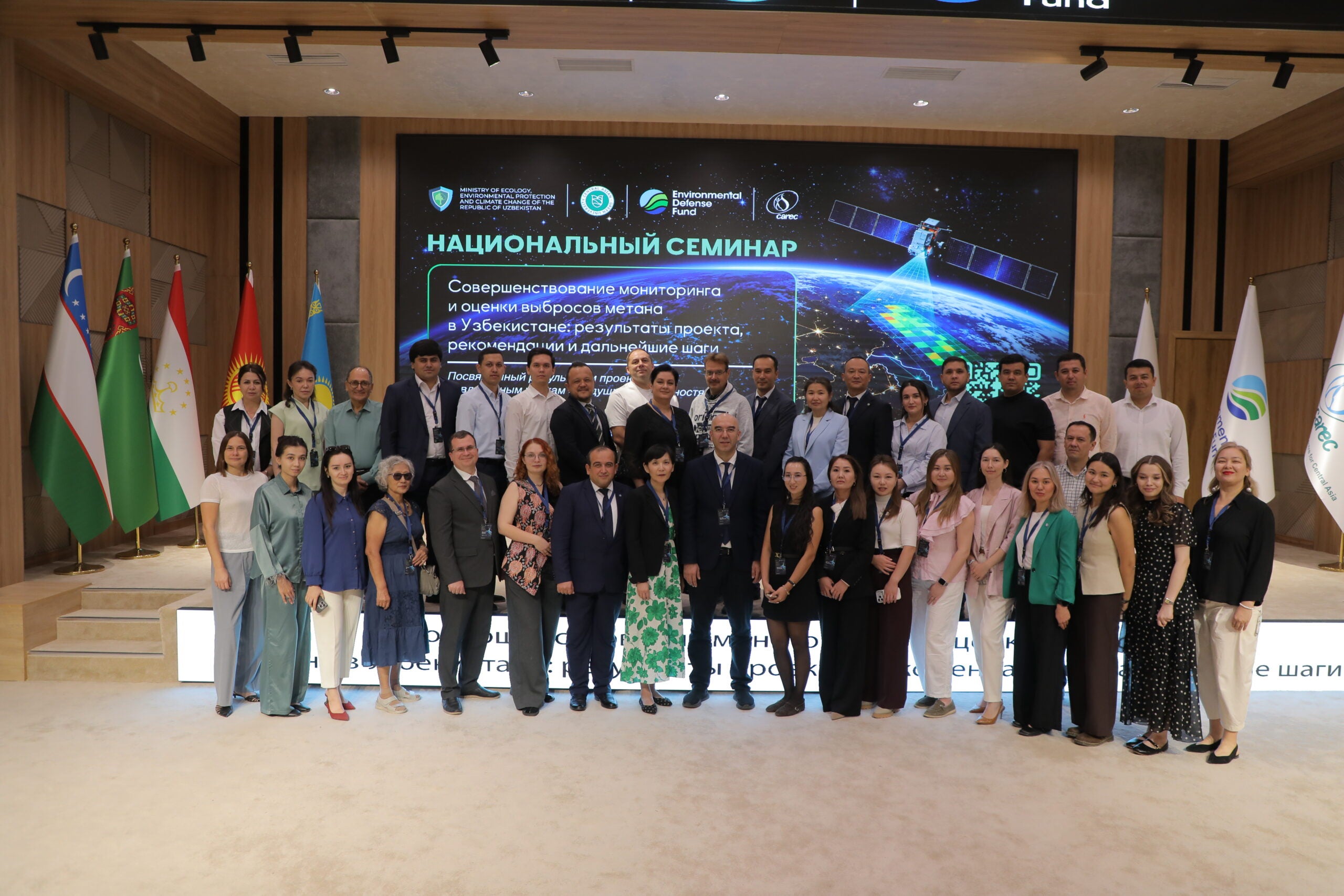
September 2026 marked a milestone of EDF’s work in Central Asia, with a workshop in Uzbekistan convened with our partner the Regional Environmental Centre for Central Asia (CAREC) and key government, industry and academic stakeholders from across the region. The gathering reflected on progress achieved during our first year of engagement and helped chart a path toward deeper collaboration in the years ahead.
Why Central Asia Matters
Long a bridge connecting East and West, Central Asia is emerging as a critical frontier for methane mitigation, given its importance as an oil and gas supplier to markets in Europe and Asia and its substantial potential to reduce emissions.
The region contains some of the world’s most methane-intensive oil and gas operations. The good news is that more than 70% of the region’s oil and gas methane emissions could be reduced with existing technologies, and more than half of these emissions could be reduced at no net cost. Methane is not only a powerful short-lived climate pollutant responsible for roughly 30% of the global warming today, but also the primary component of natural gas. Cutting methane waste delivers important energy, economic and climate benefits, particularly for a region facing shrinking glaciers, growing water stress, and continued dependence on the oil and gas sector.
Better methane performance also helps strengthen producers’ competitiveness. As major oil and gas buyers in Europe and Asia pay greater attention to supply chain methane emissions, the ability to measure, manage and demonstrate methane reductions can help producers meet evolving market expectations and enhance market access.
Central Asia has significant opportunities to act on methane now. Encouraging signs of commitment and progress are emerging. Notably, all three oil and gas producing countries in the region have joined the Global Methane Pledge. Kazakhstan strengthened its commitment at COP30 by joining a near-zero fossil fuel methane emissions declaration and is developing methane regulations. Uzbekistan is advancing methane monitoring and policy development. Turkmenistan has undertaken methane mitigation pilots. The challenge now is to translate this growing momentum into action, accelerating regional coordination and moving beyond planning and piloting.
A year of building MRV capacity and policy readiness in Uzbekistan and beyond
Over the past year, EDF has focused much of its Central Asia engagement on Uzbekistan, working closely with CAREC, to strengthen methane measurement, reporting and verification (MRV) capacity and policy readiness. We delivered webinars and in-person training on methane MRV based on ground-, aerial-, and space-based monitoring technologies, and partnered with local experts to evaluate inventory methodologies, identify data gaps, and assess how satellite observations can strengthen national emission inventories. This work helped strengthen local capacity to interpret and apply satellite data, while improving the analytical skills needed to build a more complete emissions profile, including both point source and area source emissions and the relative contributions of super emitters and low-emitting sources.
We also supported an assessment of Uzbekistan’s methane policy landscape and identified priorities for strengthening policy frameworks. In parallel, we worked with the Oil and Gas Decarbonization Charter (OGDC) and the Oil & Gas Methane Partnership 2.0 (OGMP 2.0) to engage national oil companies across the region, build methane management capacity, and support the implementation of their methane commitments.
Additionally, EDF joined UNEP’s International Methane Emissions Observatory (IMEO) in delivering training on satellite monitoring and measurement as well as best practices for methane mitigation in oil and gas operations and coal mining in Kazakhstan. By providing practical toolkits and facilitating peer exchanges, EDF aims to foster broader collaboration among stakeholders across the region.
Looking ahead: A regional vision for methane action
Building on the first year’s foundation, we will deepen our support for evidence-based methane action in the region. Prospective priorities include working with CAREC and its Regional Climate Action Transparency Hub (ReCATH) to accelerate MRV operationalization and national uptake in Uzbekistan and expand regional collaboration. Working with multilateral development banks and private investors, we will conduct scoping studies for innovative financing pilots, identify investment barriers, assess stakeholder readiness, and develop practical financing approaches to advance viable methane mitigation projects in emerging markets.
As more Central Asian countries advance their methane efforts, the region has a significant opportunity to strengthen cooperation and accelerate implementation. COP31 offers an important platform for countries to demonstrate progress on methane action and highlight the climate, energy security, and economic benefits of reducing emissions across the region.