Climate 411

Blogging the science and policy of global warming

Posts in 'Economics'

China Takes the Lead on Clean Energy Jobs: How the U.S. Can Still Win

A majority of Americans are worried that the United States’ role in the world economy will diminish in the coming years, according to a new Washington Post-ABC News poll.

But the truth is, China is already beating the U.S. to clean energy jobs.

China is quickly becoming the global powerhouse in clean energy manufacturing and innovation, dwarfing the efforts of America. Backed by huge investment and an industrial policy bigger than the world has ever seen, China has become the worldwide leader in new energy technology markets while the U.S. is quickly falling behind.

But we can match the scale of China’s centralized industrial policy by fully deploying the engine of American prosperity: our marketplace. It is the only tool we have with the scale and capital to compete with China.

If the U.S. puts a limit on carbon pollution from dirtier sources of energy, we will send a clear signal to the marketplace that will unleash a massive wave of private investment in clean energy that would allow us to compete with the Chinese.  Only when American policy creates a profit motive for investors, inventors and entrepreneurs, will we have a chance to win the race.

President Obama made that case to the Business Roundtable. He called for a price on carbon to kick-start America’s efforts to win the clean technology race.

Key excerpts of the President remarks:

A competitive America is also an America that finally has a smart energy policy.  We know there is no silver bullet here – that to reduce our dependence on oil and the damage caused by climate change, we need more production, more efficiency, and more incentives for clean energy.

But to truly transition to a clean energy economy, I’ve also said that we need to put a price on carbon pollution …

What we can’t do is stand still.  The only certainty of the status quo is that the price and supply of oil will become increasingly volatile; that the use of fossil fuels will wreak havoc on weather patterns and air quality.  But if we decide now that we’re putting a price on this pollution in a few years, it will give businesses the certainty of knowing they have time to plan and transition.  This country has to move towards a clean energy economy.  That’s where the world is going.  And that’s how America will remain competitive and strong in the 21st century.

If Congress puts a limit on carbon pollution, the U.S. will compete with China. If we don’t, there’s no reason to believe the future will look any different than the facts we see today. Those facts are listed below, or you can download and print EDF's one-page handout version [PDF].

China’s Climate and Energy Policies Create an Investment Advantage

  • In 2009, China dedicated $440 billion in government funding solely to clean energy. –AFP, 5/24/2009
  • Renewable energy industries in China reached 1.12 million jobs in 2008 and are increasing by 100,000 a year. –NYT, 1/31/2010
  • China is already moving aggressively on measures it promised at Copenhagen, including closing an additional 10 gigawatts of inefficient, polluting coal plants. – Washington Post, 1/7/2010
  • In December 2009, China passed a law requiring its electric grid companies to buy any and all electricity generated from renewable sources. – WSJ, 12/27/2009

China Goes into Wind Power Overdrive in 2009

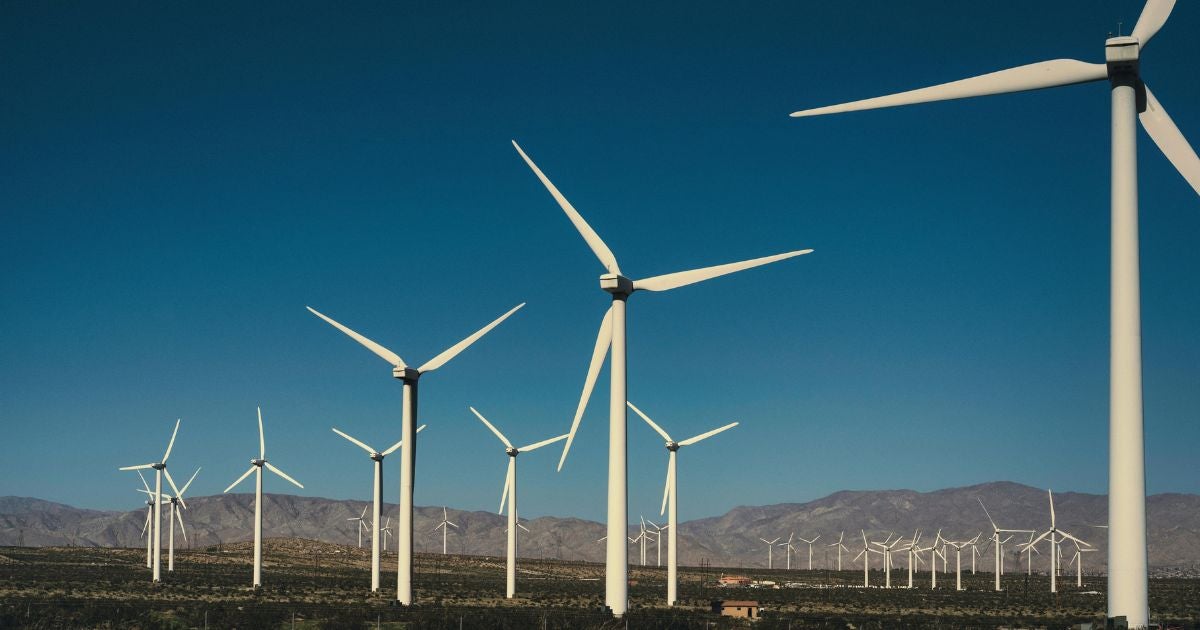
  • Five years ago, there was almost no Chinese presence in the wind manufacturing industry, and now China hosts the world’s largest wind market with installed capacity of over 25,000 MW, a significant increase from 2008, when China was home to about 12,000 MW. –  GWEC, 2/3/2010
  • As the world’s wind power capacity grew by 31% in 2009, China was responsible for one-third of the additions, experiencing industry growth of over 100%. – GWEC, 2/3/2010

The Saudi Arabia of Solar

  • China has leapfrogged the West in the last two years to emerge as the world’s largest manufacturer of solar panels. – NYT, 1/31/2010
  • Already home to one-third of global solar manufacturing capacity, Chinese competition has reduced global solar prices by 30% and is forcing rivals to shift production facilities to China: U.S. Evergreen Solar Inc. is moving its assembly line from Massachusetts to China, while BP PLC's solar unit said it would stop output in Maryland and rely on Chinese suppliers instead. – WSJ,  12/15/2009
  • Responding to domestic demand, Applied Materials – the world’s largest supplier of equipment to the solar photovoltaic industry – opened the world’s largest private sector solar research center in Xian, China in October 2009. – TIME, 11/30/2009

Green Technology Investment

  • Batteries and Electric Cars – China is also leading in advanced vehicle and battery technology. Chinese firm BYD introduced the world’s first plug-in hybrid vehicle , China’s production of lithium ion batteries had accounted for 41 percent of the global market by 2008, and the number of battery companies in China increased from 455 to 613 between 2001 and 2004. – Breakthrough Institute, 11/09
  • Transmission — China is an emerging world leader in ultra-high-voltage, or UHV transmission technology, with more than 100 domestic manufacturers and suppliers.  The State Grid Corporation will invest $44 billion through 2012, and $88 billion through 2020 in building UHV transmission lines. – Center for American Progress, 6/4/2009

Video: The Facts of Cap and Trade, From an Economist

EDF is known for unconventional tactics. We often experiment with new ideas to find the ways that work. However, this time I had a chance to do something truly off-the-wall.

I was asked to make a video with the coalition Clean Energy Works that explains cap and trade in a way that non-economists could understand, i.e., in English.  (And with clever animation.)

What were they thinking?

Maybe the idea was just crazy enough to work. Here are a couple of reactions so far:

Check it out, let us know what you think, and spread the word.

James Murdoch: A New, Conservative, Clean Energy Champion

The energy and enviro communities are all buzzing about today's Washington Post op-ed by James Murdoch, the head of News Corporation's Europe and Asia divisions, and son of its founder, Rupert Murdoch.

The op-ed, "Clean energy conservatives can embrace", calls for a capping carbon pollution and supports market-based incentives for clean energy. If you haven't seen it yet, it's worth reading.

A Wild Ride: Big News from the Clean Energy Front

A lot has happened quickly in the clean energy world. Here's a wrap-up:

  • Yesterday was day two of the Senate Environment and Public Works Committee's markup process for the Kerry-Boxer bill. Republicans once again boycotted the proceedings, although they made a couple of cameo appearances. The markup continues today — you can see it on C-Span. And, Greenwire is now reporting that Senate Majority Leader Harry Reid has given EPW Chairwoman Barbara Boxer "the green  light" to move ahead without the GOP. Reid reportedly told Boxer to advance global warming legislation on Tuesday, November 10,  if Republicans have not ended their boycott by then.
  • At the same time, three strange bedfellows — Sens. John Kerry (D-MA), Lindsey Graham (R-SC) and Joe Lieberman (I-CT) announced they would work on a "dual track" to create a climate bill that would get 60 Senate votes. Our Tony Kriendler says the three have given "new life to a bipartisan process."
  • The U.S. Chamber of Commerce is making tentative gestures of support in the general direction of a climate bill. The Chamber, which has been slammed by the media and abandoned by some of its own members since saying we need a "Scopes monkey trial" on climate science, said today that it "supports most of the principles outlined" in that Kerry-Graham-Lieberman proposal. Details are still fuzzy, but Tony Kreindler says: "We're delighted to see the Chamber recognize that there's a bipartisan path forward to a cap on emissions. If they support it, that would be truly a first." Indeed, we at EDF would all be thrilled if the Chamber's new tone were followed up with real action.
  • A new group launched today "to support action to limit greenhouse gases and counter the U.S. Chamber of Commerce." American Businesses for Clean Energy includes high profile companies — including some who quit the Chamber because of its stance on climate change. Members include utilities — New Jersey's Public Service Enterprise Group Inc. (PSEG), Florida's FPL Group Inc. (FPL) and New Mexico's PNM Resources (PNM) — as retailer Gap Inc. and Colorado ski resort operator Aspen Skiing Co. More from the Wall Street Journal.
  • And New York University School of Law's Institute for Policy Integrity released a new poll of 144 economists. It found a whopping "94% believe the U.S. should join climate agreements to limit global warming," and that "significant benefits from curbing greenhouse-gas emissions would justify the costs of action."

Best Economic Analyses: Economy Can Thrive as We Cap Carbon

When you want to find out which cars are best, you look to honest experts who do their homework – like Consumer Reports or the National Highway Traffic Safety Administration.

At EDF, we do the same thing when it comes to analyzing how the economy will fare under a carbon cap:  we look at what the neutral, nonpartisan economists are saying.

In the world of economic forecasts, the honest brokers include the Environmental Protection Agency, the Energy Information Administration, the Massachusetts Institute of Technology, and the Congressional Budget Office.

In a just-released publication, EDF’s economics team looks at what these nonpartisan experts are saying about the House-passed American Clean Energy and Security Act (H.R. 2454, or ACES).  As you recall, that bill would put a gradually declining cap on emissions of heat-trapping gases.

Here’s what we found:  according to unbiased economic experts, if we adopt ACES, the US economy will reach $25 trillion in the spring of 2030 – just a couple of months after it would do so with no cap.  In other words, we don’t have to compromise between a strong economy and a better environment.  We can have both.

To help you see how tiny the impact of a cap on economic growth will be, check out this chart:

gdp_bars

The new EDF paper builds on our analysis last year of nonpartisan studies of earlier climate bills.  The new studies square up perfectly with last year’s:  fighting climate change is easily affordable.

So what about those wild numbers you hear tossed around – that if we cap carbon, the economy will crater and families will go broke paying ginormous utility bills?   Those numbers aren’t from these neutral, nonpartisan studies; they’re from “studies” by groups who want to kill climate legislation.

We’ve rebutted the crazy numbers elsewhere.  But this brief is about real economic studies done by serious, neutral experts.

The new paper also compares the tiny costs of protecting ourselves against potentially catastrophic global warming with the much larger amounts we spend to protect ourselves in other ways – like police and fire protection, life insurance, and national defense.  This chart tells the story:

dollar_penny

There are a lot more goodies in our economists’ new report — check it out.  And if you want the graduate-level course, you can learn still more about climate economics at http://www.edf.org/climatecosts.

Yet Another CBO Study Shows Small Costs of Clean Energy Legislation

The Congressional Budget Office (CBO) just released another report showing that the costs from clean energy legislation would be small – and could help America avoid the severe economic impacts of climate change.

The report, "The Economic Effects of Legislation to Reduce Greenhouse-Gas Emissions," is based on other previous analysis.

Here are some of the CBO's main findings:

  • Without policies to reduce carbon pollution, climate change will have negative and possibly severe economic impacts on the United States.
  • With legislation including a cap on carbon pollution, the cost to consumers will be modest, and in line with previous independent estimates.
  • Low-income families (the lowest 20 percent of households) would see purchasing power riseas a result of the House-passed clean energy bill, thanks to the allocation provisions. Higher income households would see a very small increase in costs.
  • The reduction in household purchasing power, taking into account compensation from the allocation provisions, would amount to 0.1-percent in 2012 and 0.8-percent in 2050, with an average of 0.4-percent over the period 2012-2050.
  • Nationally, the House legislation would reduce the U.S. gross domestic product (GDP) — relative to the no-policy scenario –  by 0.2 to 0.7 percent in 2020; 0.4 to 1.1 percent in 2030; 0.7 to 2 percent in 2040; and 1.1 to 3.4 percent in 2050. At the same time, real GDP is projected to be roughly two and a half times greater in 2050 than today under either scenario. (Note that taking no action would also reduce GDP growth, perhaps to a much greater degree, because of the impacts of climate change.)
  • Annual U.S. economic growth between 2010 and 2050 would be reduced by 0.03 to 0.09 percentage points, relative to a business-as-usual growth rate of 2.4 percent. (Again, this “business as usual” estimate assumes a fictional world in which climate change does not occur.)

An earlier CBO analysis [PDF] of the House clean energy bill found it would cost the average American household about as much as a postage stamp per day. Other analyses by the Environmental Protection Agency and the Department of Energy found similar results.

This is the fourth study to confirm the same conclusion (other ones: EPA [PDF], CBO [PDF], EIA, ) – America can afford to pass legislation that will make us more energy independent and will help fight climate change.

In fact, we can’t afford not to.

More Fuzzy Math on the Costs of Climate Legislation

For those of you wondering what the story is with a Treasury Department document that purports to estimate the cost of climate legislation: it doesn’t.

The Treasury Department analysis simply quantifies the potential revenue from a hypothetical auction of all pollution permits under a cap and trade bill.

Opponents of climate change legislation are now firing up the fuzzy math machine again, dividing that figure by the number of people in the country and concluding that cap and trade will mean high costs for households. Sound familiar? That's how House Minority Leader John Boehner arrived at his roundly dismissed $3,100 figure.

It’s a flawed analysis of a non-existent proposal.

Even if a 100 percent auction was a live legislative proposal, which it's not, that math ignores the redistribution of revenue back to consumers. It only looks at one side of the balance sheet. It would only be true if you think the Administration was going to pile all the cash on the White House lawn and set it on fire.

The bill passed by the House sends the value of pollution permits to consumers, and it contains robust cost-containment provisions. Every credible and independent economic analysis of the American Clean Energy and Security Act (such as those done by the non-partisan Congressional Budget Office, the Energy Information Administration, and the Environmental Protection Agency) says the costs will be small and affordable — and that the U.S. economy will grow with a cap on carbon.

For more info on what well-designed cap and trade legislation will actually cost, please visit http://www.edf.org/climatecosts.

API Misses the Mark: Why Refineries Will Do Just Fine Under ACES

The American Petroleum Institute (API) recently took a break from hosting anti-cap-and-trade rallies for oil company employees, and used its spare time to put out a study claiming the American Clean Energy and Security Act (ACES) would be unfair to American oil refineries. Unfortunately their study uses some dubious assumptions – and makes some even more questionable claims.

API’s study (carried out by consulting firm Ensys Energy) outlines two major complaints.

  • First, API whines that the bill only sets aside 2.25 percent of emissions allowances for refiners, while the electricity sector gets 35 percent of the available allowances.
  • The second, related claim is that ACES would increase the cost of doing business so much that companies would turn to cheaper overseas refineries instead.

Before we even address those complaints, there’s one thing I have to point out — API is relying on bad modeling and cherry-picked results to create its case.

  • The results quoted in API’s news release come from running a scenario that severely restricts international offsets and allows no expansion of low-carbon technologies beyond what would happen without a clean energy bill. There’s no basis for those assumptions, but they do manage to skew the results to make refineries look more vulnerable.
  • However, if we consider the “basic case” (or, “most likely”) model outcome in Ensys’ report, it is clear that the activity of domestic refineries is expected to increase compared to their current levels.

But let’s ignore the study results for a minute, and just take a look at API’s two complaints.

First, API seems to think refineries are getting picked on because they aren’t getting as many free allowances as the electricity sector. But — they ignore the reasons why the two are not comparable.

  • The electricity sector allowances they’re talking about actually benefit American consumers. The allowances are first handed to local distribution companies, or LDC’s, but the value of the allowances doesn’t stay there. LDCs are required to use the value of those allowances to protect consumers from electricity price increases. Giving allowances to the LDC’s really means giving allowances to American ratepayers.
  • Oil refineries, in contrast, are private companies whose owners are free to pocket any money they get from their emissions allowances. So giving allowances to oil refiners really means — giving money to oil refiners. (API might like those two ideas equally, but no one else does.)

Of course, if the oil refiners were willing to accept the same regulations as utilities, and guarantee that their emissions allowances would be used to lower the price of a gallon of gasoline, that’s an idea worth discussing. API’s study doesn’t put that offer on the table, though.

Second, API says that America could become dangerously dependent on foreign refineries. (API President Jack Gerard says, "Climate legislation should not come at the expense of U.S. economic and energy security.")

But – U.S. refineries have cornered 90 percent of the market for domestic gasoline. Homegrown refineries dominate the market because there are, inherently, strong cost advantages for domestic production, and little incentive to send business overseas.

  • Different states have different regulations governing oil refining, which favors local businesses and makes it difficult or impossible for foreign refineries to compete.  In fact, in other environmental scenarios, such as emissions standards for cars, industries claimed exactly that – no company could possibly create 50 slightly different products to sell under 50 different state rules, and only local businesses could thrive under those conditions.
  • It’s also significantly easier and cheaper to ship crude oil than refined gasoline. That makes it much more efficient to import crude oil and do the refining right here at home. That’s a physical difference that won’t go away if we pass a clean energy bill.

EDF did our own analysis of the impact of climate legislation on oil refineries.  Here’s what we found:

  • The expected added cost from a clean energy bill, per gallon of refined gasoline, is less than one cent per gallon.
  • Analysis also suggests that refiners can be expected to pass on the majority of any cost increase to their customers.
  • As a result, between 1.4 and 1.7 percent of total allowances would be enough to compensate domestic refineries – in full — for the added costs associated with reducing their process emissions.
  • Since ACES allocates 2.25 percent of allowances to oil refiners, EDF believes the allocations set out in ACES are more than generous.

Given all this, the bill should not affect the competitiveness of American refineries.

A larger problem might be the unfortunate effect of API’s study on the average American consumer. Outside the industry, a lot of people don’t draw a distinction between “oil” and “gasoline.” A quick read of news articles about the study could imply that ACES will increase America’s dependence on foreign oil – when one of the most valuable aspects of the bill is that it will do just the opposite. Under ACES, the EIA predicts that the U.S. would reduce its consumption of oil by 344 million barrels in the year 2030 alone. That’s a vital benefit to our national security as well as our environment.

A whopping amount of our own oil and the imported oil would still be refined into gasoline here, in spite of API’s fears. After all, even their own biased study predicts increasing U.S. refinery activity.  All in all, clean energy legislation is still good for all Americans – including oil refineries.

Full Analysis of National Manufacturers Association's Flawed Study

I promised earlier today in my quick review of the flawed study from the National Association of Manufacturers that a full analysis was on the way. Here it is [PDF].

The analyis concludes, as I said this morning that "assumptions matter — and unrealistic assumptions make for outlandish results."

More Manufactured Numbers from the National Association of Manufacturers

The National Association of Manufacturers and the American Council for Capital Formation today continued their campaign of public deception against the American Clean Energy and Security Act with the release of an analysis that purports to show manufacturing declines and job losses if the bill passes.

Problem is, NAM’s numbers are about as trustworthy as the forged letters sent by their allies to members of Congress, which faked opposition to the ACES bill from local community groups. They are no more real that the Birthers’ imaginary Kenyan birth certificate for President Obama, which names a laundry detergent as the registrar. (Really.)

As you know, NAM has a long history of opposing virtually every major environmental law, often using similar bad arguments with flawed data. NAM/ACCF’s study from last year was seriously flawed – it claimed to look at that year's Lieberman-Warner bill, but it ignored important provisions of the legislation and imposed artificial constraints on the economy’s ability to reduce emissions.

The analysis presumed there would be no banking of emission allowances and only limited use of offsets. The study also artificially constrained the use of renewable energy and carbon capture and storage.

In short, they applied make-believe assumptions to a make-believe bill, and they are doing it again:

  • NAM/ACCF’s conclusions assume that ACES will spur 10 to 25 GW in new nuclear power. Compare that to the Energy Information Administration’s base scenario, which predicts 10 GW without the bill – and as much as 95 GW with the bill.
  • NAM/ACCF assumes that 95 percent of cost-saving offsets will come from domestic projects and five percent from overseas. In fact, ACES provides for a 50-50 split between domestic and international offsets, and the latter are expected to be more cost-effective.

These are but two questionable assumptions from the very few that NAM and ACCF disclosed – from a model with a huge array of inputs. No one will ever know exactly how they reached their numbers, because important details about their analysis and underlying assumptions remain in a black box.

We’ll have a more detailed rebuttal to NAM/ACCF’s claims for you later today.

In the meantime, here’s what we already know from independent, transparent analysis:

  • The Energy Information Administration says the cap on carbon pollution in ACES can be achieved for $83 per year per household – or a dime a day per person. One of the reasons for the affordability is that increases in electricity and natural gas bills of consumers are substantially mitigated through 2025 by the allocation of free allowances to regulated electricity and natural gas distribution companies.
  • The Congressional Budget Office found [PDF] that ACES would cost the average household $175 a year by 2020, or about the cost of a postage stamp per day. The CBO also found that the poorest 20 percent of American households would actually see a net cash gain under the bill of about a $40 in 2020. The study factored in the value of emissions allowances that will be rebated to consumers.
  • The Environmental Protection Agency puts the cost of a carbon cap on at $88-$140 per household per year over the life of the program – or about a dime a day per person. (Sound familiar?)
  • The Energy Information Administration (see above) also says that ACES would reduce our dependence on foreign oil. The U.S. would reduce its consumption of oil by 344 million barrels in the year 2030 alone, a cut of more than 12 percent from predicted imports for the same year without the bill. To put that figure in perspective, 344 million barrels of oil are worth almost $26 billion today.
  • The United States Global Change Research Program found that America will face hundreds of billions of dollars in costs if we don’t take steps to stop climate change. The cost of inaction will include: sea level rise of as much as two feet that will destroy property along our coasts; stronger hurricanes and other storms that will damage cities; and severe droughts that will devastate agricultural sectors.

Climate 411 is powered by WordPress.

RSS feeds are available for posts and comments.

About This Blog

Climate 411 is the voice of the experts at Environmental Defense Fund, providing plain-English explanations of climate change science, technology, policy, and news.

Our work on global warming »

Latest U.N. Climate Talks

Get in full: blogs, videos, key documents at EDF Talks Global Climate

Subscribe to This Blog

By RSS feed or email:

Suggestion Box