








6 numbers that show how far we’ve come in replacing lead pipes
Posted: in
Adverse health effects, Carcinogenic, Chemical exposure, Congress, Contamination, Cumulative impact, Developmental toxicity, Drinking water, Environmental justice, Frontline communities, General interest, Health hazards, Health policy, Lead, Neurotoxicity, Public health, Regulation, Reproductive toxicity, Rules/Regulations, Vulnerable populations
Written By

Share
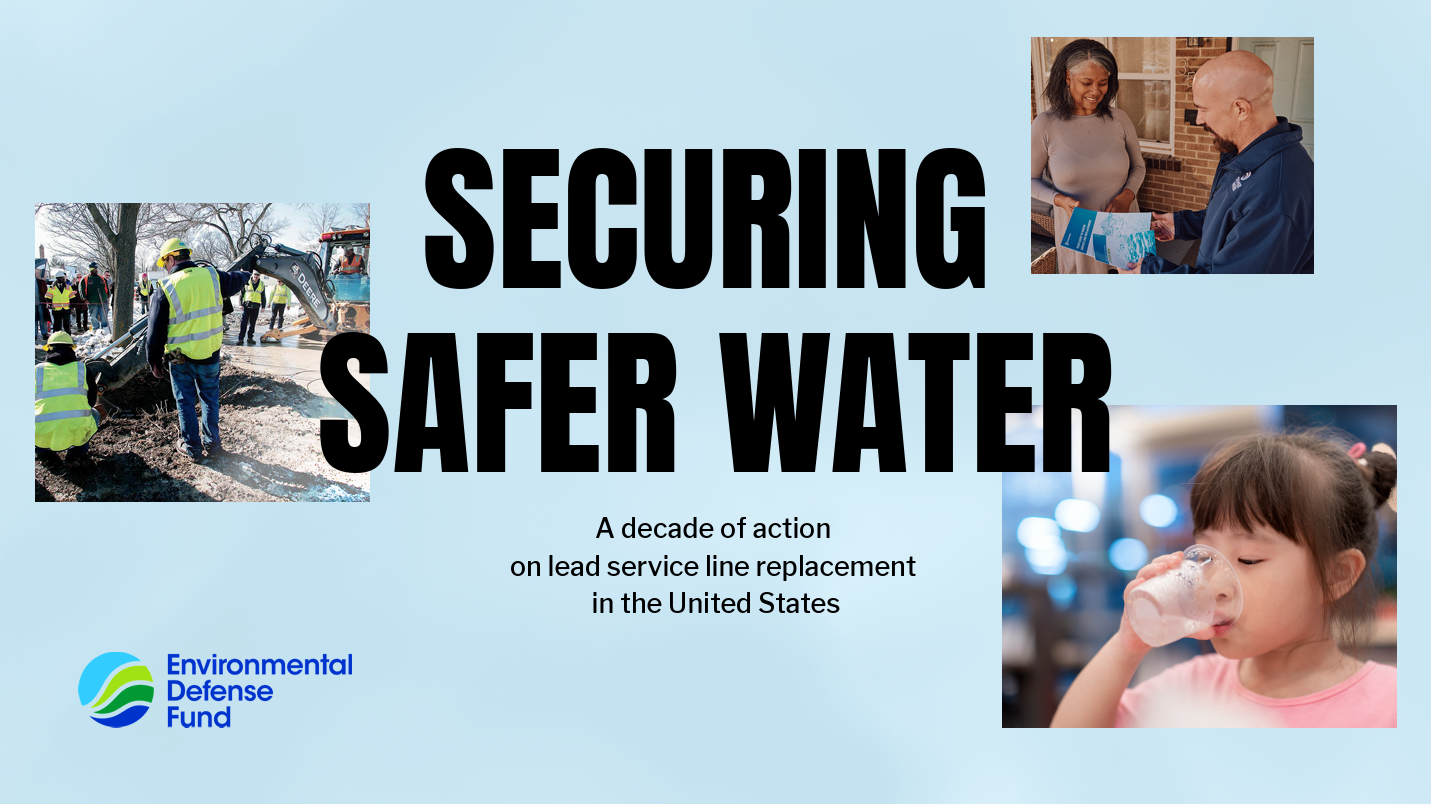
12 years since the Flint water crisis, we’re marking a decade of action on lead service line replacement in the United States.
What’s new: It’s been over a decade since lead pipe contamination events in places like Flint, Michigan and Washington, D.C. harmed thousands, awakening many to the toxic threat lurking underground in water systems across the United States. Since then, EDF has worked closely with a range of cross-sector partners to build national momentum for lead pipe replacement.
In a new look-back report, we’re taking stock of the remarkable progress we’ve made together, including founding a diverse national collaborative, the initiation of hundreds of city replacement programs across the country and billions in funding secured.
Why it matters: The health effects of lead exposure are vast and well documented. They include reproductive issues, low birth weight, high blood pressure, kidney problems, cardiovascular disease and developmental delays in children’s brains. For children under age six whose brains are still developing, lead exposure can carry deep lifelong consequences.
6 stats on progress against lead pipes: Let’s look at 6 key numbers that demonstrate what we’ve achieved together in the decade since.
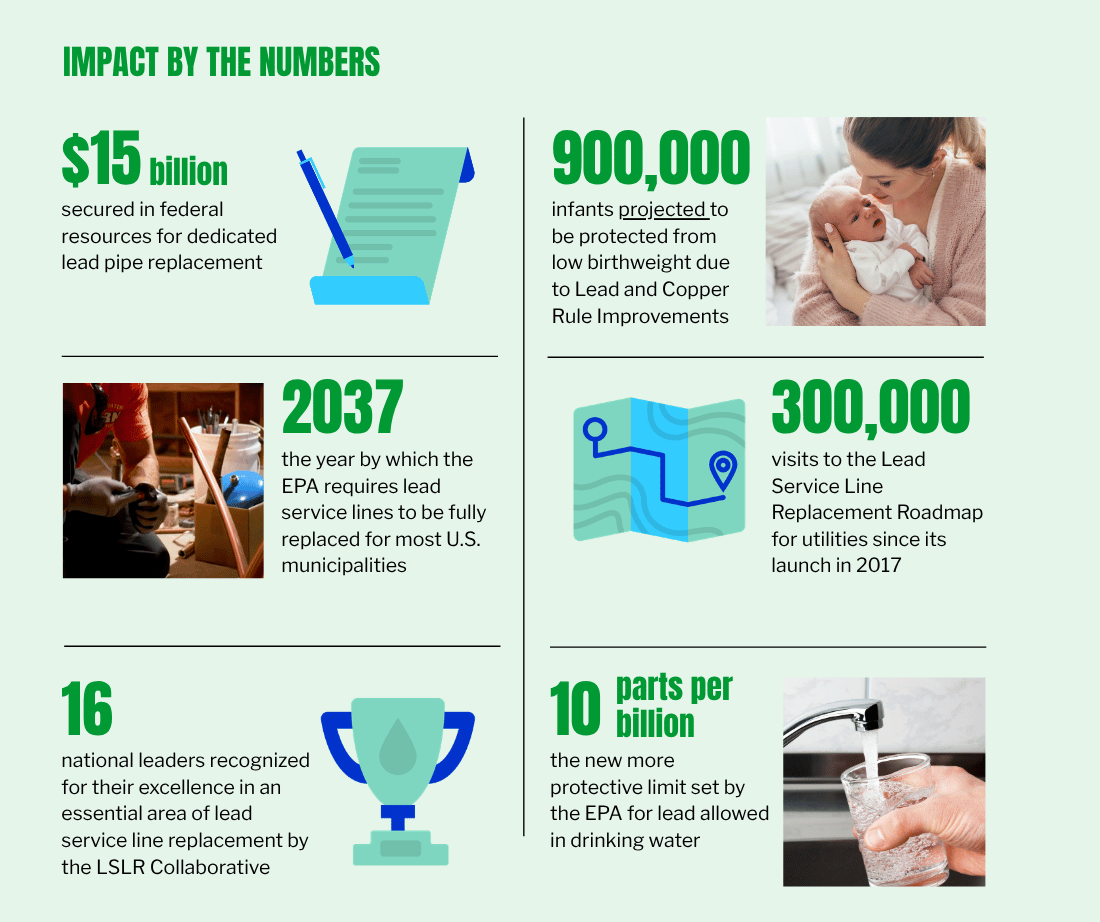
What we’ll need to finish the job: While substantial progress has been made, we know the job is not yet done, with millions of toxic lead service lines still in operation nationwide. That’s why our report also uplifts the most salient lessons our community has learned through this 10-year effort that can guide and advance future action — national, state and local — needed to secure a future without lead pipes. We invite readers to explore those in the full report.
What’s next: In the 10 years since the creation of the Lead Service Line Replacement Collaborative, hundreds of communities have taken action and a federal mandate to remove virtually all lead pipes by 2037 has established a clear path forward. Federal resources are also helping communities accelerate progress. The next steps are clear: build on the progress to date, maintain the momentum and funding, and finish the job of removing lead service lines.
With continued support and commitment from local, state and federal government officials, civil society in affected communities, utilities, public health agencies and advocates; we can get this job done and improve hundreds of thousands of lives.
Read the full report: You can view our full 10-year look-back report here. To get the latest information and resources on lead service line replacement, please check out the Lead Service Line Replacement Collaborative and the Lead Innovation Hub.