









The myth of the innovation tradeoff: Our chemical safety law protects health without stifling progress
Posted: in
Chemical exposure, Chemical regulation, Deep Dives, Industry influence, PBTs, Public health, Regulation, Risk assessment, Rules/Regulations, TSCA, TSCA reform, Vulnerable populations, Worker safety
Written By

Share
The Toxic Substances Control Act is the primary safety law protecting Americans from harmful chemicals in everyday products. Bipartisan updates in 2016 strengthened the law by giving EPA the authority and responsibility to evaluate new chemicals more effectively, and to protect vulnerable populations, including children, pregnant women and those who work at or live by facilities that produce these chemicals. Under the updated Toxic Substances Control Act, a critical baseline was established: the process of manufacturing a new chemical cannot begin until the EPA has assessed its risks and given its approval through an evidence-based chemical safety review process.
Yet some industry players continue to put on a full-court press for changes that would weaken and undermine these public health protections. Contrary to industry narrative, the record shows that companies have continued to develop and introduce new products despite these safety requirements.
Let’s take a closer look at what is actually happening.
According to EPA, since the Toxic Substances Control Act was strengthened in 2016, EPA has evaluated the safety of nearly 2500 new chemicals. Of these chemicals, EPA has approved nearly 80% for sale and use in products, either with or without restrictions. Many of the remaining cases were withdrawn by the company, with only 1% not allowed to be commercialized either due to EPA needing additional critical information or being prohibited for safety reasons.
Additionally, EPA has granted 80% of exemptions — more than 2200 requests in total — from the full review process for chemicals with low environmental releases and human exposures. These chemicals can be commercialized, if approved, after a generally shorter review.
The Toxic Substances Control Act helps safely bring innovative technologies to market
Of these thousands of chemicals approved since 2016, EPA has approved hundreds of chemicals that are currently used in innovative products. These chemicals, often highly toxic ,are approved with restrictions so that their use does not present an unreasonable risk. For example, EPA has approved hundreds of chemicals used to make microchips, in lithium-ion batteries for electric vehicles, and heat transfer fluids for use at data centers. These chemicals include persistent bioaccumulative toxic (PBT) chemicals, mixed metal oxides, and the “forever chemicals” PFAS.
These chemicals are often highly toxic, which reinforces EPA’s review process that allows approvals— only with restrictions that ensure they do not present an unreasonable risk.
Innovation should not come at the expense of health
With the Toxics Substances Control Act protections, it doesn’t have to.
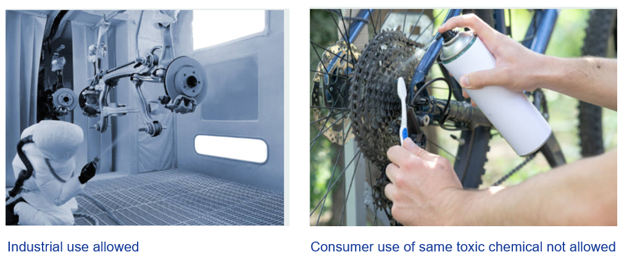
These highly toxic chemicals are often approved under restrictions which can look like requiring workers to wear gloves when handling certain chemicals, prohibiting the use of chemicals in a consumer product if they can cause allergic reactions or harm development, or not allowing PBT chemicals to be released into lakes, streams or contaminate groundwater because they can build up over time, increasing the potential for exposure.
These are limitations that most would consider to be eminently reasonable. 90% of Americans are concerned about chemical exposure in everyday products. Workers deserve to be protected. And Americans do not want PBTs in our environment.
Through the updated Toxics Substances Control Act, chemical innovation and environmental health protections are already advancing together.
The primary purpose of the Toxic Substances Control Act is “to assure that such innovation and commerce in such chemical substances and mixtures do not present an unreasonable risk of injury to health or the environment.”
[Public Law 94–469; Approved October 11, 1976]
The Toxic Substances Control Act is designed to protect against unreasonable health risks
The Toxics Substances Control Act tasks EPA with ensuring that new chemicals, including chemicals used in innovative technologies are manufactured, used and disposed of in a way that does not present an unreasonable risk to human health and the environment.
While the Toxics Substances Control Act states that authority over chemicals should not “impede unduly…technological innovation,” it further states this should be done while fulfilling the primary purpose of the Toxic Substances Control Act “to assure that such innovation and commerce in such chemical substances and mixtures do not present an unreasonable risk of injury to health or the environment.” To support continued innovation while protecting people and the environment, Congress must preserve the health protections provided by the Toxics Substances Control Act’s current chemical review process. Maintaining these safeguards is critical to keeping harmful new chemicals out of our homes, workplaces and communities while supporting the development and manufacturing of safer products and technologies.