Climate change solutions
We deliver game-changing environmental solutions that have a real impact for people around the globe.

Building resilient land and water systems that allow people and nature to prosper in a changing climate.
 At last week’s State Ag and Rural Leaders’ summit in Florida, legislators from across the U.S. discussed sustainability initiatives in the food supply chain. The conversations and presentations were informative for all – but what was missing from the conference was discussion about the role the private sector can play in supporting public sustainability initiatives.
State programs to support farmers
State programs can go a long way towards supporting farmers’ conservation efforts without economic downsides (and potentially increased revenues). (more…)
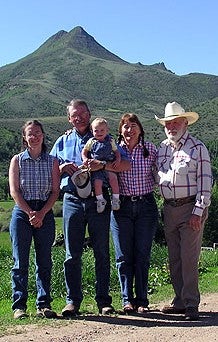
Pat O’Toole is a rancher and farmer at Ladder Livestock, a sixth-generation family operation on the Little Snake River along the Wyoming-Colorado border. A leader in collaborative conservation, Pat is engaged in a number of innovative land and water conservation efforts in his capacity as president of the Family Farm Alliance and a member of the AGree advisory board.
This past September, Pat co-authored an AGree paper with Dan Keppen, Executive Director of Family Farm Alliance. The paper – Securing the Future of Western Agriculture: A Perspective of Western Producers – addresses some broad challenges facing the global food and agriculture system. Namely, the need to meet future demands for food while simultaneously enhancing water, soil and other natural resources.
I recently had the opportunity to visit Pat’s ranch to get a sense of these challenges that he and other Western producers face, and to learn more about what Pat is doing to overcome these challenges on his ranch. I asked him to give us a recap of our discussion and to tell us more about his vision for the future.
(more…)
 Regulations and lawsuits generate more tension, disagreement, division, and, too often, failure to communicate, than just about anything else in the agricultural world. Regulations are on my mind of late because of several developments:
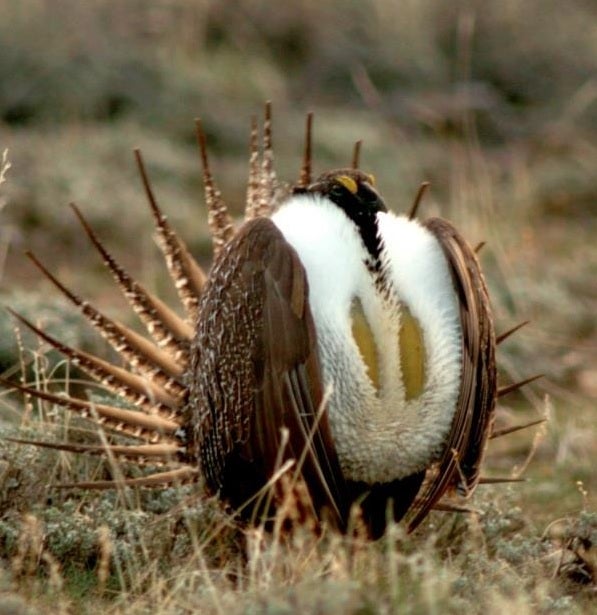
You may have seen a strange looking bird causing quite a stir in the news recently. That’s because there’s a lot at stake with the greater sage-grouse, especially now that a rider in the federal spending bill prevents the U.S. Fish and Wildlife Service from listing the species under the Endangered Species Act in 2015 (a decision was originally expected in September). But this delay isn’t stopping ranchers, conservationists and other key stakeholder from moving full speed ahead to find a solution.
You might not get this sense from the political dialog and the media, but out on the ground, there is a real spirit of cooperation when it comes to the greater sage-grouse. That’s because everyone realizes that – rider or no rider, listing or no listing – this bird needs help.
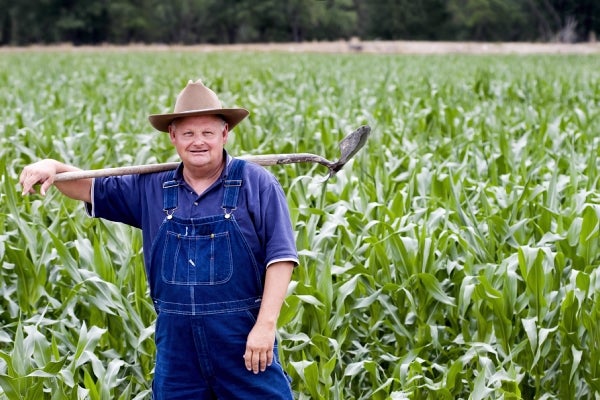 2014 was a milestone year for sustainable agriculture across the United States and around the world. In the U.S., we saw food companies and agribusiness like United Suppliers step up to the plate to meet Walmart’s new demand for sustainable grains, and EDF’s launch of the new Sustainable Sourcing Initiative. We also saw the launch of the United Nations’ Global Alliance for Climate-Smart Agriculture, which aims to enable 500 million farmers worldwide to practice sustainable farming.
On the Colorado River, countless stakeholders including U.S. and Mexican policymakers, conservation organizations and farmers came together to orchestrate and witness the Colorado River Delta pulse flow – the temporary release of water across the United States-Mexico border that brought relief and restoration to the dry, empty river delta ecosystem – an historic accomplishment for people and the environment.
The President’s Climate Data Initiative launched earlier this year to bring vast amounts of government data together in one place for communities and businesses to use when making decisions in the face of climate change. Last week, the Department of Interior and other executive branch offices released more data specific to water and ecosystems, as well as new geospatial tools, that will help natural resource managers – including farmers – better prepare for the future.
The newly released data sets include critical information about stream flow, soil, land cover and biodiversity, and are complemented by tools that will enable users to visualize and overlay data sets related to ecosystems, land use, water and wildlife. Together, the new data and tools will help farmers build resilience to the impacts of changing weather. (more…)
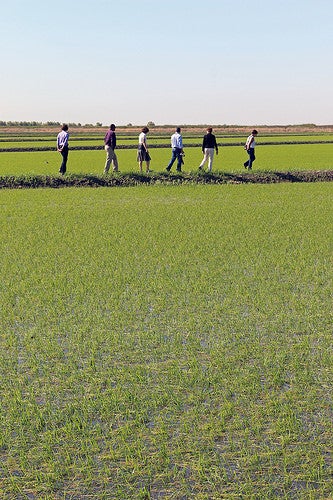 A significant milestone was achieved today in the California cap-and-trade market. For the first time, the California Air Resources Board (ARB) considered a land-based carbon offset protocol that will allow U.S. rice growers to earn additional revenue for reducing greenhouse gas emissions from cultivation.
This is a big deal. U.S. agriculture has tremendous potential to not only provide the nation with the food we eat, but also the climate solutions we need to sustain our growth.
Farmers grow carbon credits
The protocol covers rice cultivation practices in both the Sacramento Valley of California and the Mississippi River Valley, which encompasses Missouri, Arkansas, Mississippi and Louisiana. Growers here can implement any combination of three practices – dry seeding, early drainage or alternate wetting and drying – and collect data to be independently verified to create a carbon credit.
Nearly two dozen farmers have already expressed interest and are starting to gear up their operations to generate offsets in the spring of 2015. (more…)
Can a little pill solve the problem of fertilizer waste? It sounds futuristic, but it could become a reality in the next 10 years, according to recent article on AgWeb.com.
The article highlighted new developments in nanotechnology aimed at creating a “fertilizer pill” that could detect chemical signals from plant roots and release nitrogen according to those signals. The pill would allow for nitrogen to be released on an as needed basis, thereby reducing fertilizer waste byproducts that are harmful to the environment.
Although fertilizer has undeniable benefits for crop yields, excess fertilizer that runs off into our waterways is damaging to rivers, oceans and the climate.
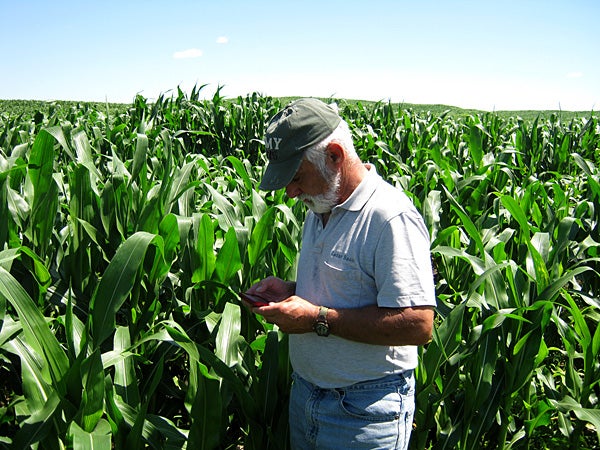 It is no surprise that information has value in the technology age. A recent article in the New York Times spotlights an Indiana farming family to show how information is shaping 21st century agriculture.
Kip Tom, a seventh-generation farmer, is riding the wave of agricultural consolidation that, since the 1980s, has led to bigger farms, bigger technology, and now, bigger data.
Bigger revenues have come along with this transition. Tom says better data analysis has raised his return on investment over seven percent – from 14 percent to 21.2 percent.
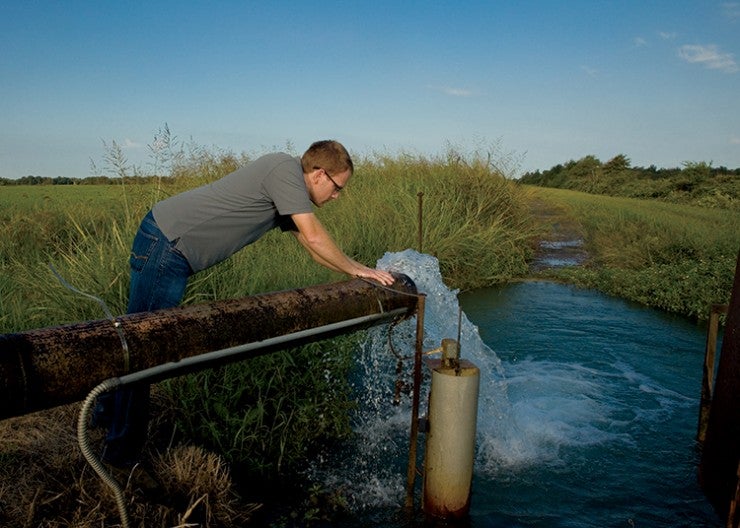
Mark Isbell is a rice farmer in Arkansas. He is participating in a pilot project to generate carbon credits by modifying growing practices to reduce the generation of methane and save water.
These practices are being considered by the California Air Resources Board at their meeting on December 18. I asked Mark to tell me why he got involved in this pilot and what it means to growers in his region.
What things did you consider as a part of participating in the agricultural carbon market?
Zero Grade (fields precisely leveled to have no slope) and Alternate Wetting and Drying (AWD) are the primary practices we have implemented. These are the best candidates for creating carbon offsets while also increasing efficiencies in other areas. Careful nitrogen management is another practice. Extra nitrogen not only leads to unnecessary nitrous oxide emissions, but also provides no benefit to the crop. It can actually be detrimental. The key is finding just the right amount of nitrogen. We are open to trying other practices as we move forward, and have some new ideas in development that we believe may add another layer to this. (more…)