Climate change solutions
We deliver game-changing environmental solutions that have a real impact for people around the globe.

Building resilient land and water systems that allow people and nature to prosper in a changing climate.

The easiest way to tackle fertilizer pollution is to lower the amount of nitrogen applied to crops, thereby reducing nutrient losses into the air and water. The problem is, reducing fertilizer rates can also shrink crop yields, which means less income for farmers and less food on our plates.
So here’s the question: how can we slash nitrous oxide emissions from agriculture without sacrificing productivity?
To meet this challenge, scientists need to understand the relationship between “nitrogen surplus” (the amount of applied nitrogen fertilizer not taken up by the plant), “nutrient use efficiency” (the ratio of how much yield you get from each pound of fertilizer applied) and nitrous oxide emissions that contribute to climate change. The more nitrogen a plant absorbs, the less it releases into the air in the form of nitrous oxide and into the water where it can contribute to harmful algal blooms. (more…)

Traditionally, governments haven’t factored farms and ranches into their climate mitigation and adaptation planning. Instead, the focus has mostly been on protecting urban communities. But that is all changing. At the National Adaptation Forum earlier this month in St. Louis, agriculture was top-of-mind in discussions about reducing emissions and building resilience to climate change.
That’s because in order to protect people, 81 percent of whom live in urban areas, we’ll need to protect what’s around where they live, too. It’s largely rural areas, like the farming town of 1,100 people where I grew up, whose working lands and farms provide valuable services to urban areas. These services include food security, flood and drought protection, recreation and water storage. Agriculture can also play (and is already playing) a big role in reducing greenhouse gas emissions.
The more resilient we can make agriculture, the better off we’ll all be. (more…)
 A new Purdue University study released this week found that agriculture will create nearly 60,000 jobs each year for the next five years. But to meet this growing demand, more students will need to graduate with agricultural degrees. And as the deputy secretary of the U.S. Department of Agriculture said in a recent interview, the farming sector must do more to work with students and the educational system as a whole.
That’s where growers like Brent Bible come into play. Brent is inspiring the next generation of farmers, scientists, researchers, and agronomists through his work with Purdue students who help him operate his 3,000-acre grain farm in Indiana. He’s also promoting soil health, nutrient efficiency, and sustainable agriculture through changes in on-farm practices.
I asked Brent, a former Indiana state police officer, about his transition to the agricultural world, his work with the Soil Health Partnership, and what gets him out of bed every morning. (more…)
 Mark Bittman’s recent New York Times op-ed, “Let’s Make Food Issues Real,” is a grim assessment of the current state of the food movement – in fact, he questions whether a food movement exists at all.
Bittman states that the lack of major change to government food policies means the food movement is not winning. “I’ll believe there’s a food movement when Hillary Clinton and Jeb Bush are forced to talk directly about food issues,” Bittman writes.
I’ll take that bet. With the drought in California threatening the nation’s produce and the other impacts climate change pose to our food supply, I think it’s likely that the next group of presidential candidates will discuss food issues on the campaign trail. (more…)

Unreliable water supply and quality is a source of enormous risk to the agricultural sector. That was the key takeaway of a new report from Ceres that evaluated 37 of the world’s leading agriculture, beverage, meat and packaged food companies to see how they are managing risks from diminishing water supplies and water quality.
In a nutshell, companies need to improve their performance.
Companies use huge amounts of water in the production of crops, which also affects water quality when nitrogen fertilizer not absorbed by plants runs off into waterways. (more…)

California Governor Jerry Brown issued an executive order this week ramping up the state’s already ambitious greenhouse gas reduction goal, setting a new target to reduce emissions by 40 percent over 1990 levels by 2030.
“With this order, California sets a very high bar for itself and other states and nations, but it’s one that must be reached — for this generation and generations to come.” – California Governor Jerry Brown
This new target is a timely and significant step in securing a more resilient future for California, which is currently experiencing one of the most severe droughts in the state’s history. But it’s a tall order – and one that will require an array of aggressive strategies across all sectors.
Fortunately, crop-based farmers are well-positioned to help. (more…)

Corn affects every person in the United States.
It is grown on about 90 million acres, an area roughly the size of Montana. Corn is ubiquitous in the products we buy, from shampoo and sodas to ethanol and animal feed.
The crop also uses the majority of nitrogen fertilizer in agriculture, requiring more nitrogen than soybeans, cotton and wheat combined. Nitrogen is necessary to produce corn. But when nitrogen is over-applied, crops cannot absorb it all – and this can lead to air and water pollution.
Fortunately, figuring out ways to use nutrients more efficiently to reduce loss improves a farmer’s bottom line. It also gives them a competitive advantage, as more and more food companies are embracing sustainability and fertilizer efficiency as a way to reduce risk in their supply chains. (more…)
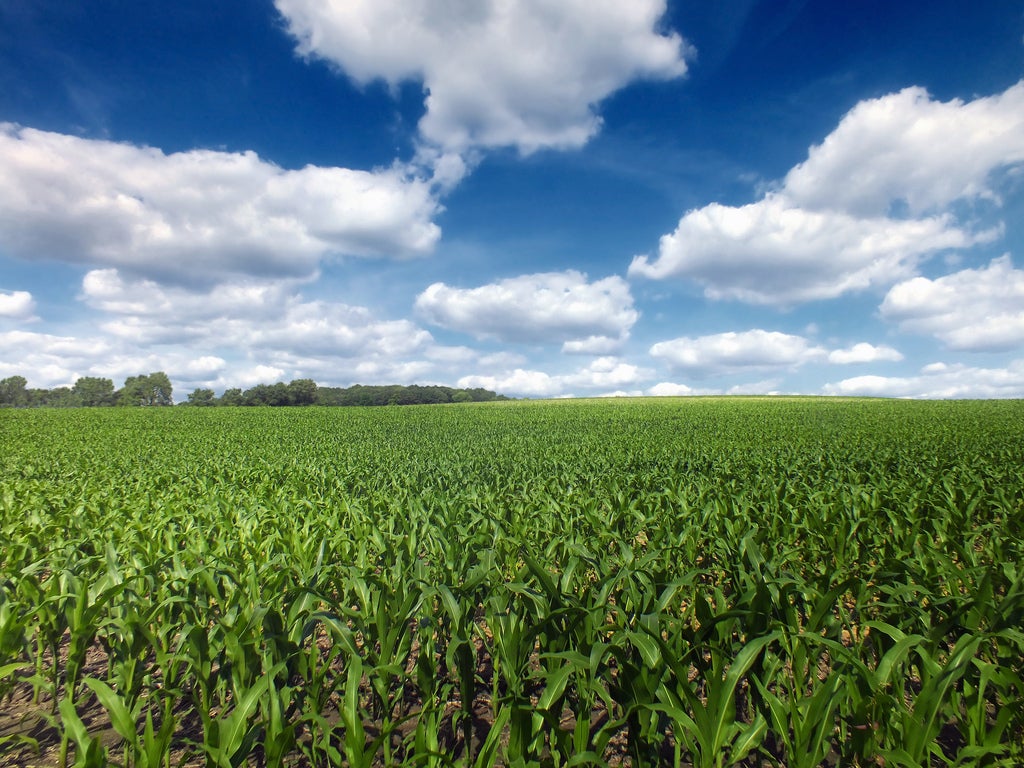
The U.S. Department of Agriculture just announced a new national climate strategy aimed at reducing emissions from the agriculture and forestry sectors. USDA will partner with farmers and ranchers on voluntary and incentive-based approaches to implement climate-smart agriculture techniques and programs. This approach will also ensure that crops are resilient to increasing fluctuations in weather and climates, and that farmers’ livelihoods are protected.
The new focus on ‘cooperative conservation’ is a huge step in the right direction.
America’s farmers face a challenge: increase productivity to feed a growing population, but do so in an era where climate is becoming increasingly unpredictable, with warmer growing seasons, droughts, and floods. Farmers are also called upon to increase production in a way that reduces greenhouse gas emissions. This is a tall order, given that if we continue with current farming practices agriculture could be responsible for 70 percent of the planet’s greenhouse gas emissions by 2050. (more…)
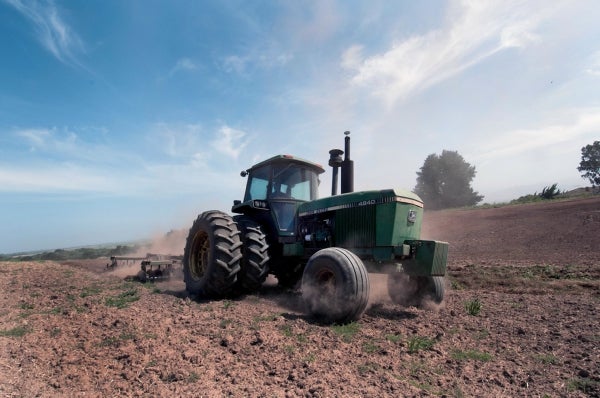 As spring planting season gets underway, many farmers are starting to wonder how much nitrogen they should apply to their crops this year to maximize yields.
The traditional approach is to apply a bit of extra fertilizer as an insurance policy to protect yields in case some of it washes away. The problem is, this is costly – nitrogen fertilizer accounts for at least half of farmers’ input costs, even though on average, 50 percent of the nitrogen applied is lost – and harmful to air and water quality.
What we need is to get to a sweet spot of fertilizer application – meaning the right amount that both protects natural resources and maximizes yields.
I asked Thomas Morris, professor of soil fertility at the University of Connecticut, about ways that research, precision agriculture tools, and data analysis can help farmers determine the right amount of fertilizer to apply to their crops. (more…)
Last time you went to the grocery store, did you notice that your pineapple was from Costa Rica, your pears from Argentina, your edamame from China, your salmon from Scotland, and your rice from Thailand?
To address the true environmental impacts of agriculture, we’ll need to think beyond our borders. And to alleviate environmental impacts in countries around the globe, we need to first understand the context of farming in these places.
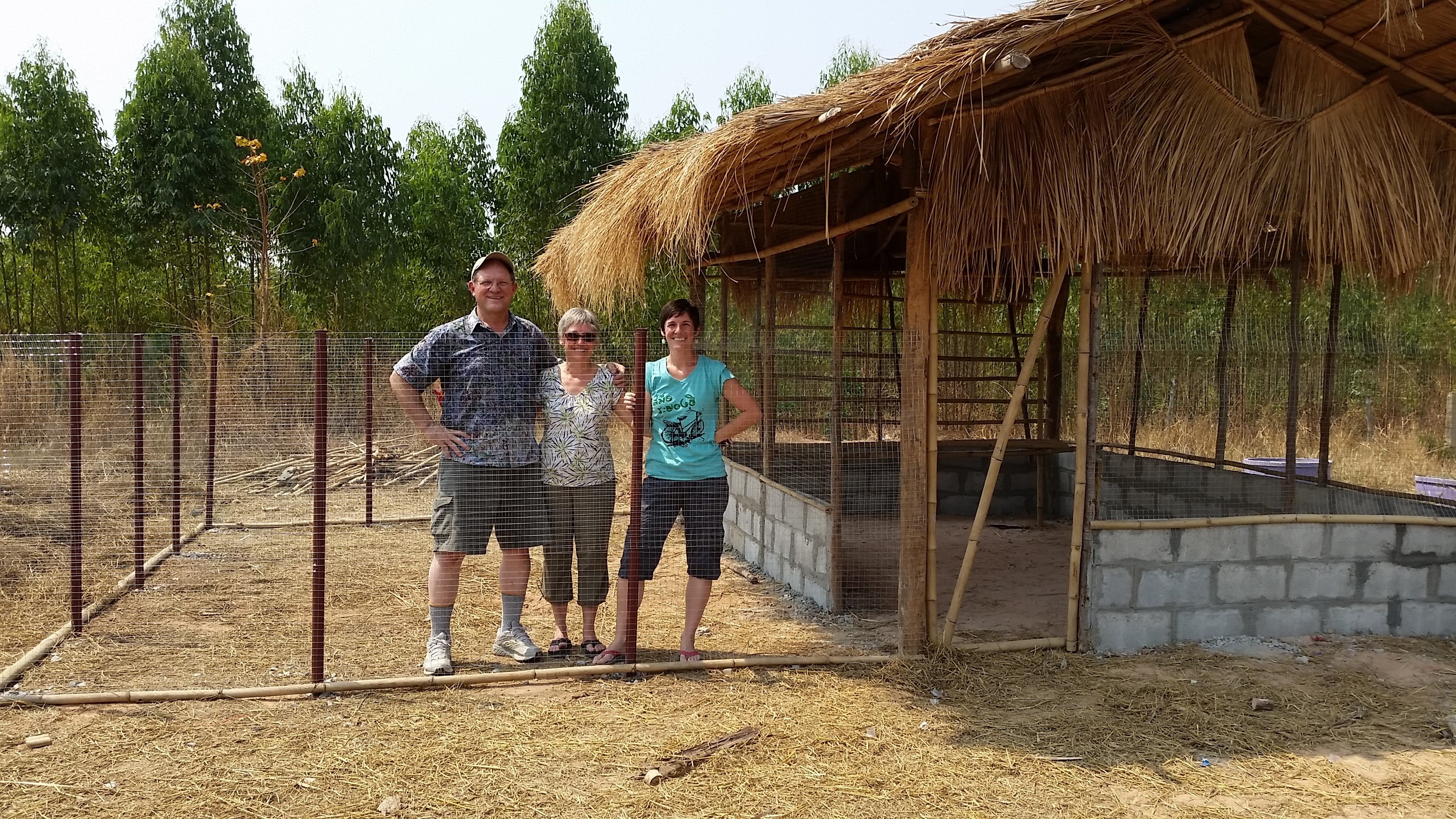
I asked Dick Wittman, who manages a 19,000-acre dry land crop, range cattle and timber operation in northern Idaho and runs a farm consulting business, to tell me what he and his wife learned about farming and environmental challenges on their recent trip to Thailand. (more…)