








The Common Goals of the Pope and Clean Energy
Written By

Share
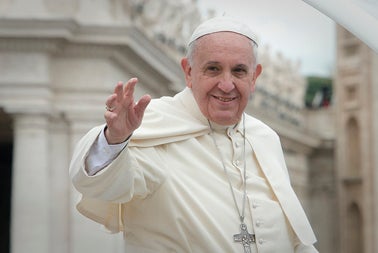 Pope Francis turned a keen eye toward the environment and the problem of climate change with his encyclical,“Laudato Si” (“Praised Be”), released yesterday. As a clean energy advocate, I’m heartened that Pope Francis recognizes the need to transform our energy system.
He writes not as a scientist or politician, but as a pastor and spiritual leader. He offers moral guidance rooted in an “integral ecology” based on fundamental Catholic teaching about care for all creation. And while we can and should measure, analyze, and debate climate change using the tools of science, we cannot hope to find adequate solutions without a shared moral understanding of what it means to take care of each other and the planet. That’s not just the Pope’s idea, either – that’s the argument of world renowned economist Jeffrey Sachs and others.
A leading voice without political boundaries, the Pope has the ability to reach people who previously could not or would not face the reality of climate change and, ultimately, inspire action.
Clean energy at the heart of the matter
Before yesterday’s encyclical was released, the declaration from the Vatican summit on climate change in April (attended by prominent scientists, economists, and leaders from various faiths) already called strongly for new incentives to increase adoption of clean energy systems and accelerate the transformation to a low-carbon energy world.
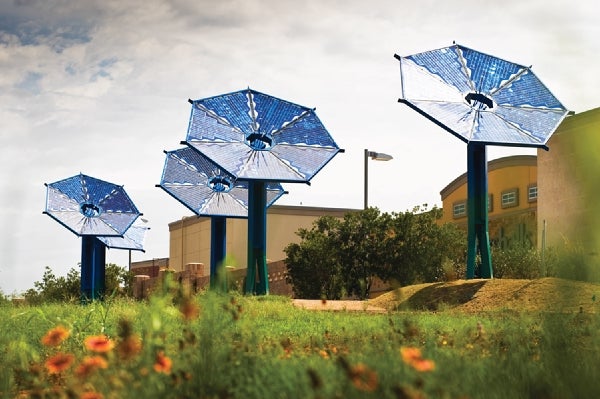
In his encyclical, Pope Francis renewed that call, focusing on the vast environmental and societal benefits of clean energy. From an economic perspective, clean energy technologies like solar and wind power are already cost-competitive with fossil fuels, and from a moral perspective, they’re consistent with the Pope’s message of solidarity and care for others – especially the poorest among us.
Innovations like demand response, distributed power, community solar installations, and microgrids all put the customer at the center, not only revolutionizing the way the energy industry works, but, just as importantly, empowering individuals to make better energy choices and reap the economic benefits.
Further, these types of clean energy advancements offer improved resiliency and reliability for the world’s poorest – whether in the in the U.S., developed countries, or the developing world – many of whom reside in rural or remote areas that are most vulnerable to public health and extreme weather disasters.
As we navigate the transition to a low-carbon world, Pope Francis’s encyclical changes the tenor of the conversation, bringing the moral dimensions of clean energy to the forefront, and, I hope, hastening the drive toward practical solutions.
A call for action
As a Catholic, I understand that care for other people and the environment is an essential part of my faith, and as a citizen, I understand that engagement with fellow citizens on this issue is the only way to affect positive change.
“Laudato Si” has appeared just months before Pope Francis addresses the U.N. in New York this September and, more importantly, in good time to catalyze meaningful action during the U.N. climate conference in Paris in December. Climate change is a moral issue that transcends all divisions, and we should recognize that Pope Francis’s encyclical is not simply a product of religious faith, Catholic or otherwise, but also a renewed call for faith in one another – to overcome dissent, to work together, to rise to meet the challenge.
And that’s not a prayer. That’s a mandate.
This post originally appeared on our EDF Voices blog.
Photo source: Jeffrey Bruno