









Does global climate action have a future?
Written By

Share
As leaders gather for Climate Week NYC, progress on methane, groundwater and wildfire preparedness shows how international cooperation can strengthen — rather than replace — local action.
By Angela Churie Kallhauge, Executive Vice President, Impact, Environmental Defense Fund
As global leaders arrive in New York for Climate Week NYC 2026 and the United Nations General Assembly, an important question hangs over their discussions: Does multilateral climate action still have a future?
This will be the final UN General Assembly of António Guterres’ term as UN Secretary-General. A stalwart climate champion, Guterres has used his tenure to elevate the urgency of climate action, including through the Early Warnings for All initiative and a global call to accelerate cuts in methane emissions. He leaves the office, however, at a moment when nationalism is rising, trust among governments is strained, and international institutions face acute financial pressures.
These interconnected pressures — along with conflict, volatile energy and food markets, and extreme weather — are also a reminder that joint action can achieve what countries and communities cannot accomplish alone.
The answer cannot be cooperation for cooperation’s sake. Multilateral action will retain its relevance only if it delivers tangible results for people. That requires connecting international ambition with national and subnational policy, finance, and local implementation.
Three urgent climate challenges show what it can look like when we leverage global collaboration.
Building sustainable energy security through methane action
Energy security is understandably high on political agendas as people around the world grapple with high costs. But it cannot be defined only by how much energy is produced. It must also consider how efficiently resources are used, how resilient systems are to disruption and whether today’s decisions create greater risks tomorrow.
International cooperation can help countries build up those factors to support their energy security by providing national and subnational leaders with better data, finance and policy support to act.
Our global methane challenge illustrates why collaboration is essential: The primary component of natural gas, methane traps more than 80 times as much heat as carbon dioxide over a 20-year period. Cutting it can slow warming in the near term, reduce energy waste and — when controls also address associated pollutants — help improve air quality.
Many solutions already exist, including finding and repairing leaks, replacing high-emitting equipment, and ending avoidable venting and flaring. The challenge is to align policy, data, and finance so these measures can be deployed both locally and at-scale.
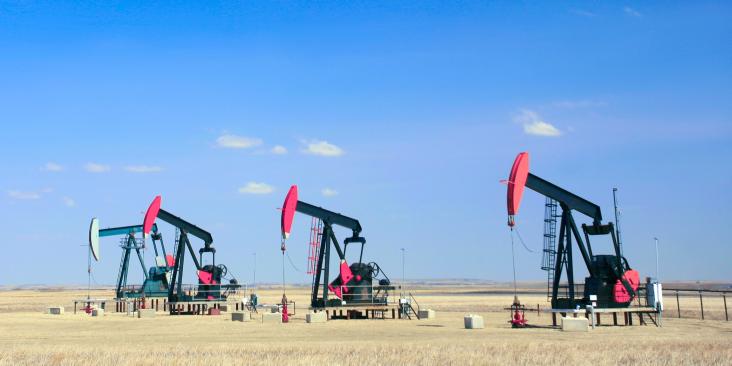
New Mexico demonstrates the role of subnational leadership. Since the state began implementing methane rules in 2021, MethaneSAT observations have shown that its methane emission rate in a portion of the Permian Basin was less than half that of neighboring Texas. Over the same period, New Mexico captured about $125 million worth of natural gas in the region, generating approximately $27 million in additional tax and royalty revenue. The state has now proposed strengthening its response by establishing a super-emitter response program and requiring zero methane emissions from natural gas-driven pneumatic controllers beginning in 2031. Stronger standards supported by transparent data and consistent enforcement can reduce pollution and energy waste.
International climate cooperation can reinforce such action by sharing knowledge, mobilizing finance, and establishing common expectations.
Global momentum is also growing, bringing subnational leadership into a mosaic of methane movement. The United Nations Secretary-General’s Call to Action on Methane offers a practical roadmap for bringing governments, industry and financial institutions together around proven, cost-effective measures. Support from King Charles III and other global leaders has also helped elevate action on methane and other powerful short-lived climate pollutants. EDF contributes by advancing methane science, improving emissions data, informing policy and helping direct finance toward measurable reductions.
That is what effective multilateralism should do: not displace local leadership, but make it more effective and connected to a global effort.
Better groundwater data, stronger local decisions
Groundwater presents another test of the same principle: international cooperation can widen access to data and tools while enabling stronger local decisions. It supplies roughly half of global domestic water use and supports more than 40% of irrigated agriculture. Research has found groundwater levels declining in approximately 70% of monitored aquifer systems.
Climate change is increasing the pressure. As rainfall becomes less predictable and surface water is less reliable, farmers, households and cities depend more heavily on groundwater. Without effective management, that dependence can accelerate depletion and put ecosystems and household wells at risk.
The challenge is not only scarcity; it is how we govern a shared, largely invisible resource. Lasting solutions must combine better information with community-led stewardship and meaningful local participation.
OpenET shows the potential of this approach. The platform uses satellite data and analytics to provide accessible information about evapotranspiration — the water transferred from land to the atmosphere through evaporation and plant use. These data can help farmers and water managers understand water consumption, improve decisions, and evaluate whether policies are working.
Technology is not a substitute for trust, inclusive governance, or local knowledge. But international cooperation can expand access to useful tools and help communities learn from one another while keeping decisions grounded in local realities.
Turning wildfire commitments into preparedness
Destructive fires in Canada, the western United States, France, Spain and elsewhere underscore the importance of investing in prevention and preparedness, not only emergency response.
But what does that look like in tropical landscapes where fire regimes are intensifying and fire management infrastructure is nascent? International collaboration can serve as a forum for resource and knowledge sharing between countries and communities to address these emerging challenges.
Wildfires in the Amazon region, for example, are no longer seasonal events and have emerged as one of the major threats to vital forests that help stabilize our global climate. Over the past decade, fire scars in the Brazilian Amazon have covered an area larger than France – 62 million hectares.
The Wildfire Action Accelerator, launched at COP30 by EDF, together with civil society partners from 18 countries and regions, seeks to translate international attention into practical capacity. The Accelerator hosts workshops and convenes these partners to address growing fire risk in the region. In Cuenca, Ecuador, training for specialist brigade members in integrated fire management shows how national commitments can strengthen local skills, institutional coordination and readiness before emergencies occur.
Cooperation must deliver
Solutions to these challenges must deliver multiple wins. Cutting methane supports climate, clean air, and energy security. Better groundwater management protects people, food systems, and resilience. Wildfire preparedness helps build safer, healthier communities.
At EDF, our role is to connect science, policy, finance and implementation — working with partners to turn commitments into measurable progress. No organization, government, or sector can deliver the necessary change alone.
So, does multilateral climate action have a future? Yes, but it must earn confidence by improving people’s lives. That is the opportunity at Climate Week NYC: to show that global cooperation is most powerful when it equips people to act locally.
In a period of fragmentation, working together may be more difficult. The challenges before us make it more necessary than ever.