








Designing carbon markets that work: How Asian policymakers are advancing credible ETS implementation
Posted: in News
Written By


Share
- Asia’s carbon market momentum is shifting from exploration to implementation. Governments across South and Southeast Asia are designing emissions trading systems, strengthening MRV and data infrastructure, and aligning carbon pricing with competitiveness, affordability and economic development goals.
- Capacity building and peer learning are critical to high-integrity ETS design. The ICAP Asia Summer School, delivered with EDF and partners, helped policymakers and NGOs explore global carbon market lessons and translate them into practical, regionally tailored approaches that can deliver verifiable emissions reductions at scale.
Across South and Southeast Asia, governments are moving from exploring carbon markets to designing the policies, institutions, and data systems needed to make them work. As countries work toward increasingly ambitious climate goals, emissions trading systems (ETSs) are emerging as a key tool to reduce emissions while supporting economic development and competitiveness. Many governments are now grappling with the practical challenges of implementation: building robust monitoring and reporting systems, designing markets that fit national circumstances, addressing competitiveness concerns, and ensuring carbon pricing works alongside existing climate and energy policies.
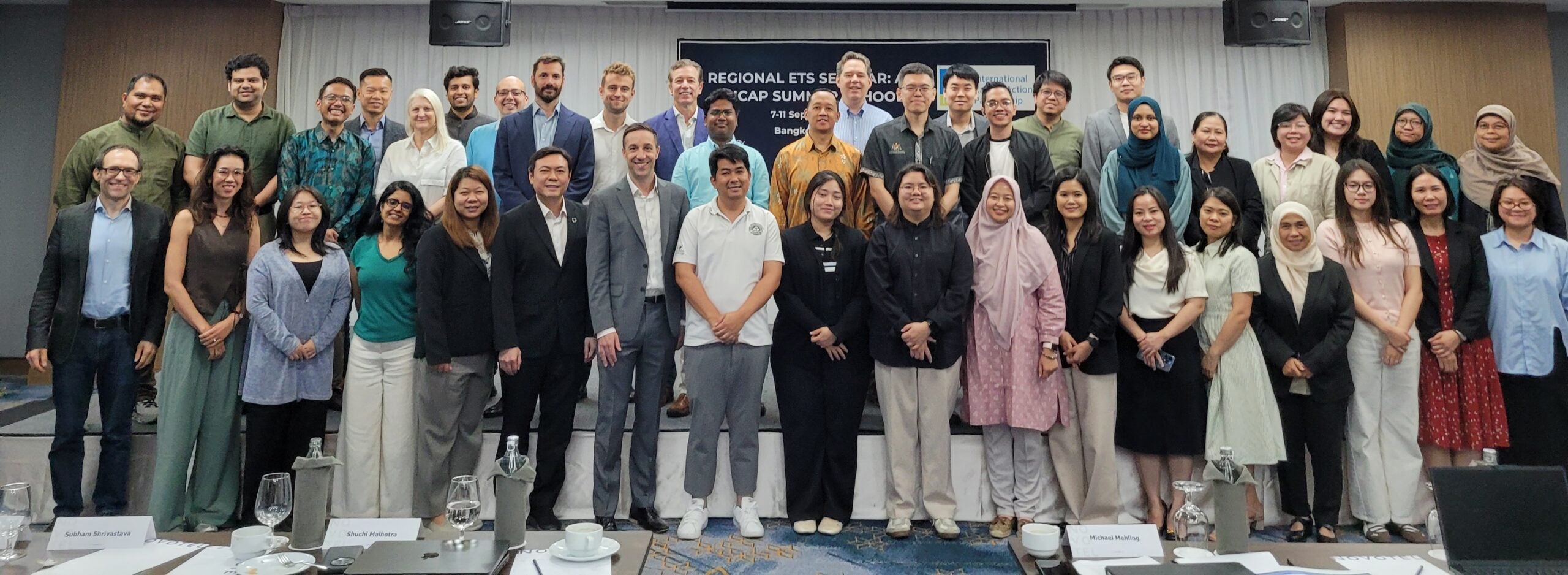
Last month, over 30 policymakers from India, Indonesia, Malaysia, the Philippines, Thailand and Vietnam gathered in Bangkok for a five-day intensive training on domestic emissions trading systems (ETS) to explore what it will take to build credible and effective carbon markets across the region.
The course marked the return of the International Carbon Action Partnership’s (ICAP) ETS Summer Schools funded under a new carbon pricing capacity building program from the European Commission. Alongside the Ecologic Institute and Get2C, EDF is helping to deliver this three-year global capacity building program to answer the question: How would an emissions trading system be designed and work in different countries?
Why now?
Emissions trading systems set a “cap” or limit on pollution from regulated entities, which need to surrender allowances to cover their emissions under this cap. One allowance translates to a tonne of emissions. Entities can either reduce emissions or trade allowances with each other. Over time, the cap tightens and emissions fall.
These systems are rapidly being developed in Southeast Asia as part of governments’ broader decarbonization strategies. Policymakers are looking beyond whether carbon markets can work and increasingly focusing on how to design systems that are credible, economically practical and compatible with existing policy frameworks. Questions around MRV readiness, institutional capacity, power market structures, industrial competitiveness, and interaction with other carbon pricing instruments are becoming central to ETS discussions across Asia.
A course shaped by regional concerns
The five-day course was designed off a pre-course questionnaire, which surfaced two clear priorities: building a carbon market with limited data and how those monitoring, reporting and verification systems can be strengthened over time, as well as concerns about how Asian economies can tackle climate change while still remaining competitive. Discussions focused on key decisions governments face when developing an ETS, including institutional capacities, governance frameworks, intensity-based cap, regulated prices in the power sector, market stability, and integrating carbon markets with a broader policy objective.
The sessions drew on real-world examples from guest speakers across Asia, Europe, and North America, including government regulators, capacity builders such as the World Bank and market experts from the Intercontinental Exchange, an auction and trading platform for carbon markets.
Building a carbon market in five days
Rather than presenting a single model, the program emphasized that successful carbon markets reflect local circumstances. Participants repeatedly explored how ETS design choices must account for differences in energy markets, industrial structures, institutional capacity and national development priorities.
A large share of the course was hands on, using a weeklong “Carbono” policy game where groups designed an ETS for a fictional country, presenting and defending their final design on the last day. Another interactive lesson was the half-day simulation “ETS Lab,” developed by the ICAP Secretariat and the World Bank Group that turned the tables on participants, asking them to play as regulated companies. From deciding whether to cut their emissions, trade allowances, buy credits or invest, participants were faced with the real consequences of their ETS design decisions, as well as how external factors like economic shocks could affect their compliance strategies and the ETS. Many named it as their highlight of the week.
Three key themes shared by emerging Asian ETS jurisdictions
While countries represented at the Summer School are pursuing different pathways, several lessons emerged consistently from discussions with policymakers and practitioners from around the world.
- Build credible markets from the outset: A carbon market is only credible and trustworthy if it delivers verifiable emission reductions. The foundation of this is robust data. The public and investors need confidence that a tonne emitted is a tonne accounted for. Credibility also means sending a long-term signal about the direction of the cap and ETS ambition early on. Even if the pilot phase gradually introduces elements of the ETS, this early signal helps countries plan investments.
- Carbon pricing supports competitiveness and affordability: Competitiveness and affordability concerns surfaced as the number one concern for every country in the room. Carbon markets have tested tools to address both. In particular, revenue raised from selling allowances can help companies navigate the green transition and protect households – especially low-income ones – from shouldering an undue burden. Though carbon prices are also rarely the main contributor to energy or commodity costs, which are often more influenced by fuel prices and raw materials.
- Design for your own country’s realities: While lessons from other jurisdictions are illustrative, they need to be tailored to the local circumstances, priorities and resources. In many countries in Southeast Asia for instance, the way a carbon price reaches power plants and electricity bills is not the same as Europe, where there are state-owned utilities and set prices requiring new analysis and policy adjustments. Many countries are also building an ETS alongside a carbon tax, international carbon credit trading, as well as domestic carbon crediting. These multiple systems and any overlaps need to be managed and accounted for.
Where do we go next?
Building credible carbon markets in Asia’s economies cannot be solved in a five-day course. But it does give participants a shared foundation, resources and an expert network to continue the hard work at home of building the data and legal systems these markets rely on. Many countries are no longer asking whether carbon pricing has a role to play. Instead, they are actively exploring how to build systems that deliver emissions reductions while supporting economic growth, competitiveness and energy transition objectives.
The momentum behind carbon markets in Asia is growing. The challenge now is translating that momentum into durable, high-integrity systems capable of delivering meaningful emissions reductions at scale.
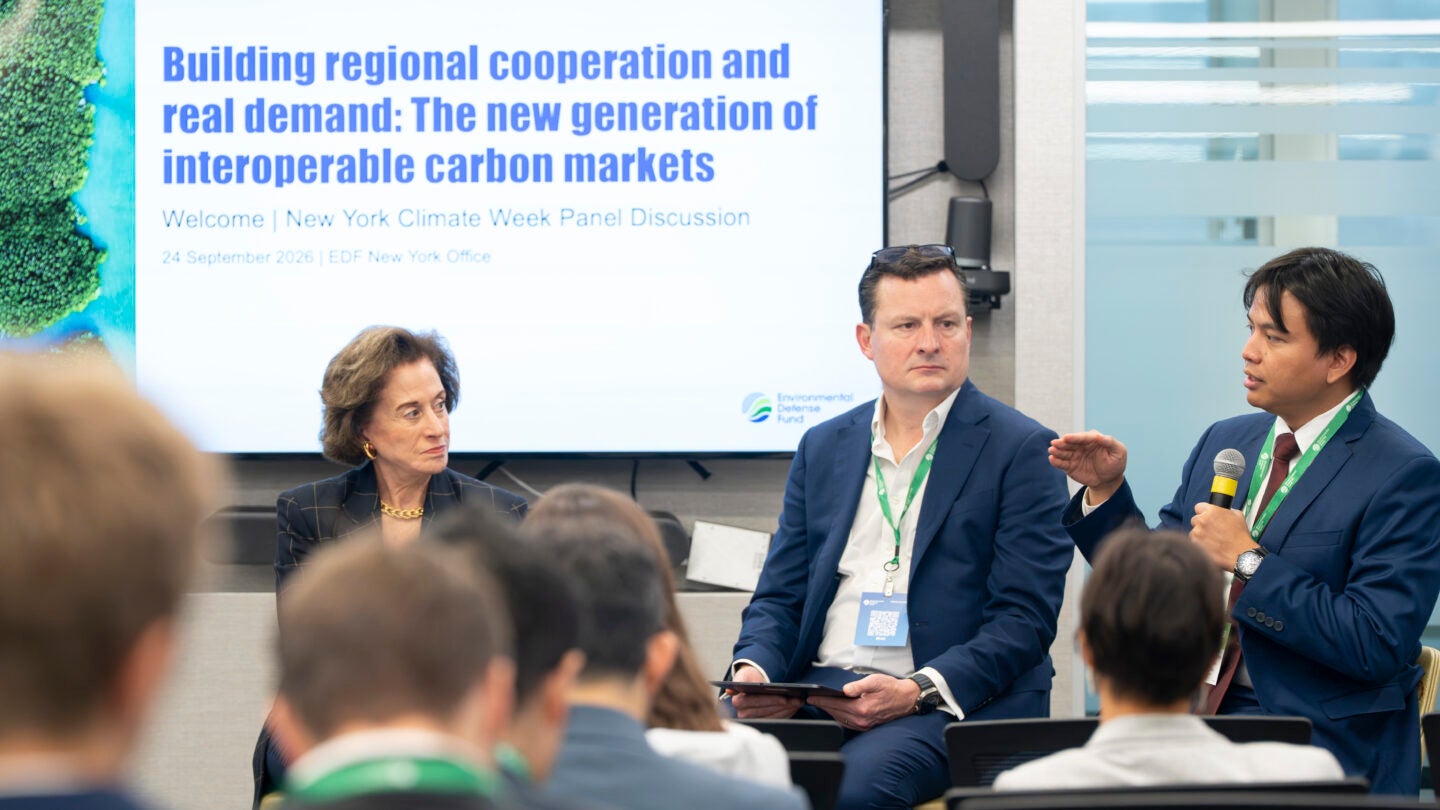
EDF will continue to support high-integrity carbon markets through the ICAP Summer Schools, our regional teams and our wider carbon market programs, including how we build trust and interoperability as discussed at New York Climate Week.
Click here if you want to learn more about other carbon pricing capacity development activities under this project. And for those ICAP Summer School alumni (and past speakers), there will be a reunion at COP31 on 18 November 2026 from 18:30 to 20:00 local time at the EU Pavilion (Blue Zone), Antalya, Türkiye (sign up here).