







Western electricity markets: Going further, together
Posted: in California, Cars and Pollution, Cities and states, Clean Power Plan, Energy, Greenhouse Gas Emissions, News, Policy
Written By


Share
“If you want to go fast, go alone but if you want to go far, go together.” This perfectly captures the journey to standing up a West-wide electricity market. After years of collaboration, Western states are now closer than ever to a true regional electricity market that can deliver cleaner, cheaper and more reliable power.
Background
In September 2025, Governor Newsom signed AB 825 into law, creating a path to a regional electricity market governed by an independent board made up of members from across the West. It is a major step forward in a decade-long effort to integrate energy systems across western states and improve regional coordination.
In December 2025, the Pathways launch committee adopted a series of corporate documents to enshrine the Regional Organization for Western Energy (ROWE), the new oversight body that will run the market envisioned in AB 825. Included in these documents were the ROWE’s bylaws, which contain a suite of public-interest provisions to ensure that the market will be the most transparent of any organized market in the country. To understand how far the West has come, it’s helpful to reflect on how it all started.
Electricity markets and the Western grid
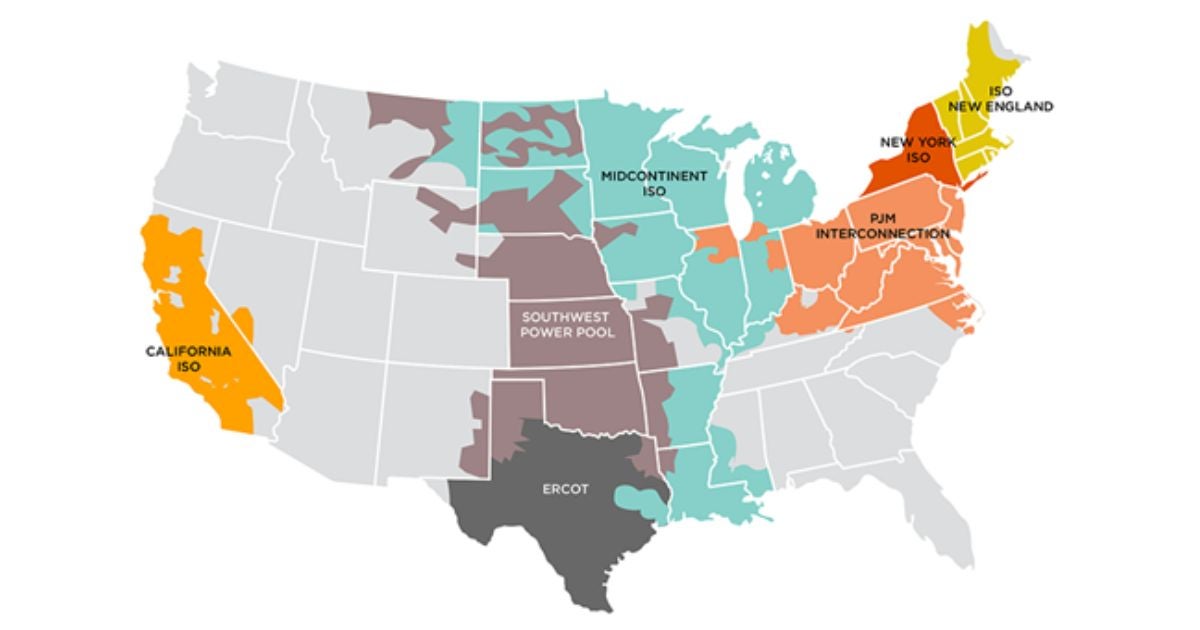
Unlike much of the United States, the electric grid across western states is not managed by a single market operator, commonly known as a Regional Transmission Operator (RTO) or Independent System Operator (ISO). Instead, 37 individual balancing authorities match electricity generation to demand in their jurisdiction and build the infrastructure to both supply and deliver that power. Each of these entities is responsible for balancing grid supply with demand, how much transmission infrastructure gets built and who they contract to buy and sell power from.
The fragmented nature of the Western grid creates significant inefficiencies, increasing the cost of sourcing and delivering power throughout the region, making it harder and more costly to deliver power where it is needed in moments of grid stress. A regional electricity market can alleviate these inefficiencies by increasing coordination and reducing the cost of trading power across utility boundaries, enabling better coordination and data-sharing, and ultimately enabling entities to trade power more cheaply across the West. The geographic footprint of these balancing authorities is large enough that trades amongst them would enable an electric grid that is “larger than the weather” — meaning an extreme event in one balancing authority would not impact several others. A robust market to trade electricity could help out specific areas when there is an extreme weather event. And with the effects of climate change becoming more real, these extreme weather events are only more likely to occur in the coming years.
To help facilitate real-time trades of electricity amongst the different balancing authorities, the West created the Western Energy Imbalance Market (WEIM). Launched in 2014 and currently operated by the California Independent System Operator (CAISO), the WEIM is a real-time energy market. By pooling resources regionally, WEIM allows participants to access the cheapest energy available in real time, which is valuable during events when localized shortages occur. WEIM has been an all-around success since its inception, growing to include over 20 balancing authorities covering about 79% of the load in the Western Interconnection and delivering an estimated $7.4 billion in gross benefits.
CAISO is in the process of building on WEIM’s success by establishing an Extended Day-Ahead Market (EDAM), a forward-looking market where energy trading is done a day in advance and generation is committed to meet forecasted demand for the following day. This kind of early commitment can reduce prices, enhance reliability, and support more integration of renewable energy onto the grid. Analyses of the EDAM demonstrate major benefits across the entire Western grid, in California as a whole, and to individual utilities including PNM, NVE, PacifiCorp.
For deeper dives on the cost and reliability upside, including savings for utilities that join EDAM and the value of a unified West‑wide market, see our recent posts:
- As California moves closer to authorizing a West-wide electricity market, new analysis shows how the market will benefit other Western states
- Growing body of research reveals high stakes for California leaders to get the details right in Senate Bill 540
Studies also have shown that a unified day-ahead market across the region would provide substantial benefits to participants, with additional services toward a full RTO providing even greater benefits. However, until now there has been one central challenge to this unified, coordinated market structure: how it is governed. A market designed to serve the entire West must be governed by the entire West. While previous attempts have been made to address governance concerns, none has succeeded and the result has been stagnation of regional market development, at least until now.
FERC also has a great explainer on energy markets in the Western United States.
Path to independent market governance
Launched in 2023, the West-Wide Governance Pathways Initiative (WWGPI) is a collaborative effort by regulators from several Western states, including Arizona, California, New Mexico, Oregon and Washington that was designed to bridge the governance challenge that has stymied expansion of Western markets (EDF has served on the Launch Committee of the Pathways Initiative since its formation). The goal of the Pathways Initiative is to create a structure that is truly independent and representative of the entire region, creating more opportunities for input and decision-making by parties that reflect the diversity and interests of the region as a whole.
This vision for a truly regional electricity market took an enormous step forward in September when California Governor Gavin Newsom signed AB825, which enables California’s electric utilities to participate in an independently governed regional market. Importantly, AB825 also affirmed state-level independence over electricity policy, making clear that participation in a regional market does not impede state policymakers’ authority to set utility requirements based on the priorities and needs of that state.
With the adoption of AB825 into California law, the Pathways Initiative moves to its next phase: the creation of the Regional Organization for Western Energy (ROWE) — a fully independent entity with exclusive authority over both WEIM and EDAM, as well as potential future market offerings.
What comes next?
The ROWE will manage both the existing Western markets (EIM and EDAM) and new market mechanisms, including resource adequacy, with others that can be added over time. The ROWE will be governed by a fully independent board, separate from CAISO, whose members will be nominated by market stakeholders. The new corporate governance documents, including the bylaws that will be submitted this year, set a new standard for transparent, responsive, and effective electricity market governance. The only market operator in the country with an Office of Public Participation, modeled on FERC’s own Office of Public Participation, to facilitate greater input from organizations beyond just utilities.
With AB825 now law in California, a fully integrated West-wide electricity market is within reach. While there is much more work to do in the years to come, it is important to recognize the progress that has happened to date.