








From water bankruptcy to hope: How a grassroots movement in Arizona made history (Part 1)
Written By

Share
When wells go dry, neighbors decide to show up
Read Part 2 of this special feature here.
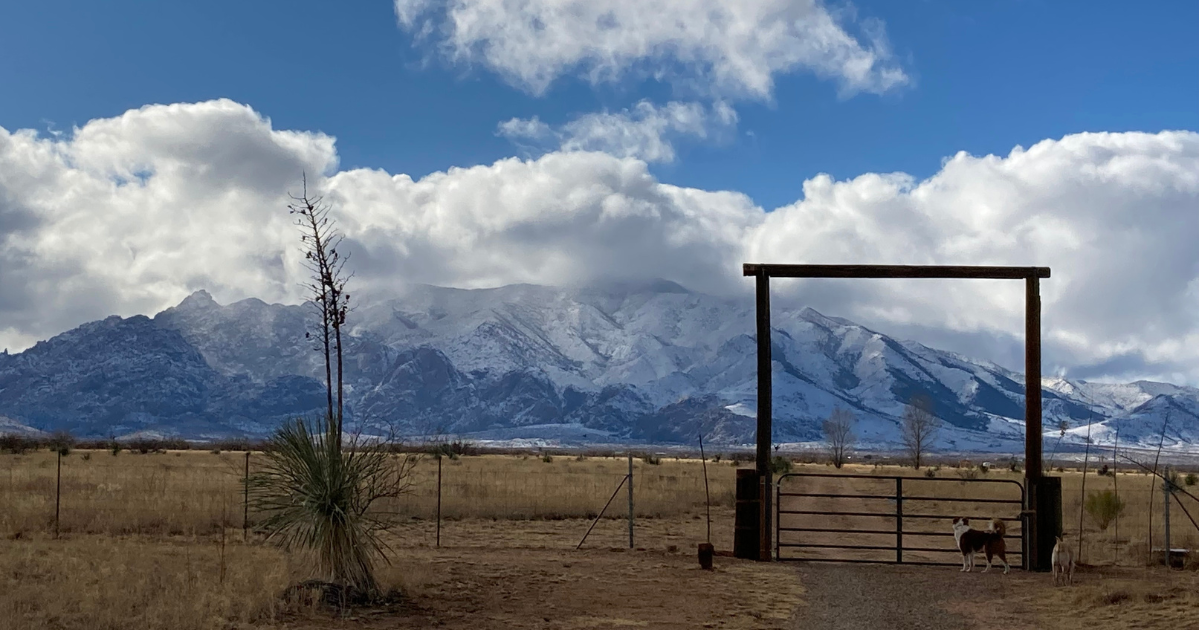
In spring 2021, I received a call from an unfamiliar number in rural Cochise County in southern Arizona. It was a resident named Steve Kisiel, a former engineer in the health field who lived in the home he built nearly 30 years ago on a plot of land with a small orchard. He wanted to talk about groundwater.
Steve and his neighbors’ wells were going dry. The foundations of homes cracked as the ground sank. Some moved away, if they could. Others hauled water to their homes. Some borrowed water with buckets from their neighbors. Those that still could access water knew it was only a matter of time until they, too, would run out, Steve told me.
Those experiences mirror many around the world: 2.2 billion people lack safe drinking water; 3 billion people live in areas where water storage is declining; and, 2 billion people live on ground that is sinking.
Steve and his neighbors found themselves on the front lines of groundwater depletion, a global crisis driving his community and many others to water bankruptcy. But Steve and his neighbors shared an idea: A hopeful future was still within reach.
That idea grew into a movement that successfully passed the first new regional groundwater protections in Arizona ever established by a local vote, under a framework called active management areas (AMAs). Then, only two years later, they secured the first new AMA ever established by the state water agency, the Arizona Department of Water Resources (ADWR). The movement kept growing, leading to another new AMA in another region in 2026. All of this progress happened within only about three years.
I sat down with Steve to document his experience firsthand, focusing on formative moments and challenges. We also talked about the lessons he learned and Steve’s advice for other communities on the front lines in Part 2 of our conversation.
What was happening when you called me for the first time in 2021?
Small groups of residents had been getting together because so many of us experienced dry wells. My neighbor Mark and I had to deepen the well that we share. We were neighbors trying to figure out what to do so our community could have a water future and to get organized.
Many people in the community knew they got water from a well. They knew we had a water problem that was getting worse, but they didn’t know what we could do about it. So a big part of our early work was education and learning together. We had a lot of different, conflicting ideas to work through. But anyone living here could see what was happening: land being cleared, new deep wells being drilled, and massive dairies and feedlots from out of state springing up. Our community was changing fast. If we didn’t do anything, we wouldn’t have a home here anymore.
That phone call gave us a framework for moving forward; it opened doors. Most importantly though, that call led to new friends, yourself and others, who would be beside us every step of the way.
A lot of people talked at us, or they told us nothing could be done. That call was the opposite.
There had never been an attempt in Arizona history to put a new AMA on the ballot. Yet you and your neighbors put two new AMAs up for a vote. How did you and your neighbors make that happen?
Quickly folks started floating the idea of an AMA. Some people said it was absolutely the right path. Others disagreed; others said it wasn’t enough. A lot of us said, “Well, what is an AMA?” We were learning as we went.
Ultimately, a determined group of five or six residents decided to take the bull by the horns. We learned about how a community can petition for an AMA by gathering signatures from at least 10% of registered voters within the basin boundaries. We decided to do that for the November 2022 election.
No corporations and no politicians were involved; it was us residents. We didn’t know how it all would work. It had never been tried before, but some group of humans had to be the first.
Once we filed the petition with the county, more people came on board. The number of supporters and volunteers grew quickly. It was exciting but also daunting.
In a rural area like ours, we couldn’t just stand in front of a mall and collect hundreds of signatures in a day. There aren’t high-traffic public spaces. We worked hard to reach people one by one. With each conversation, the community was talking about water more.
You joined the Rural Water Working Group during that time, a growing statewide coalition focused on community water security. What was that experience like?
It was very frustrating to be a part of a community hurting from water depletion, and feel dismissed by our own elected representatives. They told us repeatedly all we could do was pray for more rain. When you invited my neighbor Mark and I to join the Rural Water Working Group that was just starting, we were suddenly sitting alongside county supervisors, mayors and community leaders from across Arizona. They shared our concerns. They heard us. Wow, what a breath of fresh air.
That’s when it felt real. We didn’t know most of that group, but everyone knew us. We were so used to being put down and now here we are: a couple of regular residents on equal footing with state leaders.
We realized we were not alone. That empathy from the group and a shared feeling of belonging to a place that was struggling gave us a sense of empowerment and legitimacy that we had never felt before. That’s when we knew something special was happening. It was inspiring, it kept me going.
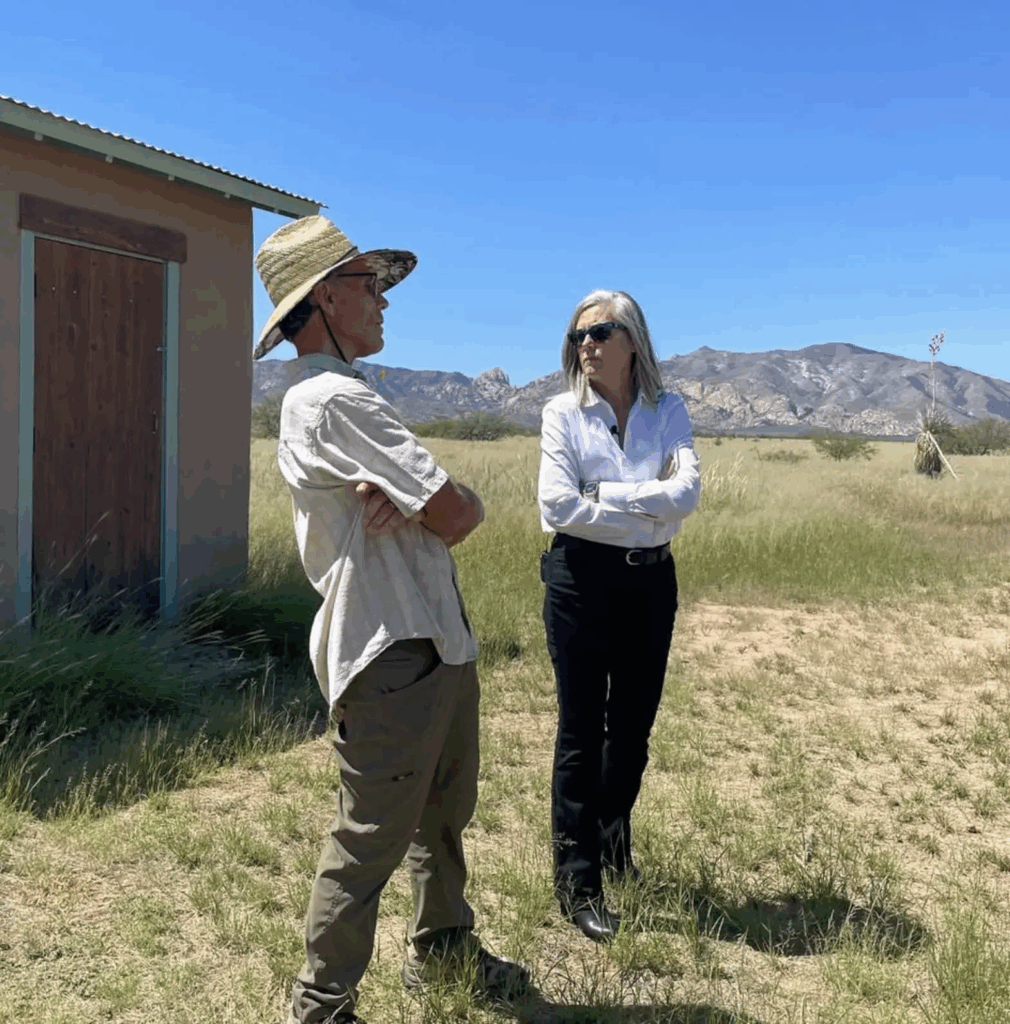
In November 2022, the Douglas AMA passed, the first AMA enacted by the people in history. But the Willcox AMA failed. Why different outcomes?
We learned that people living in two different groundwater basins in the same valley can have dramatically different attitudes about the same problem.
Part of the Douglas Basin had been a water conservation area for over 50 years. I got my hands on old handwritten notes donated to our local library from a farmer documenting how many feet his well had dropped. People in the Douglas Basin had been thinking about water sustainability for generations, and it’s more politically diverse. We expected it to pass there.
In the Willcox Basin where I live, we thought it would be close. It ended up losing by more than twenty points. It wasn’t close. It was heartbreaking. There were a lot of reasons to give up, but we couldn’t. There was too much at stake. For me, it took a mindset shift to adapt. In time, I learned to see the election outcome not as a win or loss, but a necessary step.
After the election, we made more connections, and more organic conversations were happening. To my surprise, the movement started growing faster. It was becoming clear that none of the promises for a solution made by the opposition to the Willcox AMA were going to materialize. Within six months after the election, we had hundreds of locals signing letters to our state Legislature and governor, more of us were writing op-eds and letters to editors for newspapers, and our local volunteer-managed website was growing.
The Douglas AMA was the first ever new AMA, and there were growing pains. A lot needed to be figured out about how to implement a new AMA. Having those same struggles play out here in Willcox simultaneously could have been doubly difficult. The path we ended up on was probably better for all of us in the long run.
The loss was heartbreaking, but it was about to get even tougher. Cochise County illegally accepted signatures to rescind the Douglas AMA. Then the state Legislature started moving a bill that would have stopped groundwater protections from ever happening around your home if it passed. How did you get through those twists and turns?
We didn’t have the option to give up. This place is our home. We had no funding, no lobbyists, and we were underdogs. But some folks had money behind them to push for rescinding the Douglas AMA. We didn’t have money, but we had friends. Your team responded quickly when our community asked for help, and filed suit against the county. The county attorney agreed with the suit, so the referral to rescind the AMA was stopped. We were relieved.
That legislation was a different kind of response. On its face, it sounded promising: The title was “basin management areas.” But once communities understood what was in the bill, we realized quickly it would hurt us. Dozens came to the Capitol to testify and share our personal experiences. Rather than pacifying communities like ours, that bill ended up backfiring. It just ended up galvanizing more people.
We each had to find courage to keep going even when the path felt uncertain for extended periods of time. There were so many setbacks and twists. But doing hard things together made lasting friendships, and we relied on those relationships.
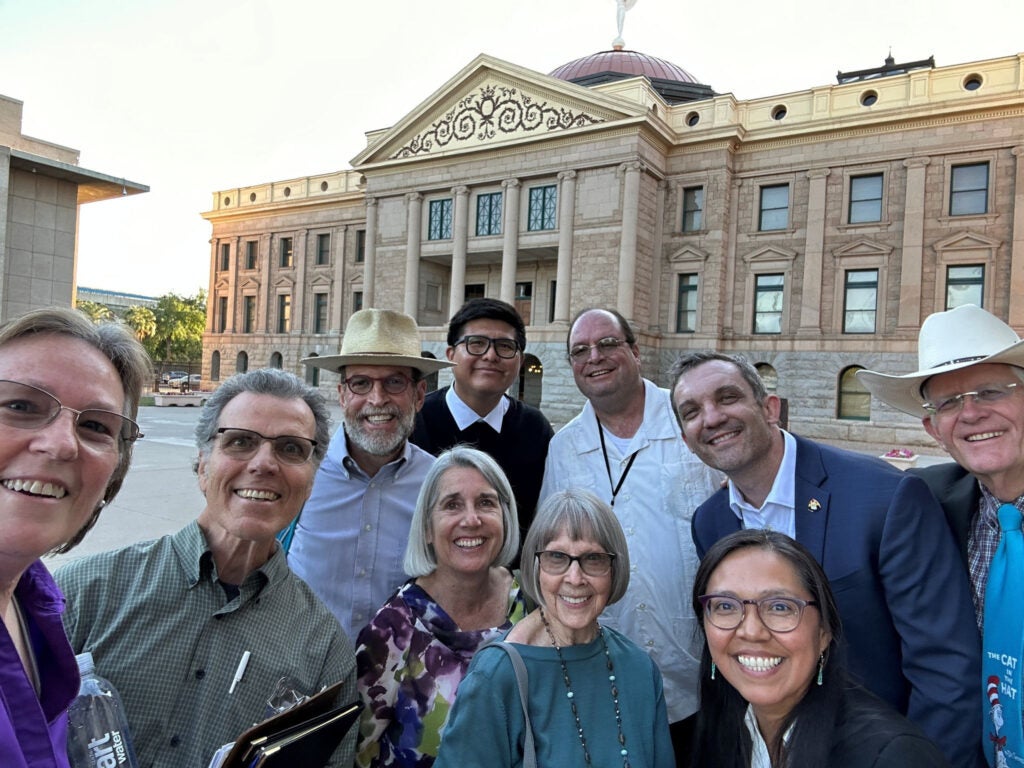
I never thought I’d be at the Capitol as much as I was. My neighbors Mark, Lisa, Ed, Cheryl and others from the community were there, too, all sharing our stories, and so were you at every step. It didn’t feel like we belonged there, but we kept working together. I don’t know if there is a harder thing to do than try to get groundwater protections where there had never been any before. But there wasn’t anything we could have been doing that mattered more.
After testifying at my first hearing at the Capitol, a lot of us were feeling frustrated. Then a legislator came up to us in the courtyard like we were famous. She said she had never seen a group make an impact like we did that day. We took selfies to remember this moment.
We didn’t always see it in the moment, but our stories were being heard. And, the tide was turning.
Check out Part 2 of our conversation where Steve shares what came next and lessons for other communities on the front lines of groundwater depletion.