Climate change solutions
We deliver game-changing environmental solutions that have a real impact for people around the globe.

Building resilient land and water systems that allow people and nature to prosper in a changing climate.
Every year hurricanes present a variety of threats to communities along the Atlantic and Gulf of Mexico coasts. And these risks aren’t just from storm surge.
Harvey and Ida showed us the effect of heavy rainfall, while Hurricane Florence demonstrated how rivers can overflow into homes and businesses. Meanwhile, climate change is impacting sea level rise, which increases sunny day flooding and the trauma caused from storm events.
Flooding doesn’t just impact coastlines, it impacts entire communities both inland and by the water. It hinders parents’ ability to bring their children to school and it limits patients’ access to vital healthcare and medical services. Not to mention, flooding has inequitable impacts on the wealth, health and wellbeing of millions of families.
As we enter into the 2023 hurricane season, we’re reminded of the urgent need to implement natural disaster mitigation strategies that address comprehensive flood and storm risks. Acting before the next storm strikes means protecting both communities and ecosystems, in addition to saving nearly six times the cost spent on disaster recovery.
The good news? Over the past year, leaders have responded to our call to act – a call that was supported by more than a hundred organizations around the country. Here are two major ways their efforts can prepare us for the next hurricane: (more…)
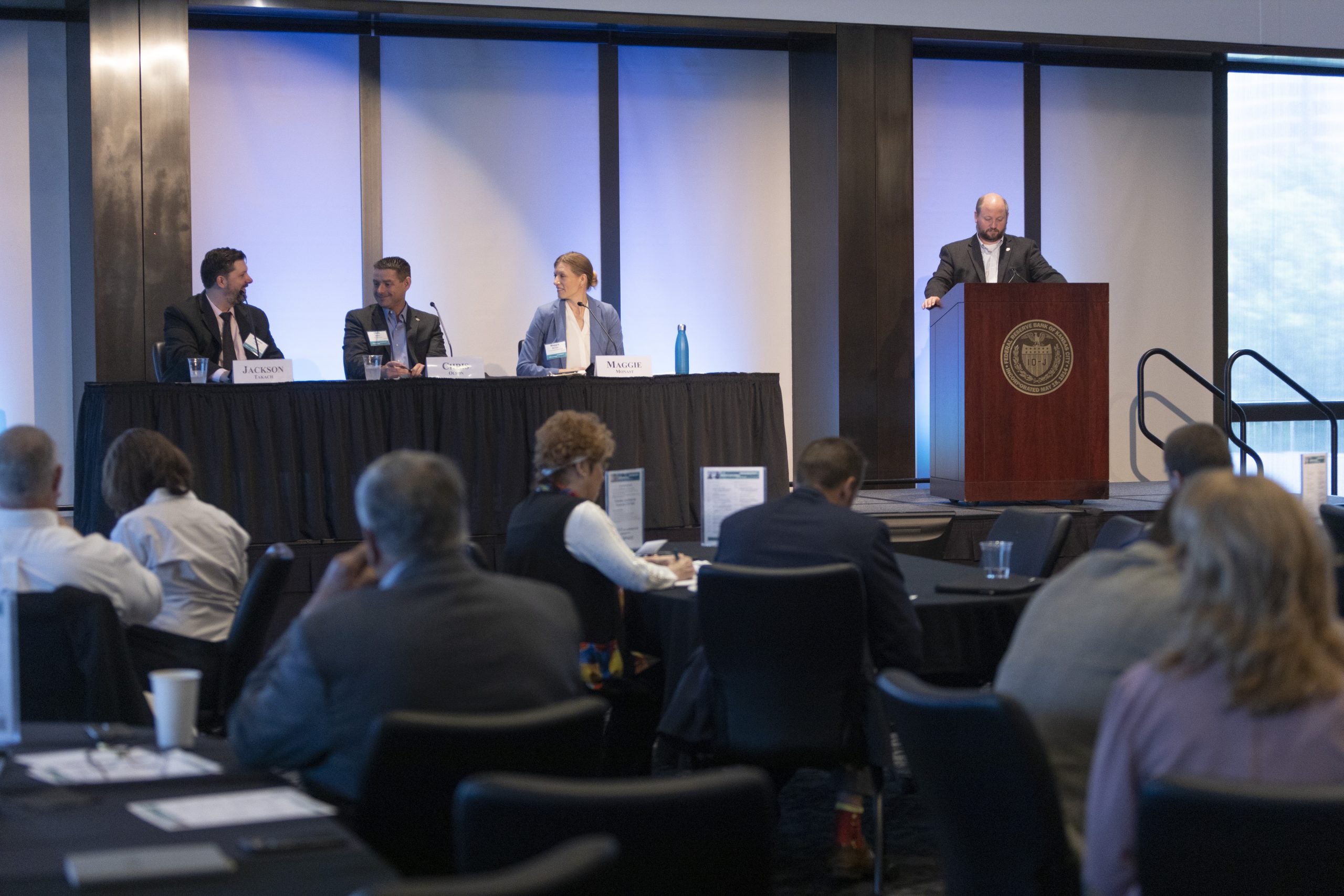
The Federal Reserve Bank of Kansas City’s 2023 Agricultural Symposium, “The Changing Geography of Agricultural Production,” explored the factors driving changes in where and how agricultural commodities are produced, disruptions that are leading to further geographical differences, and the role of investments and farm policy in the years ahead.
I had the honor of joining as a panelist with representatives from Farmer Mac and Rabo AgriFinance, where I shared EDF’s perspective on how climate change affects agricultural production and finance. Climate impacts on agriculture, from catastrophic weather events to temperature and rainfall variability, increase risks for farmers and their financial partners. This pattern of increasing disruption directly affects food availability, prices, and ultimately, what ends up on our plates. As one of my fellow panelists noted, “The one certainty in agriculture today is volatility.” (more…)
By Kelly Varian, Master of Public Affairs Student at UC Berkeley
Flooding is the most frequent and costly natural disaster in the United States, causing over $30 billion in damage annually, with disproportionate effects on low-income communities. With climate change exacerbating flood risk and population growth continuing in high-risk areas, over 40 million Americans living along rivers and inland floodplains, along with 13 million more on the coasts, could see their homes inundated with water by the end of the century.
A new website from EDF, American Rivers, and Four Corners Mapping provides a special look at the Grand Canyon through an educational, interactive journey. The interactive tool invites people to take a tour through the Grand Canyon and learn how the complexities of the Colorado River crisis impact the Grand Canyon and its surrounding communities and ecosystems through words, images, and short videos. (more…)
This blog is co-authored by Rachel O’Connor, Manager, Climate Resilient Water Systems.
As Arizona’s water crisis worsens due to extreme drought and overuse, more attention than ever is being directed toward addressing this critical issue. At the federal level, an influx of funding has become available through the Bipartisan Infrastructure Law and Inflation Reduction Act. And at the state level, the Water Infrastructure Finance Authority (WIFA) has just begun accepting proposals for its first allocation of $200M for water conservation projects.
Authors: Dawn Shirreffs and Kelly Suttles
In 2022, the Florida legislature created the official designation of strawberry shortcake as the State Dessert. Key lime pie advocates may yet have a second chance to emerge victorious as important new research by Environmental Defense Fund and Two Degrees Adapt signals concern for growing strawberries in the Sunshine State due to climate change.
U.S. farmers and ranchers are already living with climate change. For example, they are facing shorter windows to get seeds in the ground and higher temperatures that can dry out soil faster. At the same time, agricultural production is a factor in climate change, contributing more than 10% of U.S. emissions. Congress owes it to farmers and ranchers to write a 2023 farm bill that does three things to advance climate-smart agriculture.
A plan for the largest transformation of New York City’s and northern New Jersey’s waterfront since the Robert Moses era has been proposed by the U.S. Army Corps of Engineers (USACE). It’s called the New York-New Jersey Harbor and Tributaries Study and it was introduced to the public to address flooding and storms like Hurricane Sandy. At stake is the future of more than 84 miles of waterfront and waterways in the metropolitan region and an area that supports 16 million people.
New York and New Jersey residents must determine if this $52 billion dollar plan aligns with the future they want. Addressing flood risks is a step in the right direction, but as it stands today, the current proposal does not reflect the priorities of many communities and environmental organizations. With the impacts of climate change already in motion, we simply cannot afford to get this wrong. (more…)
When making any decision, we often find ourselves weighing the pros and cons of an action – the benefits versus the cost. The official practice, referred to as “benefit-cost analysis,” is not only used by individuals and businesses, but also by the federal government when determining funding for a program or initiative. In simple terms, when the benefits exceed the cost of an investment, federal funding may be made available.
But oftentimes benefit-cost analysis doesn’t look at the full picture, neglecting to consider who benefits from an investment and who bears the brunt of its cost. This is true when examining the nation’s flood risk management strategy. Historically, the annual loss from flood damage disproportionately impacts low-income communities and communities of color, leaving those with fewer resources less protected.
The Water Resources Development Act of 2022 (WRDA 2022) passed through Congress last December as part of the James M. Inhofe National Defense Authorization Act. This typically biennial and bipartisan legislation invests in water infrastructure by authorizing projects, studies and programs led by the U.S. Army Corps of Engineers (USACE). Across the country, the new legislation allows USACE to play a critical role in protecting, enhancing and restoring coastal and riverine areas from climate-impacted flooding and storms. (more…)