Climate change solutions
We deliver game-changing environmental solutions that have a real impact for people around the globe.

Building resilient land and water systems that allow people and nature to prosper in a changing climate.
Wyoming is known for its panoramic landscapes, jagged mountains, and herds of pronghorn and bison. This imagery is associated with parks like Yellowstone and the Grand Tetons. But not all of Wyoming’s landscapes are encapsulated in iconic national parks.
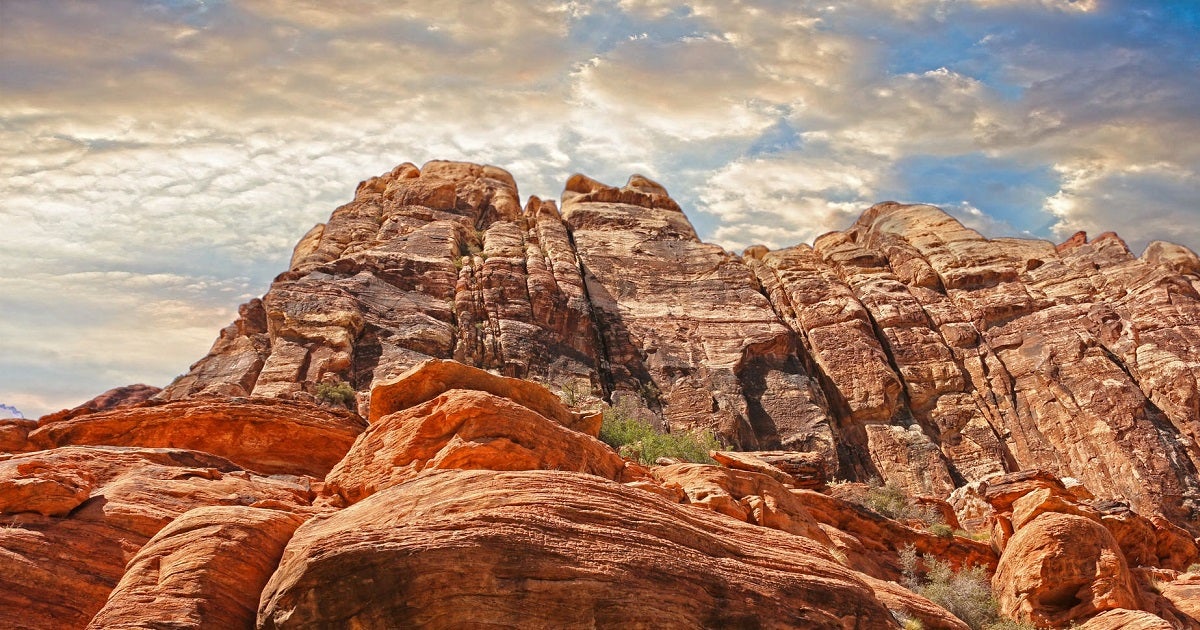 In southern Wyoming, the continental divide splits to form an enormous arid basin marked by vast sand dunes and grey, alkali lakes. The largest unfenced area in the lower 48, this region is known by Wyomingites as the Red Desert.
The Red Desert stretches across 4 million acres in south central Wyoming. It is home to the largest herd of pronghorn in the continental U.S., the largest desert elk herd, and the longest migrating mule deer herd in North America. Nearly three quarters of the area is covered by sagebrush grassland, and sage-grouse leks are present in much of the region. In the Red Desert’s northeastern corner, a series of alkali lakes known as the Chain Lakes provide critical wetland oasis for migrating shorebirds like ducks, trumpeter swans and white pelicans.
What differentiates the Red Desert from Wyoming’s other iconic landscapes is the rapidly increasing land use for energy development.
This week, the Senate advanced a farm bill that includes many important provisions for conservation on America’s working farms, ranches and forestlands. Among these provisions is language codifying the Working Lands for Wildlife program that helps farmers and ranchers restore habitat for at-risk wildlife. It’s the first time the program has been formally recognized in the farm bill.
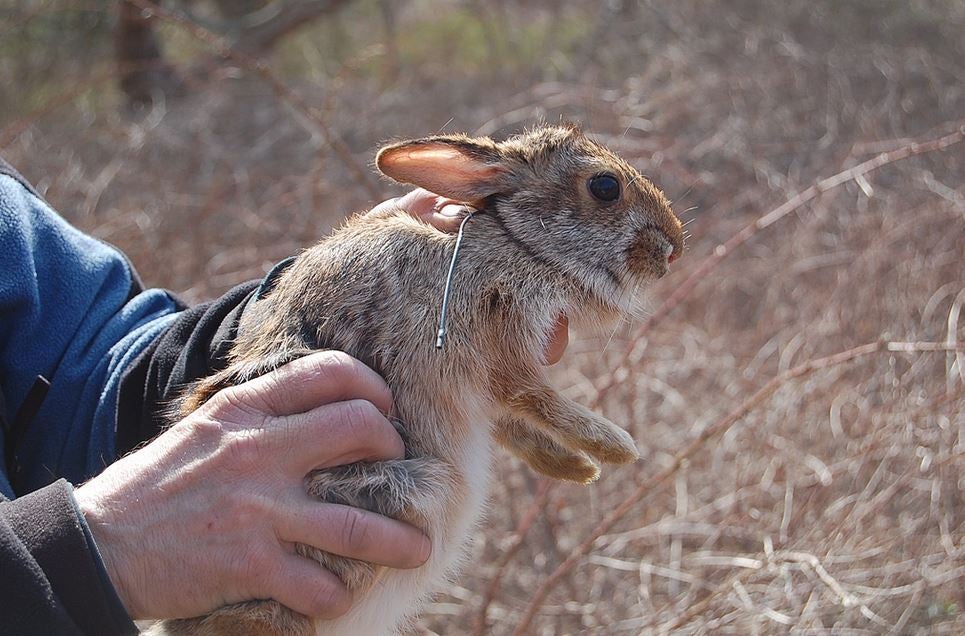
Through the Natural Resources Conservation Service program, USDA provides technical and financial assistance to landowners who voluntarily make improvements to wildlife habitat on their property. The U.S. Fish and Wildlife Service pairs this with regulatory predictability under the Endangered Species Act.
It’s a win-win approach for improving agricultural productivity while enhancing habitat for wildlife.
The Senate votes this week on the farm bill – an $867 billion piece of legislation. Within the bill’s 1,200 pages are big advances for conservation, technology and innovation.
In addition to the bill maintaining full funding for the conservation title, here are five reasons why producers, consumers and environmentalists should celebrate the Senate farm bill and champion the inclusion of these key provisions in the House and Senate compromise bill.
Coastal communities are struggling to accurately understand their flooding risks and identify appropriate solutions for mitigating the effects of rising seas and increased storm surges.
Fortunately, new technologies are emerging that facilitate more rapid acquisition of more accurate data and improve data visualization to support efforts to build coastal resilience.
[Tweet “New technologies are emerging that can help communities understand risk and build coastal resilience. https://www.edf.org/Ejp”]
Leaders in the private sector have already developed bold new technologies – from satellites and sensors to machine learning – to help understand risks and develop solutions. But this fourth wave ingenuity is not limited to the private sector. Several public sector entities offer innovative and readily usable resources to help build more resilient and safer coastal communities.
The California legislature has passed a budget bill that gives me great hope for the state and for the nation. That’s because the budget was not only passed with bipartisan support – it also proves that conservation has broad political appeal.
California has rebuked the Trump administration on a number of issues including healthcare, immigration and the environment, leading many Americans to see California as the ultimate resistance state. But when I take a closer look at this budget, I think it has less to do with resistance, and everything to do with resilience.
Resilient people, communities, institutions and, yes, environment. (more…)
“What I aspire to is the grace with which he was able to meet people where they were and, at the same time, challenge preconceived notions.”
His 1999 New Yorker essay “Don’t Eat Before Reading This,” and subsequent book, Kitchen Confidential, were full of bombast, bad-ass adventure and raw truth-telling. That made him fun to read, and later to watch. But if that is all it was, I doubt I’d find his death so devastatingly sad.
It was his passion for his craft, his love of people, and, ultimately, his talent for being able to suspend his own (strong) biases and beliefs in order to bring people together, that resonates deeply with me as I think about the work I lead for Environmental Defense Fund.
Bridging cultural divides
Bourdain often said that Parts Unknown, the “food show” that made him a global celebrity, wasn’t ever really about food. It was about people. It was about sitting down with them and learning who they were. It was about sharing ideas, asking questions, and opening up their world and their worldviews to the rest of us.
He embraced the dichotomy of the world being a really big place and a small planet all at the same time. (more…)
Technology investors are discovering a new and largely untapped market: farmers in heartland America eager to fly drones, employ robots and crunch big data to boost their business.
In 2017, tech startups in the agriculture sphere raised $670 million to develop software management, big data analytics, automated equipment and other cutting-edge tools that help farmers grow crops with scientific precision, AgFunder reported. Agriculture is one of the last major sectors to experience the digital revolution and it’s a market ripe for growth.
New technology allows farmers to manage their fields down to the square foot – tracking plant health, soil moisture and estimated profit in real-time. That requires advanced software, sensors and state-of-the-art imaging technology.

To meet such needs, investors raised more money for ag tech startups in 2017 than during the previous two years combined. (more…)
Meadow Club in northern California is among the first golf courses to participate in a program engaging the golf community in conservation efforts for the beloved monarch butterfly.
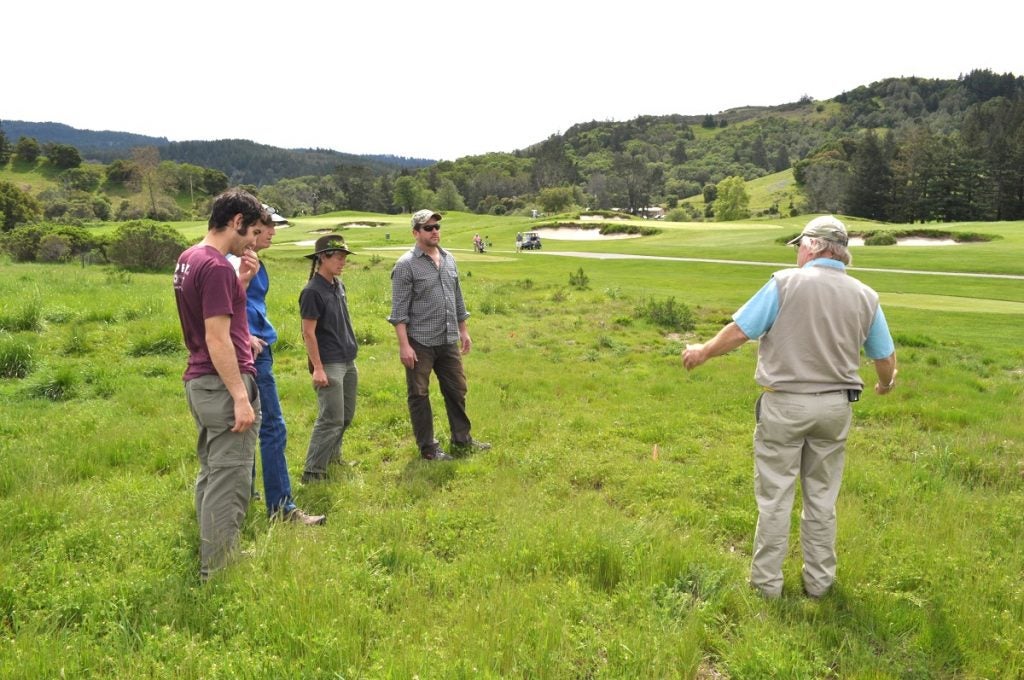
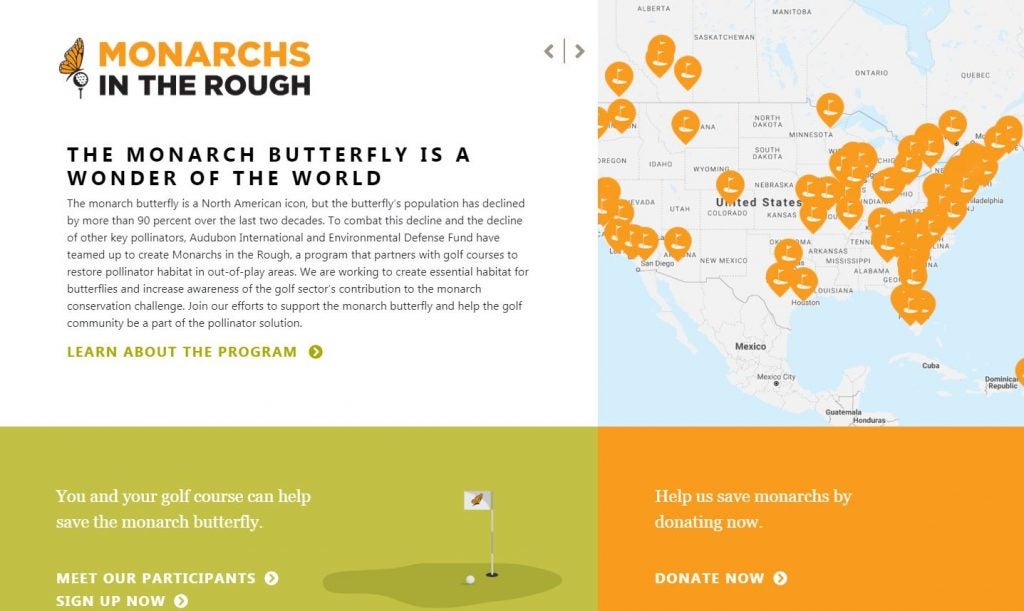
Monarchs in the Rough launched in January 2018 and has since enrolled more than 250 courses committed to planting milkweed and wildflower habitat, which the monarch needs to breed and feed.
The population of monarch butterflies has declined by more than 90 percent in the last two decades, and other pollinators have declined at similarly alarming rates. To change this trajectory, staff from Environmental Defense Fund and Audubon International decided to team up with a seemingly unlikely ally – golf courses.
Occupying approximately 2.5 million acres in the U.S. alone, golf courses are an untapped potential for habitat restoration, if managed appropriately. That’s where Monarchs in the Rough comes in, offering scientific expertise and technical support to help golf course superintendents and personnel grow habitat in out-of-play areas.
But many golf course staff, including those at Meadow Club, are already well equipped with knowledge and experience from previous conservation efforts, and can offer lessons learned for other golf courses and individuals looking for milkweed planting tips. (more…)

Interior Secretary Ryan Zinke last week invited members of the conservation community to meet with him to discuss a number of his department’s near-term priorities.
Among these priorities was a “grand pivot” that Secretary Zinke described as a shift from focusing on energy dominance and shrinking monuments to a focus on conservation. When outlining his specific conservation priorities, Secretary Zinke spoke mostly in broad strokes about the reorganization of his department and infrastructure backlogs.
Some of his ideas on the reorganization had merit and we’d be willing to work with his agency to ensure that it is staffed to meet the needs of near and long-term conservation challenges.
While departmental organization and infrastructure needs are both worthy of administrative attention, I’m concerned that these priorities could detract from three urgent environmental and public health needs.
I was recently cleaning out old files and came across notes from a presentation I made after the Great Midwest Flood of 1993. It was on the state of the nation’s floodplain management, a topic even more relevant today.
Many no longer recall the Great Midwest Flood despite its record-breaking precipitation, flooding and $13 billion price tag. Sure, 1993 seems like a long time ago, but I believe the reason the flood has left most people’s memory is because, over the last 25 years, the nation has experienced one devastating, record-breaking flood after another. Our memories are diluted by the frequency of such events.
Sadly, many of the lessons I shared in my presentation back then remain true today.
It’s time we stop talking and get serious about improving our nation’s floodplain management by putting these lessons into action.