Climate change solutions
We deliver game-changing environmental solutions that have a real impact for people around the globe.

Building resilient land and water systems that allow people and nature to prosper in a changing climate.
As the recent surge in corporate net zero commitments suggests, the risks associated with climate change are top of mind for today’s leading businesses and investors.
For companies that produce, process or sell beef, pork and/or dairy, there’s an often overlooked, invisible source of climate pollution lurking in the supply chain: methane.
An extremely potent greenhouse gas, methane has more than 80 times the warming power of carbon dioxide in the short term. This means cutting methane emissions is one of the fastest ways for businesses to make progress toward their sustainability targets, meet growing stakeholder demands for bold climate action and be more resilient.
The opportunity for leadership is especially urgent in the livestock sector, which is responsible for roughly one-third of all human-caused methane emissions globally.
While some food and agricultural companies are making progress on methane, there’s still a long way to go. Here’s what these companies need to know.
Last weekend I paddled on the Blanco River with my family. We swam in spring-fed swimming holes, fly fished and lounged in shallow sections of the river, which was flowing nicely thanks to recent rains that ended drought conditions across Texas.
But it’s hard to ignore that Texas is sitting in the shadow of one of the worst droughts in history — one that’s crippling the rest of the West.
As temperatures rise and groundwater levels remain low with little rain in the forecast, it is imperative that we develop solutions to manage our water supplies more sustainably.
Unfortunately, state leaders put water on the back burner this legislative session, failing to take action on several water bills — even a benign bill to study groundwater and surface water interactions. But just because state leaders haven’t taken action doesn’t mean we can’t.
Here are three steps that all Texans can take now to build momentum behind protecting our rivers, streams and groundwater. (more…)
Over the past several weeks, the U.S. Department of Agriculture has made important progress in advancing climate-smart agriculture and creating equitable opportunities for producers to be part of the climate solution.
Here are three recent examples of progress you may have missed in the news, plus next steps for the agency to continue this momentum. (more…)
The recent federal executive order on climate-related financial risk institutes a whole-of-government approach to assessing and mitigating climate-related financial risk, with the goal of bolstering the resilience of financial institutions and the communities they serve.
As a sector dependent on natural resources and predictable weather conditions, agriculture is particularly vulnerable to climate change. Maintaining U.S. agriculture’s position as a global leader long into the future will require the sector to address climate risk head-on, and soon, with innovative financial solutions that move beyond managing risk and move toward financing resilience.
Here are some of the implications of the executive order for agricultural finance institutions, and opportunities for these institutions for support a more resilient and prosperous food system. (more…)
New data and insights are now available from Precision Conservation Management, a partnership organization that connects 280 Illinois and Kentucky farmers with conservation specialists from local soil and water conservation districts to provide actionable data on conservation financials.
Over the last five years, PCM gathered field-level farm management data — including the number of passes across the field, the rate of inputs into those fields, tillage passes and cover crop use — integrating that management data with cost tables created by the University of Illinois to provide farmers with the financial outcomes of different conservation practices.
Here are the top three insights from five years of farm data. (more…)
Climate change poses a significant threat to Virginia’s communities, infrastructure and economy. The state has the highest rates of sea level rise on the Atlantic seaboard with more than 34,000 buildings and 534 square miles of coastal land at risk of flooding by 2060, while more intense rainfall is also increasing flood risk statewide.
Virginia’s state leadership is moving diligently to mitigate current and future flood threats by funding and implementing risk reduction and resilience projects across the commonwealth.
Here’s how the state is tackling its flood risk problem with thoughtful planning and long-term funding. (more…)
Update: Colorado Gov. Jared Polis signed a bill June 24 to provide $20 million to water projects.
Despite some recent rains, nearly half of Colorado remains in a drought and about one-third of the state in severe, extreme or exceptional drought. Urgent action is still needed.
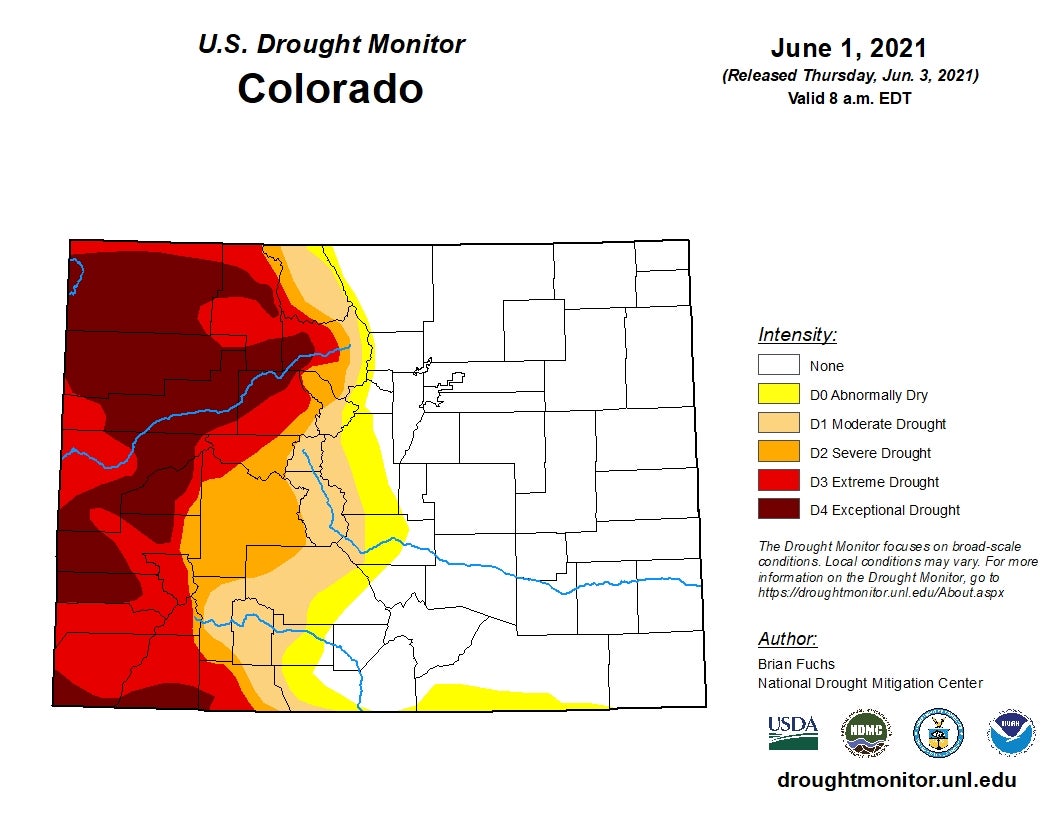
Fortunately, higher-than-expected sports betting dollars are just the first in a hat trick of three new funding streams that can deliver critical water projects in the state. Here are the three big plays: (more…)
This blog post was co-authored by Camille Morse Nicholson of the Midwest Row Crop Collaborative.
The increasing attention being directed at agriculture and the environment by policymakers and the private sector is a welcome shift — one on which the future of our agricultural system depends.
However, there remain a host of uncertainties to be resolved as we shift the system to one that not only produces food, fuel and fiber, but also delivers soil health, biodiversity and climate resilience benefits.
The Midwest Row Crop Collaborative (MRCC), a coalition of companies and NGOs, is working to break down barriers to scaling climate-smart practices, including closing the information gap on the financial benefits of conservation practices like cover crops and nutrient management, and helping farmers invest in these practices, confidently. (more…)
The first time I paddled the Nueces River I was blown away by the water — crystal clear, aqua colored, almost tropical. I could easily see the bottom of the river many feet below me and fish as they darted under my kayak.
Fed by springs that percolate up from groundwater beneath the Edwards Plateau, the Nueces is among the last remaining uniquely pure waterways in Texas.
More development is leading to an increase in discharge permit applications in Texas, putting pristine waterways like the Nueces at risk.
House Bill 4146 by Rep. Tracy King (D-Laredo) and Senate Bill 1747 by Sen. Judith Zaffirini (D-Laredo) in the state Legislature will protect these unspoiled streams and rivers by prohibiting wastewater discharges in them. HB 4146 has passed the House and now awaits a hearing in the Senate Water, Agriculture and Rural Affairs Committee.
Climate change is already impacting farmers, both through extreme weather events and more variability in temperature, rainfall and pests. At the same time, farmers and the broader agricultural system can provide climate solutions and build resilience to reduce climate-related risk.
This dual opportunity has implications for the entire agricultural system, including the agricultural lenders who finance farms. (more…)