








Is 15% of the Global Clean Energy Market Good Enough?
Posted: in Clean Energy, Clean Power Plan
Written By

Share
How does 15 percent measure up?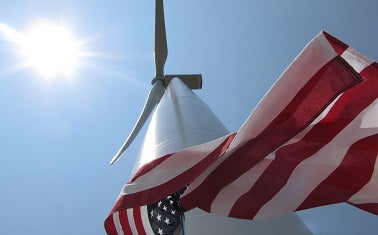
If you’re talking about a baseball batting average, 15 percent puts you on the first fast and joyless train to Mudville. If you’re talking about return on savings with today’s interest rates, 15 percent has you laughing all the way to the bank.
If, however, you’re talking about America’s share of a $1.3 trillion global clean energy market, as Advanced Energy Economy recently reported, that 15-percent figure, while not too shabby, merits further consideration about how we got here – and where we should be heading.
Advanced energy market grew a whopping 14%
Sure, the “advanced energy market” is a broad term, but that’s because it’s a broad market.
Distinct from conventional energy products, advanced energy products are all the clean energy innovations we see and use on a daily basis including solar panels, wind turbines, electric and hybrid vehicles, high-performance buildings and energy-saving industrial processes.
Simply put, the advanced energy market is everything that enables more secure, clean, and affordable energy for today and tomorrow.
And it’s big. The global advanced energy market is on par with the apparel industry and four times as big as the semiconductor industry. The United States market, for its part, reached nearly $200 billion in 2014 revenue, surpassing our airline industry and roughly equaling the pharmaceutical industry.
With a growth rate of 14 percent last year – five times that of the overall economy – the U.S. advanced energy market appears to be on the right track. So how do we sustain growth and expand the market over time?
Energy efficiency: A $1.2-trillion opportunity
According to Advanced Energy Economy, U.S. building efficiency is the largest advanced energy market segment, with revenue of $60 billion last year. The kicker is that energy efficiency is not only the critical growth driver – it’s often the cheapest and easiest to implement.
In fact, a new report from the Lawrence Berkeley National Laboratory found efficiency programs cost utilities exactly 4.6 cents per kilowatt hour, on average, while generating the same amount of electricity can cost up to three times more. After all, the cheapest energy is the kind you don’t have to produce in the first place.
Efficiency has the potential to generate more than $1.2 trillion in domestic energy savings by 2020 – a figure on par with today’s entire advanced energy market. But only if we get the right policies in place.
A plan to drive investments
A competitive, innovative market rests on stable, forward-looking policies, and the U.S. Environmental Protection Agency’s proposed Clean Power Plan is one crucial step in the right direction. By placing limits on carbon pollution from existing fossil fuel power plants, the plan will create long-term market signals to drive investment in energy efficiency and all areas of the advanced energy market.
So, while the U.S. has only 15 percent of the global advanced energy market today, we may soon boost our share significantly. The advanced energy market is dynamic, continually evolving to integrate the most efficient and cost-effective technologies and services.
Let’s encourage its growth with equally dynamic policy.
Photo source: Flickr/USDA
This post originally appeared on our EDF Voices blog.
One Comment
Paul, any analysis which doesn’t include nuclear energy under the heading of “clean” or “advanced” is as antiquated and naive as Jimmy Carter’s 1980 goal of obtaining 20% of all U.S. energy – not just electricity – from the sun by 1999.
Can we learn from our mistakes, or must we pursue avenues which are the antithesis of stable and forward-looking? Will we let intellect serve as a guide for policy, or primal, irrational fear?
The answers to these questions are on what the future of the Earth’s climate depends.