







Companies Turn to Technology to Engage Consumers in Smart Energy Management
Posted: in Clean Energy, Grid Modernization
Written By

Share
By: Claire Dooley, student at the Bren School of Environmental Science & Management
 Most of us in America would argue that affordable and reliable energy access is a basic life necessity, possibly even a basic human right. However, JD Power & Associates recently reported that only 3% of consumers are actually reviewing their energy usage more than once a month. Interaction with this commodity is almost entirely passive. Utilities do whatever it is they do to keep the electrons flowing, and we pay the bill.
With all of the public attention that energy’s impact on climate change has received in recent months—including IPCC findings that human-induced global warming is unequivocal and a new EPA regulation on coal-fired power plants—consumer awareness and interest in curbing our reliance on dirty energy is on the rise. Concurrently, the massive influx of residential clean energy technologies is providing unprecedented opportunity for the public to participate in climate change solutions.
Knowledge is power
Consumer engagement is growing in part because of tech giants’ literal implementation of the adage that knowledge is power. Significant movement in home energy management is taking place across the industry. Just this year, Google made a $3.2 billion acquisition of the Nest Thermostat, Apple unveiled their home automation platform HomeKit, and the energy data analytics start-up Opower had its initial public offering.
More financing options
Homeowner options to augment energy management with localized, renewable energy generation are also increasingly viable. As the cost of solar photovoltaic (PV) systems continues to plummet, noteworthy organizations are providing creative financing to help get these systems on our rooftops. Amongst the options are Solar Mosaic’s crowd-funding model, Solar City’s PV leases, and Grid Alternative’s volunteer-based program that provides PV to low-income families.
Energy storage technologies on the rise
With a plethora of energy storage technologies in development, including those championed by serial entrepreneur Elon Musk around electric vehicles and on-site batteries, the possibilities for creating, managing, and storing clean energy at home are expanding exponentially as well.
Smart homes as the new norm
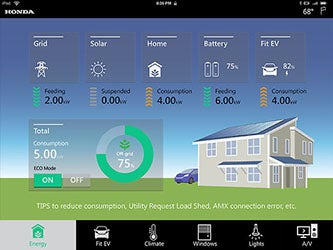
I cannot wait for the day when carefully controlled energy flows through each of my home’s gadgets—appliances, electric vehicle, rooftop PV, and on-site storage—before the connection to my local utility is engaged to balance any shortage or excess. A few years ago, it would have been easy for most to write my dream home off as some Jetsonian fantasy. However, residents of smart home demonstration projects across the globe, such as those of Pecan Street in Austin, Texas, are proving all of the necessary technologies exist today.
If the technology is ready to do its part in curbing home energy impact on global climate change, the question remains: are we?
This post originally appeared on our Climate Corps blog.