










The Clean Power Plan’s enormous climate benefits – in one graphic
Posted: in Basic Science of Global Warming, Clean Power Plan, Greenhouse Gas Emissions, News, Science
Written By

Share
In addition to the vital public health benefits it offers, the Clean Power Plan is the nation’s most significant action to date to address climate change’s number one culprit – heat-trapping carbon dioxide emissions.
Now, EPA Administrator Scott Pruitt is trying to revoke the Clean Power Plan. Here’s a look at the enormous benefits we could lose.
When the Clean Power Plan is fully in place by 2030, the avoided annual carbon dioxide emissions relative to business-as-usual (350 million metric tons) are equivalent to preventing:
- 40 billion gallons of gasoline consumed, or
- 380 billion pounds of coal burned, or
- 810 million barrels of oil consumed, or
- 850 billion miles driven by an average car.
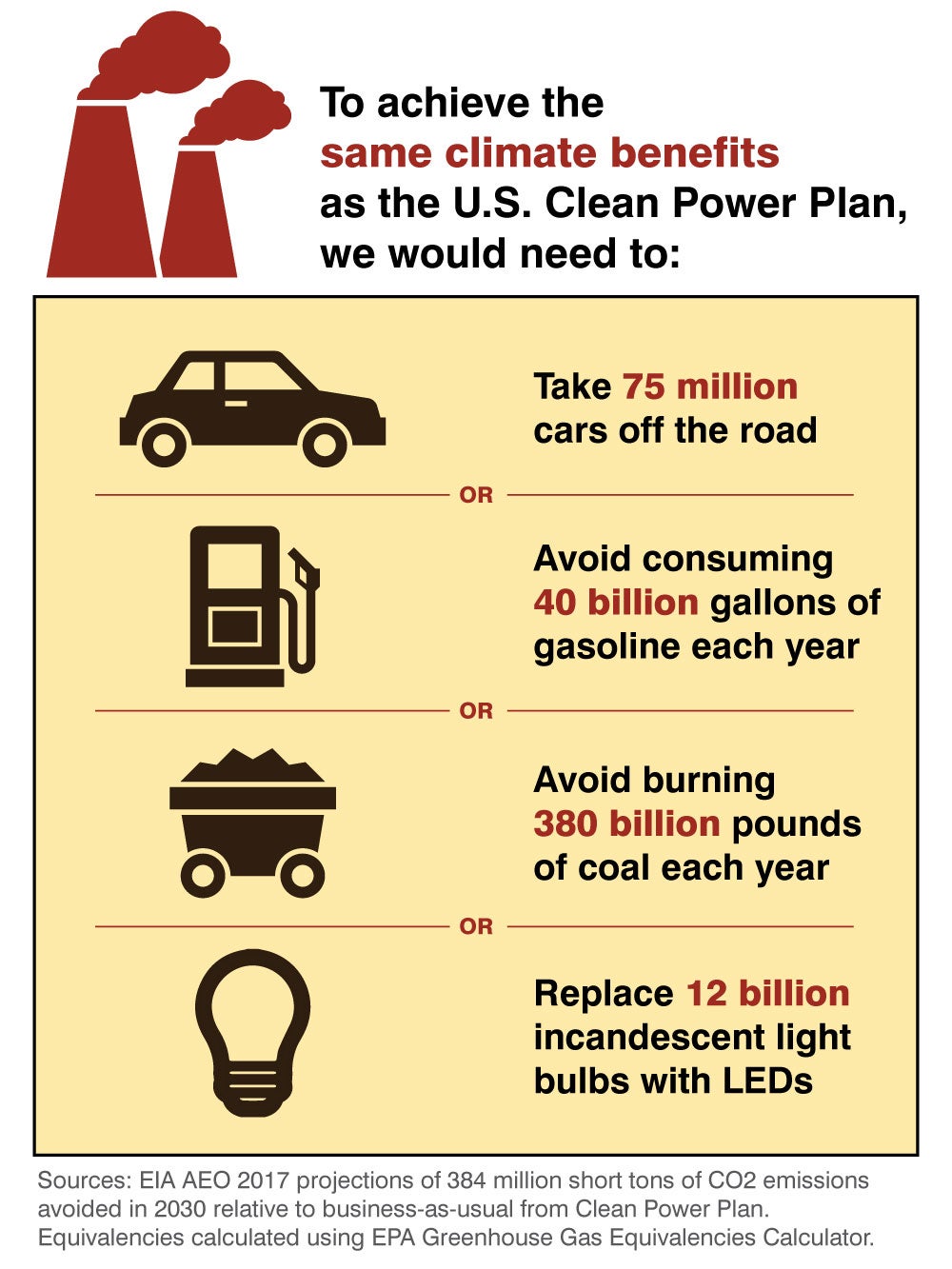
In order to get the same climate benefits that the Clean Power Plan would deliver, we would need to:
- Replace 12 billion incandescent light bulbs with LEDs, or
- Take 75 million cars off the road




One Comment
The good news is that there will be a period of public comment, so be sure to make your voice on this issue heard. To learn how to make the most of your public comment, check out this post: http://chesterenergyandpolicy.com/2017/10/10/advice-for-effective-public-comments-in-the-federal-rulemaking-process/