Tag Archives: EPA

“Loser Pays” in Texas vs. EPA

Governor Perry has been promoting tort reform for quite some time.  In fact, it has surfaced that legislation may be introduced to the Texas Legislature that would establish a “loser pays” system for lawsuits.  In his state of the state address this year Perry said that Texas needs a system "in which those who sue and lose are required to pay the court costs and legal expenses of those they sued."

Is Governor Perry ready to follow his own rule?

Over the last year, the Governor, his appointees at the TCEQ and Attorney General Abbott have spent tremendous resources fighting the Environmental Protection Agency on Flex Permitting and greenhouse gas rule implementation and to no avail.  In fact, the various suits and maneuvers by Perry and Abbott to block enforcement of the EPA’s GHG rule were rejected not once, but four times by more than one court.  Their actions are the legal equivalent to doctor-shopping.

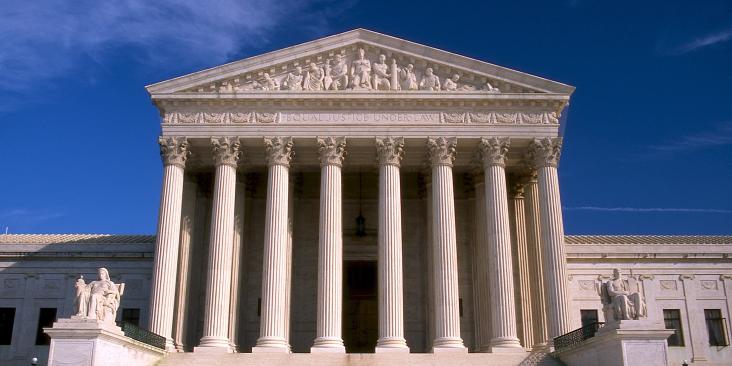
Despite rhetoric from Perry and Abbott, there can be no confusion about the EPA’s actions on the greenhouse gas rule.  They are acting on the authority of a 40 year-old law and a directive from the Supreme Court.  

While the Governor and Attorney General have the luxury of some free help from Exxon’s Lawyers, Texas taxpayers make up the difference and pay the full bill as the EPA and Federal Courts spend their limited resources wading through politically motivated lawsuits from Perry and Abbott in the name of polluters.

While I do not wish to wade into the debate on the merits of tort reform, I cannot help but wonder if Governor Perry would so readily support “loser pays” if his political whims were held to the same standard.  Maybe we should be asking him if he will guarantee to pay the taxpayers back for the costs of these lawsuits he has lost thus far and will likely lose again going forward.

Posted in Environmental Protection Agency, GHGs, TCEQ, Texas Permitting | Also tagged , , | 1 Response

Environmental Protections are Health, Not Political Issues

Last month I wrote about a series of public teleconferences on additional charge questions from the Environmental Protection Agency, as it continues to reconsider the 2008 ozone standard. The evidence from more than 1,700 peer-reviewed scientific reports is clear (and continues to be reinforced with new science) in demonstrating that our current ozone standard is not protective enough of human health, and we at EDF continue to advocate for a strengthening of the standard. Just this week, during the second public teleconference in this series, I reinforced our position with formal comments.

Here are highlights from my testimony, with a few additions:

The Science is Sound
We appreciate the continued dedication of the CASAC (Clean Air Scientific Advisory Committee) during the course of the 2008 ozone review through the present. To this day, as it continues to answer additional charge questions, the committee has not waivered in its opinion regarding the standard. CASAC remains strong, and has issued multiple statements indicating that the current ozone standard is unacceptable with regard to protecting human health. New research, including recent reports demonstrating significant increase in pulmonary inflammation in healthy individuals exposed to 60 ppb ozone, and clear evidence linking respiratory mortality with ozone exposure in a single pollutant model, serve to confirm this opinion and highlights the immediate need for a more health-protective standard. In other words, the science is sound. Read More »

Posted in Air Pollution, Ozone | Also tagged , , , , | Leave a comment

A New Paradigm for Managing Air Pollution?

For several years, many within the scientific community have discussed a streamlined approach to regulating the multitude of air pollutants poisoning our air. In 2004, the National Research Council suggested that we “Strive to take an integrated multipollutant approach to address the most significant exposures and risks” and “foster control strategies that accomplish comprehensive reductions in the most cost-effective manner for all priority pollutants.”

As a result of these recommendations, as well as the growing interest from regulators and the regulated community to manage air pollutants more effectively, the Environmental Protection Agency and Health Effects Institute co-hosted a three-day panel discussion this week in Chapel Hill, NC titled: EPA’s Multipollutant Science and Risk Analysis: Addressing Multiple Pollutants in the NAAQS Review Process.

Why was this meeting important?
This workshop marked the first official forum convened to address the scientific challenges associated with developing a multipollutant strategy to reduce criteria air pollutants. Read More »

Posted in Air Pollutants, Environmental Protection Agency, PM2.5 | Also tagged , , , , | 1 Response

To Strengthen or Not To Strengthen: There Should Be No Question

Results of a bipartisan poll released just this week showed strong public support for clean air, with 69 percent of voters in support of updating Clean Air Act standards with stricter limits on air pollution. These results are significant given that during a public teleconference tomorrow, the Environmental Protection Agency is expected to get an earful from industry, which has rounded up a powerful posse to dissuade the agency from establishing stronger, health-based standards on ozone.

All of the usual suspects are scheduled for comment: American Petroleum Institute, Alliance of Automobile Manufacturers, American Road and Transportation Builders Association, BP America Production Company, ExxonMobil Biomedical Sciences, Inc., National Association of Manufacturers, and even our own state environmental agency, the Texas Commission on Environmental Quality.

Reading through the comments already submitted, it is clear that these groups are NOT supportive of more health-protective standards. Yet, a timely poll shows majority voter support for strong standards. Not only that, the science supports stronger standards as well. Then there are the legal mandates protecting human health, Read More »

Posted in Air Pollution, Environmental Protection Agency, Ozone, TCEQ | Also tagged , , , | 1 Response

Mercury Gives New Meaning to March Madness

Much has been written about the hazards of mercury, but with the release of a new report from Environment America, the Environmental Protection Agency’s upcoming proposed air toxics standards on mercury, and all of the recent talk about Texas power plants, we felt that the issue warranted more attention.

How Are We Exposed to Mercury?
Nearly all exposure comes from eating fish or shellfish. These days, most of us know that we should limit the consumption of certain species of fish – especially pregnant women and nursing mothers. But how does the mercury get there in the first place?

After being released into the atmosphere, mostly by coal-fired power plants and other industrial sources, mercury eventually falls back to the earth depositing into soil or bodies of water.  There it’s converted to methylmercury, which is even more toxic. Read More »

Posted in Air Pollution, Environmental Protection Agency, Mercury | Also tagged , | 2 Responses

Texan Health Still Jeopardized While $500 Million of Clean Air Funding Still Sits Unappropriated

It just seems anti-Texan. You wouldn’t expect a state that prides itself on individual rights and fiscal responsibility to collect taxes from citizens for air quality programs that it doesn’t fully fund. But that’s exactly what has been happening year after year in Texas, while some areas of the state suffer from worsening air quality (e.g., the Environmental Protection Agency just downgraded Dallas and Fort Worth air quality from moderate to serious).

In a recent post, “Budget Reductions Could Stymie Efforts for Cleaner Air,” former TCEQ Commissioner Larry Soward writes about the possibility of funds being dramatically cut from the state’s diesel emission reduction program, known as TERP (Texas Emissions Reduction Plan). He worries that the Texas legislature will use clean air funding to cover losses from other programs.

Given that Texas continues to have significant air quality challenges across the state, and that TERP was created as part of a legal, binding agreement with the EPA, it is hard to understand why the state would take actions that increase our legal liability, threaten human health, and send us backward in our efforts toward improving air quality.

Read More »

Posted in Air Pollution, Environmental Protection Agency, TCEQ | Also tagged , , , , , , | 3 Responses

Texas Could Pay Bills, Save Ills

With Texas now facing a $27 billion budget shortfall and the possibility of new taxes, layoffs and service cuts at the state level, we’re long overdue in implementing the long-term savings that will help improve our quality of life, save jobs and even make Texans healthier. It’s time for the Texas Commission on Environmental Quality to stop wasting taxpayer money fighting the Environmental Protection Agency and for state legislators to adopt common-sense solutions like those outlined in the “No Regrets” bill, which offers reductions strategies for greenhouse gas (GHG) emissions at no cost to business and consumers.

Reducing air pollutants that are harmful to human health (e.g., particulate matter, ozone-precursors, and even GHGs) saves money. How? Fewer missed days at work. Decreased number of hospital visits. Lower mortality rates. We’re talking about the hidden costs of air pollution. Don’t just take our word for it. Consider that in Texas:

  • Asthma accounted for more than 25,000 hospitalizations and an estimated $446.8 million in hospital charges in 2007.  An estimated 2.3 million (12.9%) adults had self-reported lifetime asthma, and 1.4 million (8.2%) adults had self-reported current asthma.
  • Cancer is the second leading cause of death and will become the number one leading cause of death in the next decade. The total estimated direct medical costs due to cancer in 1998 were $4.9 billion, and indirect costs from lost productivity were $9.1 billion – for a total of about $14.0 billion attributable to Read More »

Posted in Air Pollution, Environmental Protection Agency, GHGs, Ozone, PM2.5, TCEQ | Also tagged , , , , , , | 1 Response

Hypocrisy In Action

This doesn’t require a lot rhetoric or discussion.  Hypocrisy in action is like a truck driver ballet, it’s painful, but you have to look.

Take a look at this PDF – it’s what Attorney General Abbott filed December 30th, 2010 as part of their latest frivolous lawsuit against the EPA on Green House Gas permitting.   You’ll see the names of some top lawyers from Baker Hostetler.

It seems that Governor Perry and Attorney General Abbott, while loathing DC insiders, certainly don’t mind giving them your money.  These guys have experience fighting for pollution, they represent ExxonMobil. 

Questions to ask ourselves as the Comptroller prepares a report for the Legislature next week on the State’s budget shortfall:

1)      How much are Exxon’s Yankee Lawyers costing Texas taxpayers?

2)     How much have the Governor and Attorney General spent on these frivolous lawsuits?

3)     When will Governor Perry start spending state resources on the good of the people and not the good of polluters?

Posted in Air Pollutants, Air Pollution, Environment, Environmental Protection Agency, GHGs, Ozone, TCEQ, Texas Permitting, Uncategorized | Also tagged , , , , | 7 Responses

Resolutions for Those Who Should Care About Clean Air

Many of us are vowing to lose weight, spend less or quit smoking in 2011. This is a time when we evaluate the previous 12 months of our lives and look for opportunities to become better people. There is no doubt that Texas air quality could be better. With our state ranking at the top of every bad list on air quality, improvement is necessary. As I finished my own resolutions I imagined what some of our federal and state leaders’ could be – in a perfect world:

  • Environmental Protection Agency: In 2011, we resolve to adopt more health-protective standards, especially with regard to ozone. More than half of our country’s population is exposed to this harmful air pollutant, with levels regularly exceeding current federal standards in many large cities. We will no longer delay implementation of a stronger standard. The Clean Air Scientific Advisory Committee reviewed the data during Read More »

Posted in Air Pollution, Environmental Protection Agency, Ozone, Texas Permitting | Also tagged , , , , , , | 2 Responses

Texas vs. The EPA: A Paradox

Over the past several weeks, Texas has done everything in its power to block EPA measures intended to ensure protection from greenhouse gas pollution emitted from large sources in Texas.  With the Federal Court of Appeals in Washington, D.C. expected to make an imminent decision regarding Texas’ latest challenge to EPA’s protective measures, we thought it would be helpful to identify what is at stake:

  • On April 2, 2007, the Supreme Court found that greenhouse gases are air pollutants covered by the Clean Air Act.   As of January 2, 2011, the Clean Air Act requires that large emitters of greenhouse gas pollution obtain permits applying the best technology available to control their greenhouse gas emissions.
  • EPA gave all states, including Texas, notice that state permitting programs must address significant emissions of greenhouse gases and Texas alone has chosen not to act. Read More »

Posted in Air Pollutants, Air Pollution, Environment, Environmental Protection Agency, GHGs, TCEQ, Texas Permitting | Also tagged , , , , , , , | 3 Responses