Category Archives: Extreme weather

New Thinking Is Critical To Better Manage Water And Electricity Resources In Texas

Central Texas Workshop Discusses Opportunities For Resiliency During Extreme Weather Events

Last week, I attended a regional workshop that focused on adapting to extreme events, sponsored by the U.S. Environmental Protection Agency (EPA), the National Oceanic and Atmospheric Administration, the Water Environment Research Foundation, the Water Research Foundation, Concurrent Technologies Corporation, and NOBLIS. This workshop was the sixth in a series organized around the country to determine what is needed to increase the resilience of water utilities and communities in the face of extreme weather events. While the focus was on water, time and again, electricity was brought into the conversation—the two are closely linked, and in Texas, a state facing shortages of both water and power, this will require some creative thinking on our part.

This workshop focused on Central Texas, in particular our drought. But as the two-day workshop went on, it became clear to the organizers when local water utilities and other stakeholders spoke, that drought was only one extreme event that Texas has had to deal with…and continues to deal with. We are a state of extremes—weather, politics, personalities—and we not only have drought to handle, but also hurricanes, floods, tornadoes, wildfires, and just generally scorching heat. One of the first speakers was John Nielson-Gammon, the State Climatologist based out of Texas A&M University. He confirmed that while these natural phenomena are not new to Texas, we are experiencing more intense weather events. Last year was one of the hottest in Texas since we started recording temperatures, and we are heading into the third year of a pretty gruesome drought. Not being prepared for extreme events to get worse seems pretty foolhardy.

During the workshop, we heard from a variety of speakers from around the Central Texas region, including from the Barton Springs/Edwards Aquifer Conservation District, the Lower Colorado River Authority, rice growers, the University of Texas, the high tech industry, and individuals from Austin, San Antonio, and Bastrop. These people are dealing first hand with the impacts of the extreme events we’ve had in the past few years. They are simultaneously trying to manage the current situation while planning for what the changing climate means in the coming years. It’s a difficult balancing act.

As an outsider to the planning process, I was asked to report on the proceedings of a meeting at the end and to give an overview of my impressions of the workshop. My impressions were as follows:

It is crucial to balance short-term preparedness with long-term resiliency, and neither should be sacrificed at the expense of the other. Planners in Central Texas know how to handle floods, fires, and drought, but the intensity of these natural phenomena will likely increase with the effects of climate change. It’s also essential to ensure that we are protecting our water and electricity needs for the long-term.

There is tension between urban and rural needs. This is not a new concept, and it is particularly tense with regards to water needs. Often the decisions about water and electric needs are made in cities, and city dwellers may think of rural needs only in the abstract. But protecting the quantity of water available for farmers and ranchers is how we feed our urban populations. Some cities in Central Texas are, out of necessity, dealing with this issue. In the wake of the wildfires in Bastrop, planners in that area are taking a closer look at how homes are constructed and how the urban/rural interface affects the ability to provide water for its population and prevent future wildfires. Controlled burns are one way that wildfires are prevented, but you can’t do controlled burns in a subdivision built into a forest. Thinking about developing our communities in more thoughtful ways is critical.

Adapting to our changing climate necessarily includes water, but it also goes beyond water. Emergency preparedness must include ensuring adequate water supplies and electricity. We can envision extreme events in Austin because we’ve had them in the past: fatal flooding, tornadoes, wildfires, drought, and heat waves. These extreme events will likely intensify as climate change advances, and we need to be comprehensive in our planning. We know that we’re facing potential electricity shortages within the next three years, and water supplies are already stressed. We also have to take into consideration whether our current infrastructure can maintain our growing population, especially in the face of future extreme events, and what those events mean in terms of health impacts. Many evacuees from Hurricanes Katrina, Rita and Ike were dehydrated and fell sick, and healthcare workers across the state responded heroically. We should anticipate more vulnerable populations in the wake of extreme events in the future. Read More »

Also posted in Climate change, Drought, Environmental Protection Agency, Texas Energy Crunch | Leave a comment

ERCOT Reliability: “It’s Complicated”

It seems like only yesterday that ERCOT was issuing dire warnings of rolling blackouts as a direct result of regulations required by the court system to ensure cleaner, healthy air for Texans and our neighboring states.  Well, maybe not yesterday, but at least as recently as this month.  Buried deep within the report was ERCOT’s tacit acknowledgement that they have allowed companies to idle more than 1,000 MW of power plants because those plants are not economic in today’s hyper-competitive market.

(source: www.texastribune.org)

 Of course, no announcement made as much news as Luminant’s claim that they were shutting down two of their Monticello lignite power plant units in response to EPA regulations.  Those claims have been pretty well debunked over the last few months as people began to realize that market economics and poor planning were responsible for Luminant’s decision.  As we discussed in September, it was as convenient for Luminant to blame the EPA as it was reflexive of Texas politicians and regulators to threaten rolling blackouts as a result of Luminant’s decision.  ERCOT’s decision to let other power plants shut down for economic reasons calls those claims into serious question, and their recent decision(password required) that idling the Monticello units at the heart of this debate  does not threaten system reliability will hopefully end this cycle of unfounded recrimination and backtracking.

As ERCOT has made clear, the real threats to system reliability are of our own making: market failures have lead to a lack of proper signals to encourage the building of new power capacity; and this year’s record breaking drought, made more extreme by climate change, has threatened to shut down more than 11,000 MW of power plants.  What all of this means is that ERCOT’s reliability issues are far more complicated than a political slogan, and getting rid of sensible regulations that protect our children, elderly and general population from real health risks will do nothing to solve our problems. 

Instead of focusing on the easy political score, our leaders should be looking for real solutions that don’t pose risks to human health or to our water supply.  The solutions are out there: dry-cooled power plants, energy efficiency programs like demand response, as well as wind, solar and other non-water consuming renewable energy. 

The most recent decision by ERCOT that idling Luminant’s power plants poses no threat to grid reliability should end the cycle of unfounded accusations for political gain.  It should focus our state leadership on solutions that will work instead of distractions that only delay solving the problem.  It should also serve as a signal to those who are all too ready to accept unfounded claims for the sake of a good story or a convenient target. When it comes to ERCOT and reliability, the issues are complicated, but the solutions are out there and it will take real focus and effort to prevent Texas from experiencing the same rolling blackouts we had last winter.  It’s winter again (even if it’s just barely starting to feel like it), and next summer looks to be another scorcher. We don’t have a lot of time, so let’s get to work.

Also posted in Air Pollution, Climate change, Drought, Uncategorized | Leave a comment

Environmental Costs Of Our Inaction Have Arrived. Is This Really What We Want?

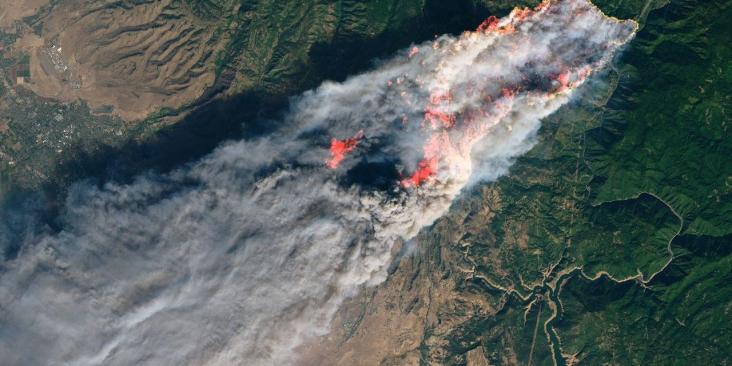
 1.2 million acres have burned, tens of thousands were left homeless, hundreds dead due to freak tornadoes and the Southwest is running out of water while the Mississippi breaches its banks. What is to blame?

Why are weather forecasts (that were once at least somewhat accurate) now hopeless?  These questions may not have easy answers, but the issues surrounding them deserve our nation’s full attention.  One explanation is that climate change is affecting extreme weather events.

(Credit- www.publicradio.org)


Climate Communication, a non-profit science and outreach project made up of scientists across the globe, says:

All weather events are now influenced by climate change because all weather now develops in a different environment than before. While natural variability continues to play a key role in extreme weather, climate change has shifted the odds and changed the natural limits, making certain types of extreme weather more frequent and more intense. The kinds of extreme weather events that would be expected to occur more often in a warming world are indeed increasing.

 “Extreme events are a manifestation of climate change,” according to Thomas Karl, Director of the U.S. Climatic Data Center and lead author of a 2008 report by the U.S. Climate Change Science Program, which showed that extreme weather events linked to climate change are happening right now in the United States. 

Karl added this in a March 2010 broadcast for EarthSky, “We may be fine for many years, and all of a sudden, one particular season, one particular year, the extremes are far worse than we’ve ever seen before.”

Over the last 50 years, the Federal Emergency Management Agency (FEMA) reports that the number of natural disasters in the U.S. has more than QUADRUPLED. And, according to the insurance giant MunichRe, since 1980, the total economic losses attributed to natural disasters has more than TRIPLED.

(Credit- Photo by Scott Olson/Getty Images)

Here in the Lone Star state, researchers from Texas A&M University said, “The months-long Texas drought is sapping the record books bone dry and is racking up dire statistics that have never been reached since reliable record-keeping was started 116 years ago.” This is exactly the kind of abrupt change Karl predicted.

Joplin, Tuscaloosa, the Wallow Fire, the flooding Mississippi, droughts and wildfires across Texas: these events have caused us all pause in the past year.

Earlier this year, we asked our supporters to share stories of the extreme weather they have experienced in 2011; more than 2,200 individuals sent in stories that include a variety of extremes – from heat, to blizzards, to floods, to drought. These stories inspired our 2011 Extreme Weather Video and our Postcards from the Edge. We also created the “Yes, I’m Worried” petition to share with our leaders in Washington who are unwilling or unable to take the climate crisis seriously.

We saw what happened with DDT.  Many ignored the concerns for years, said there must be other explanations.  As they did, people got sick, bird populations dwindled and the problem grew larger.  Debate is good, questions are good, but actively ignoring sound science and the inescapable power of nature is irresponsible.

 We need your help.  Please sign up here to join the movement to support bold action to stop run-away global warming.

Also posted in Climate change, Drought, Uncategorized | Leave a comment