






Building water leadership through community in the Salinas Valley
Posted: in California, Community, Drought, Groundwater, Groundwater Recharge, Water Leadership Institute
Written By

Share
[Ver la versión en español de este artículo]
Water connects people, places, and generations. It carries stories, sustains livelihoods and shapes the landscapes we call home. And yet, despite how deeply shared water is, participation in water decision-making is not always shared equally. In places like the Salinas Valley, structural barriers, from technical complexity to limited access to decision-making spaces, can make it difficult for communities most impacted by water challenges to meaningfully help shape solutions.
Too often, efforts to increase participation focus on bringing people into existing systems without changing the conditions that make those systems hard to access in the first place. Meetings are held during working hours, technical language can feel inaccessible and many spaces are not designed to be culturally relevant or welcoming.
Addressing this disconnect requires more than simply sharing information; it requires rethinking how we build relationships. It means moving at the speed of trust: taking the time to listen, to build meaningful partnerships and to ensure that community perspectives are not only included, but shape the process from the start. While this approach may take more time upfront, it leads to stronger partnerships, more grounded engagement, and solutions that are more responsive to the communities they are meant to serve.
The inaugural Water Leadership Institute (WLI) in the Salinas Valley put this into practice: investing early in relationships and connecting water issues to lived experience to create more accessible and meaningful pathways for engagement in local water decision-making.
Partnerships that build trust
At the heart of the Salinas Valley WLI was a commitment to partnership, not just as a value, but as a way of working. The program was co-created with local partners, including the Salinas Valley Basin Groundwater Sustainability Agency (SVBGSA); California Marine Sanctuary Foundation (CMSF); the MILPA Collective (Motivating Intergenerational Leadership for Public Advancement); and Leticia Hernandez, a community organizer and founder of the Natividad Creek Park Community Garden and Learning Lab. The development and implementation of the leadership curriculum was also supported by Rural Community Assistance Corporation (RCAC), whose Leadership Institute, launched in 2004, was adapted through a collaboration of RCAC, EDF and Self-Help Enterprises (SHE) to create the first Water Leadership Institute in 2013.
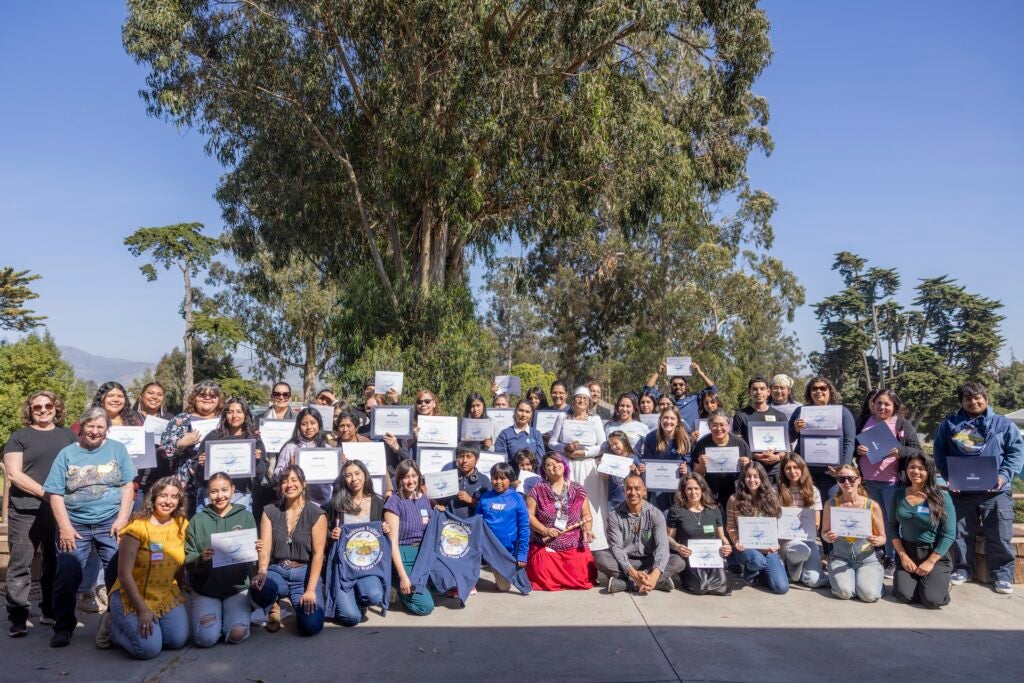
These partnerships were essential to building trust and grounding the program in the community. George Villa and Karina Moreno of MILPA and Leticia played a key role in outreach and recruitment, leveraging deep relationships across and beyond the Salinas Valley to support strong participation. As a result, the Salinas cohort brought together 50 participants ranging in age from 16 to 72 years old, with participants traveling from communities across the Salinas Valley, including particularly strong representation from Soledad. The cohort was predominantly bilingual, and included 15 monolingual Spanish-speaking participants, reflecting the program’s commitment to language accessibility.
Sarah Hardgrave, deputy general manager of SVBGSA, played a key role in helping shape a curriculum that remained grounded in the realities and evolving context of how the Salinas Valley is implementing the Sustainable Groundwater Management Act, and connecting participants to resources, networks and opportunities to engage in water governance in the Salinas Valley.
Too much and too little water
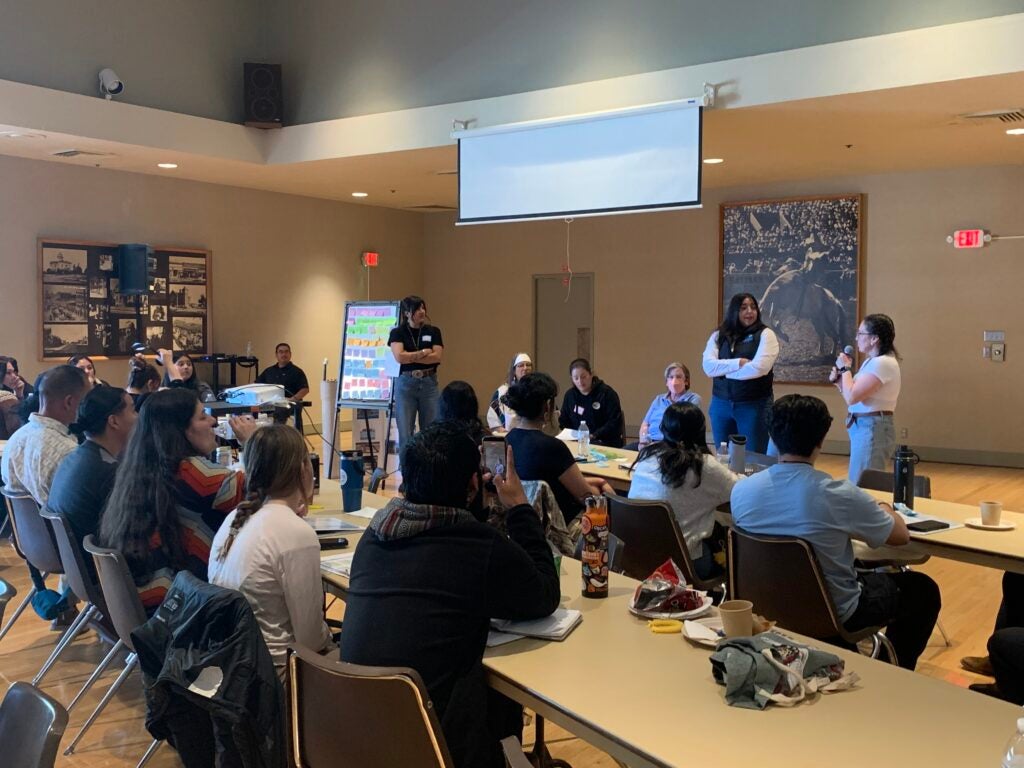
Months before the workshop series began, EDF and partners hosted a community listening session at MILPA’s office in Salinas to better understand local priorities, concerns and relationships to water. For instance, community members shared that water in the Salinas Valley is experienced through challenges like agricultural runoff impacting water quality; recurring and devastating flooding across the basin, particularly in Pajaro and Bolsa Knolls; inequitable water rates; aging infrastructure that leaves some communities without reliable drinking water; and the interconnected impacts of water contamination, land use and displacement.
Many participants also raised questions about how the region can experience both severe flooding and groundwater overdraft at the same time. These conversations revealed a strong interest in understanding the technical aspects of local water systems, and in building skills around communicating across differences, organizing collectively and strengthening community power.
Participants from the listening session and broader community networks helped form a regional advisory group, which guided the program’s focus, outreach strategies and overall design. This process ensured that WLI reflected the needs and realities of the Salinas Valley, rather than applying a one-size-fits-all model. Together, the listening session and advisory group provided invaluable insight and direction for the planning team.
Establishing core values
One of the clearest priorities raised by community members was the importance of centering Indigenous perspectives and creating space for dialogue about how those values do, or do not, show up in existing water management systems. This became a cornerstone of the program, helping ground the cohort in values rooted in reciprocity, relationship and respect for all living things. Kanyon Sayers-Roods, an Ohlone and Chumash WLI collaborator and participant, continually asked: “How can you be a good ancestor in training?”
These values also shaped many of the program’s reflections on leadership. Across workshops, participants consistently described effective leadership as being rooted in care, love, humility, accountability and leading by example. Participants emphasized that meaningful leadership requires a strong commitment to community and equity, along with the willingness to acknowledge what we do not know and build trust through consistency and action.
Together, these efforts shaped a program that is not just a training, but an experience rooted in the lived experience of those most deeply impacted by water issues in the Salinas Valley. Many elements of the program were developed in response to community input: sessions were held on weekends and offered bilingually, were family friendly, with meals and stipends provided to reduce barriers to participation. Outreach and recruitment followed a grassroots relationship-based approach, anchored by MILPA’s deep community ties and trust.
While this approach required more time and resources, it resulted in a highly engaged cohort and over 20 guest speakers. The group was intergenerational, diverse and grounded in strong Indigenous participation, bringing together community members, practitioners and leaders to learn from one another.
What counts as expertise?
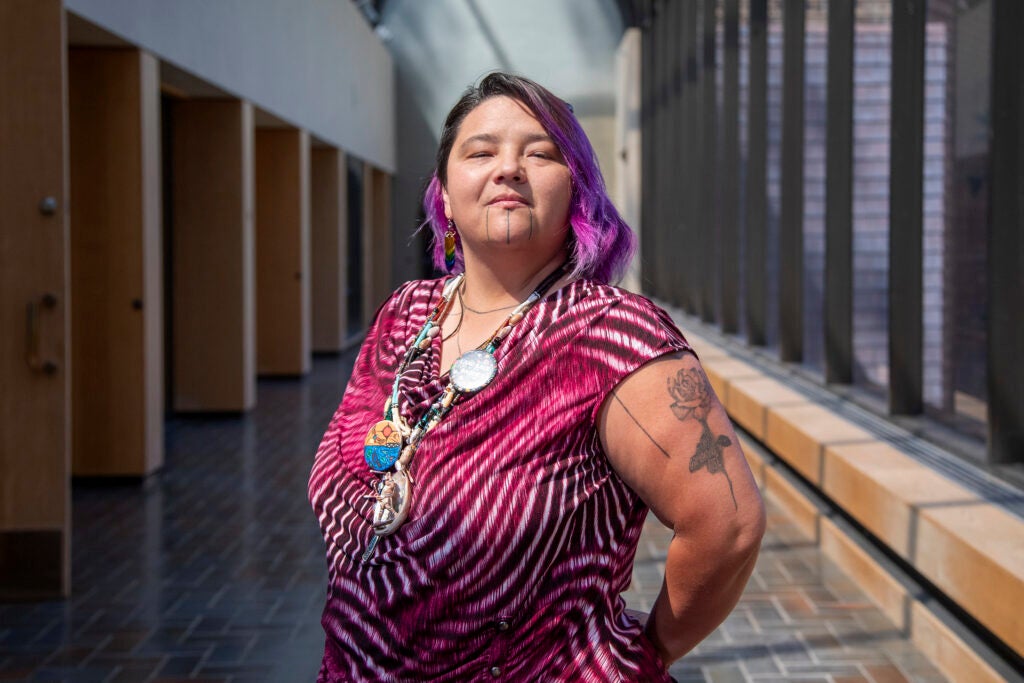
WLI begins by expanding what counts as expertise, centering community knowledge alongside technical learning. For instance, the curriculum included panels on topics like “Water Leaders’ Origin Stories” and how leadership can shift power. WLI participants already engaged in water advocacy and community projects across the Salinas Valley long before joining the program were among the panelists. This approach emphasized that while participants had much to learn from professionals working in agencies and organizations, they also had just as much to learn from one another, as well as valuable lived experience and insight to contribute themselves.
Grounded in both technical learning and community storytelling, the curriculum invited participants to explore water across time, reflecting on the past, present and future of water in the Salinas Valley. They built a foundation in the present, learning about Indigenous relationships with water, the water cycle, groundwater and river systems, water quality and contamination, drought and flood dynamics, and agricultural water use. This curriculum was paired with reflections on leadership styles and personal connection to water.
They then looked to the past, examining how historical decisions, policies and systems of power have shaped current water conditions, and how individuals and communities can navigate and influence those systems. For instance, participants learned about California water rights, and the historical decisions and systems that have shaped how water is managed today. Louise J. Miranda Ramirez, Tribal Chairwoman of the Ohlone Costanoan Esselen Nation, shared the history of the region’s lands and waters through the lens of her people’s advocacy in the area since time immemorial. Having Louise share space alongside those presenting the more technical dimensions of water management was especially meaningful. It helped reshape how water education was approached within the program by demonstrating that technical expertise, cultural knowledge, lived experience, and Indigenous perspectives are not separate conversations, but essential and interconnected ways of understanding and relating to water.
Finally, participants turned toward the future, envisioning what more just and sustainable water systems could look like, identifying opportunities for leadership, and imagining themselves in decision-making spaces. They had the opportunity to meet California Sen. John Laird, of District 17, which includes Salinas and Monterey, who held a question-and-answer session with the group.
Throughout the program, WLI emphasized not just building knowledge, but also connection and application. Participants explored pathways for ongoing involvement through networking with local organizations and agencies. The program culminated in a collective “Water Mosaic,” where participants contributed reflections on individual water droplets, creating a shared visual representation of their learning, values and connection to one another.
Through reflection across time and across spheres of influence, from individual to systemic, participants began to see themselves not just as learners, but as leaders shaping the future of water in the Salinas Valley.
Impact and next steps
Exit surveys show that the WLI participants left with a stronger understanding of water systems and the forces that shape them, along with a deeper sense of confidence in their own leadership. Just as importantly, many described a renewed sense of connection to their communities, to each other and to the role they can play in shaping water decisions moving forward.
As the program continues to evolve, there is strong interest in future WLI cohorts across the Salinas Valley, alongside early exploration of how to support alumni beyond the program itself. In partnership with the Salinas Valley Basin Groundwater Sustainability Agency, we are beginning to consider what ongoing engagement could look like, ranging from opportunities for deeper involvement in local water governance processes to continued spaces for learning and connection among participants.
At the same time, EDF is continuing to learn what meaningful support can look like for participants interested in stepping into GSA committees or other water governance spaces, and what tools, relationships, and resources community members may need to feel successful and supported in those spaces. Early efforts include piloting Q&A sessions with SVBGSA and EDF staff for WLI alumni interested in open GSA committee seats, as well as exploring ways to support community members who want to participate in public meetings or provide public comment.
While WLI workshops introduce these skills and opportunities, we recognize that ongoing support and relationship-building beyond the cohort itself is essential. Sustaining these connections is not only more effective in helping emerging water leaders navigate complex governance spaces, but also reflects the relational foundation that shaped this first cohort.
When WLI was started, the primary measure of success was whether participants eventually joined water boards or GSA committees. While EDF remains committed to supporting participants who are interested in pursuing those opportunities, the definition of success has expanded: It now also includes the strength of the relationships and trust built between EDF, partner organizations and the community members who the WLI aims to serve.
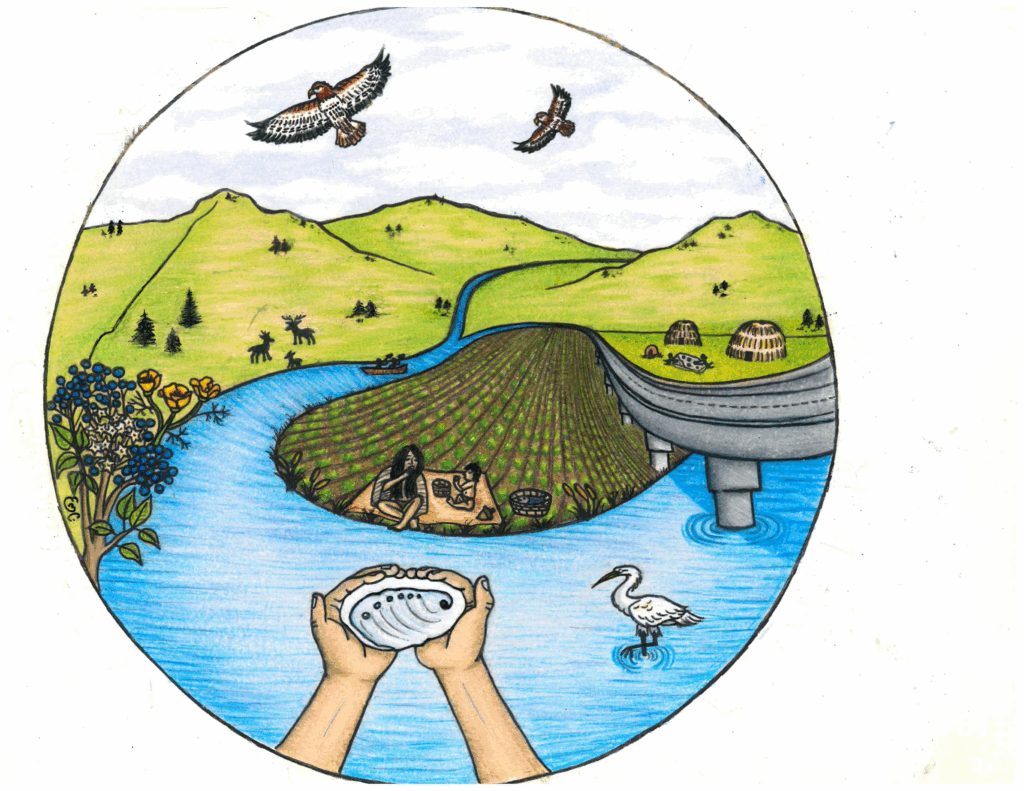
We acknowledge that the Salinas Valley Water Leadership Institute was held on the unceded, ancestral homelands of the Salinan-, Ohlone- and Esselen-speaking peoples. We honor their enduring relationships with the lands and waters of the Salinas Valley and recognize the many Indigenous communities, descendants, and relatives who continue to steward and care for this region today. We offer our gratitude and respect to the First Peoples of the Salinas Valley, whose knowledge and leadership continue to shape its future.