







From Idea to Groundbreaking: Multibenefit Land Repurposing Grantees Share Lessons Learned
Written By

Share
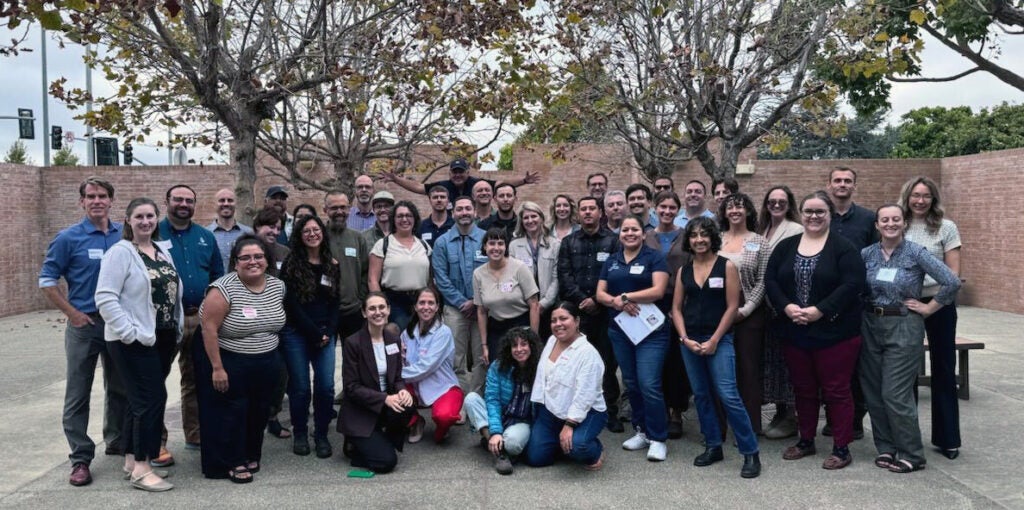
From the Tule Subbasin to the Pajaro Valley, groundwater sustainability managers, nonprofit staff and local government leaders from across California recently came together to work out the nuts and bolts of project delivery, share lessons learned and celebrate the progress of California’s Multibenefit Land Repurposing Program (MLRP) at a pivotal time during its expansion.
The fourth annual Pause and Reflect gathering for MLRP block grantees came just a few weeks before the California Department of Conservation (DOC) released draft guidelines that outline how $200 million in 2024 Climate Bond funding will be administered. MLRP was established in 2021 and has been appropriated $90 million in general funds from the Legislature. This funding has supported two rounds of grants for eight regions, one Tribal grant, and 41 approved projects totaling 5,500 acres of agricultural lands slated for transition to other uses that reduce groundwater use while delivering new public benefits.
Overcoming roadblocks to project delivery
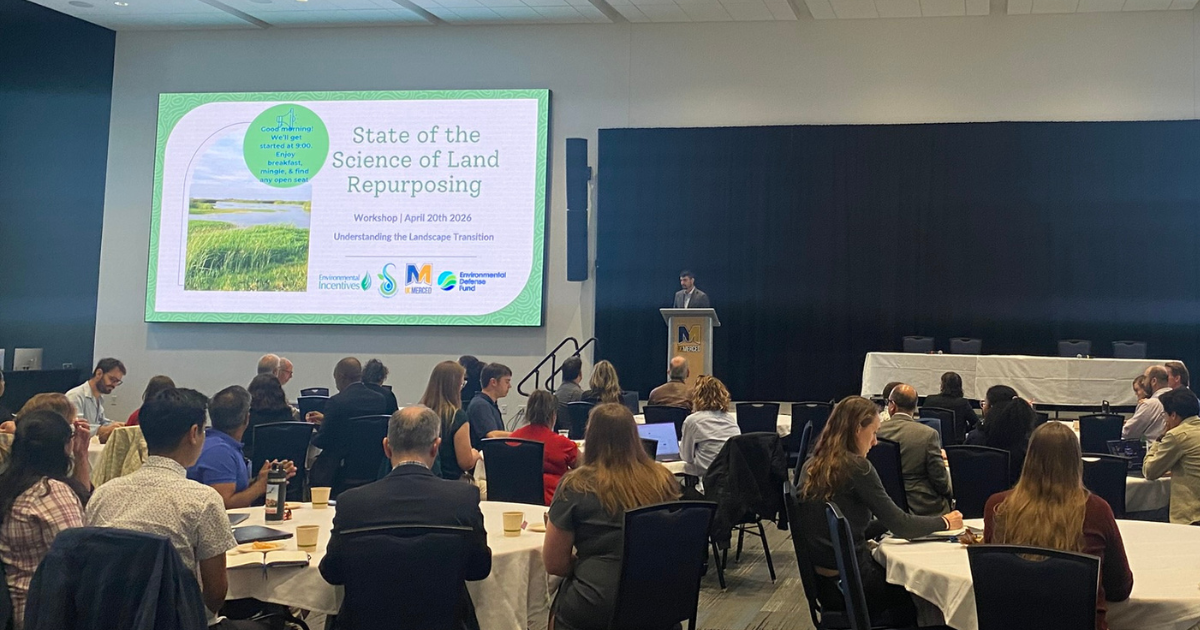
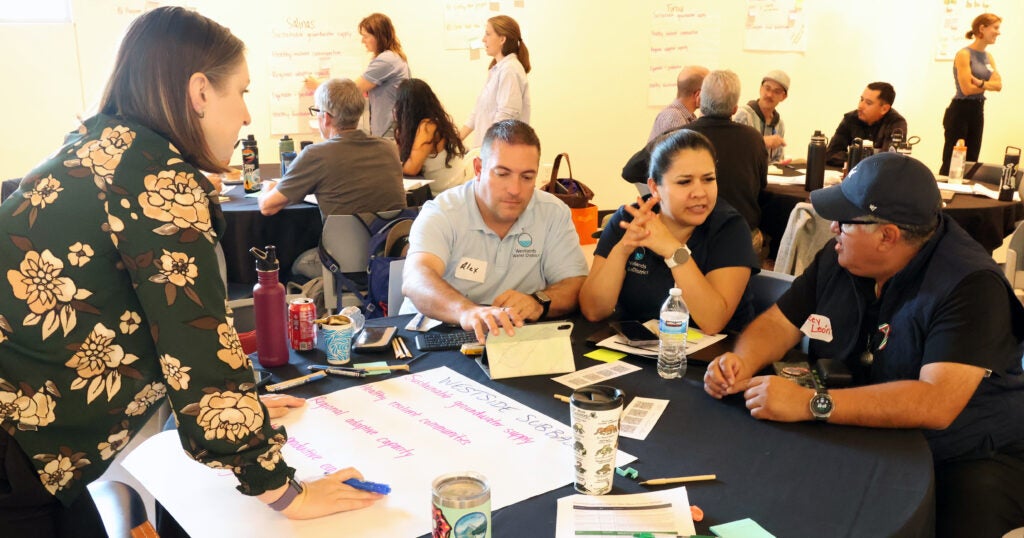
During day one of the Pause and Reflect event at the National Steinbeck Center in Salinas, grantees talked about the realities of project implementation and the practical challenges of moving multibenefit projects from concept to implementation and long-term monitoring. They did a mapping exercise to identify roadblocks along the project delivery journey and talk to others who have already overcome those hurdles.
For example, grantees described delays related to permitting, property boundaries, acquisition documents, and engagement with project neighbors. They also asked that other grantees who have navigated these challenges present their successful strategies during future monthly meetings on topics such as “Contracting with small growers and landowners.”
Although grantees may be working in very different areas with different challenges — from saltwater intrusion on the Central Coast to land subsidence in the San Joaquin Valley — these conversations highlighted that there are still lessons to be learned from each other about navigating contracts, public access, small grower engagement and other elements of implementing multibenefit land repurposing.
In addition to discussions across geographies, the eight grant regions (organized by groundwater subbasin) gathered amongst themselves to discuss their regional priorities within five MLRP benefit categories: Sustainable Groundwater Supply, Healthy, Resilient Communities, Regional Adaptive Capacity, Equitable and Productive Economy, and Healthy, Functioning Ecosystems. That discussion provided the opportunity to re-examine the values that communities, practitioners and decision-makers prioritize and how their projects are meeting community goals.
Seeing projects in action
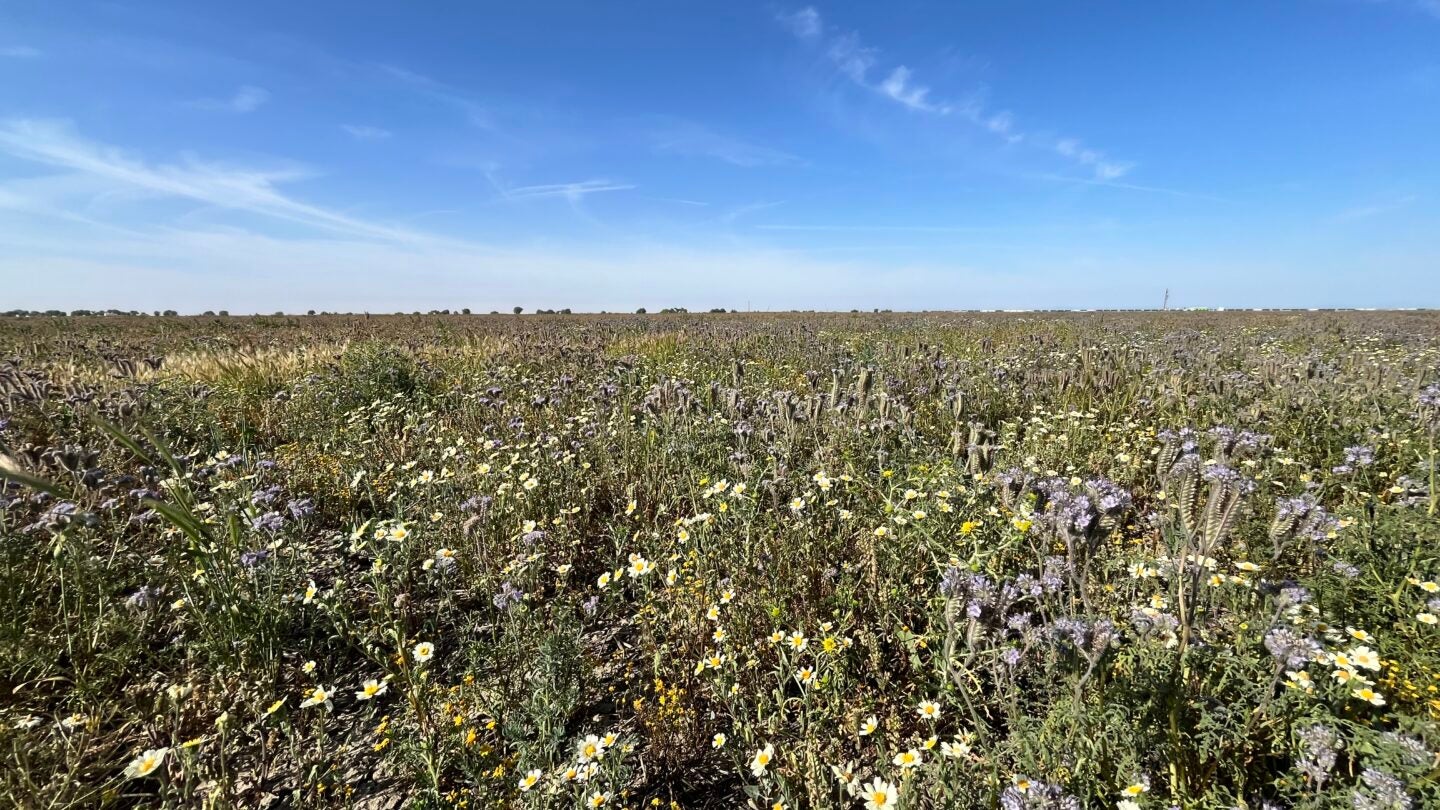
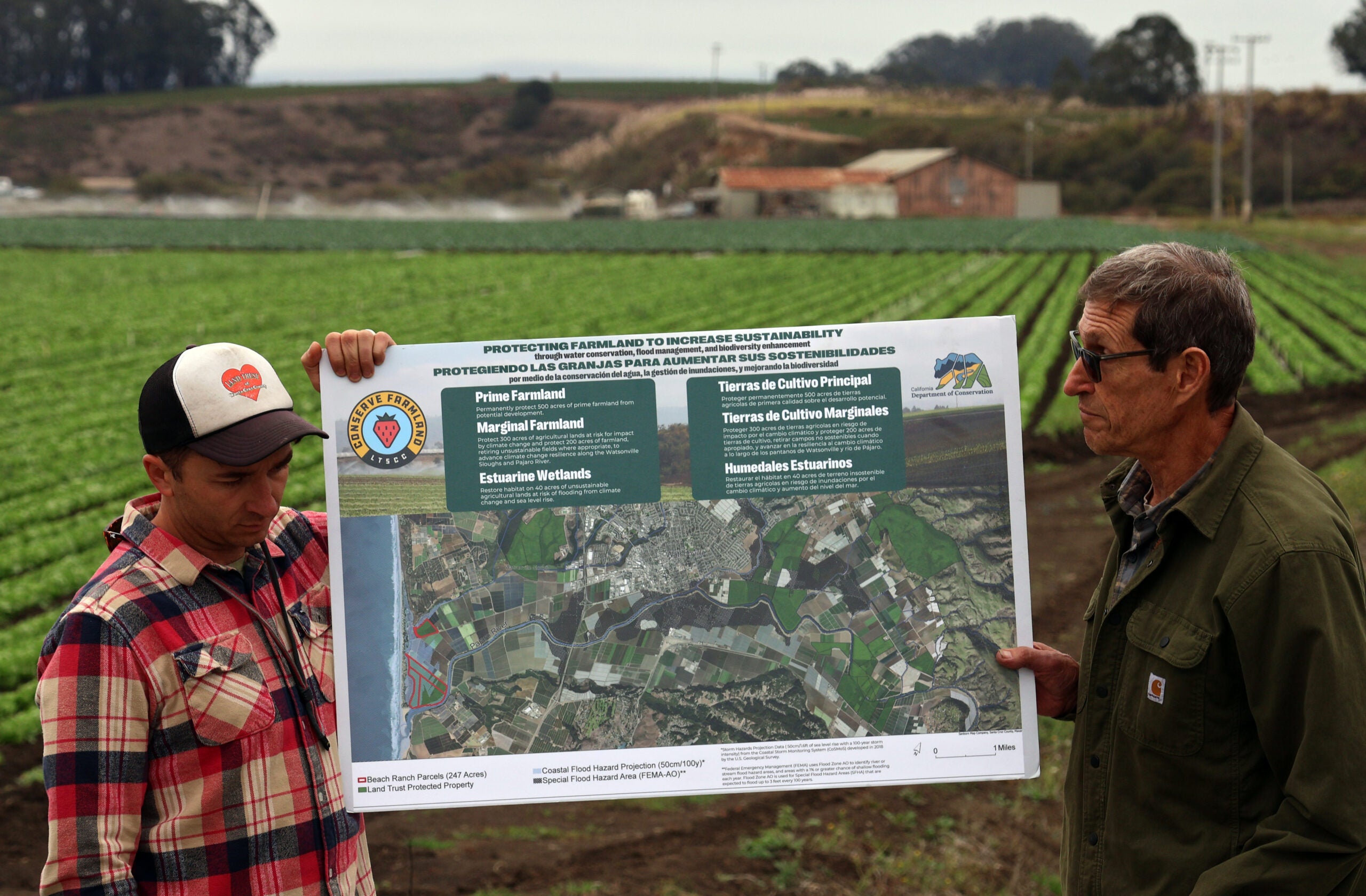
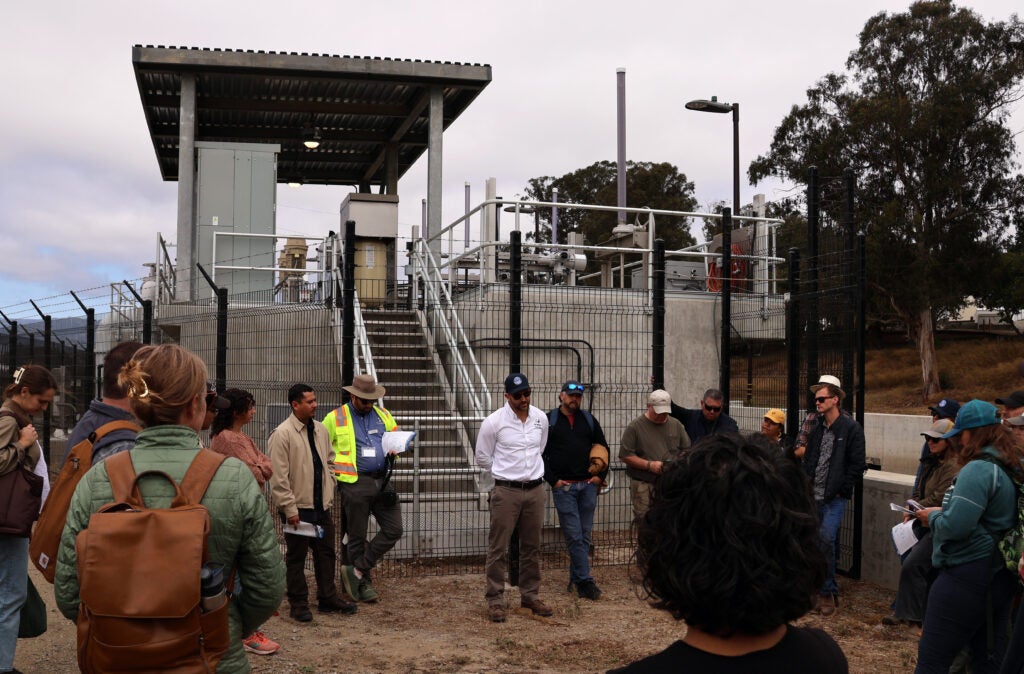
The Pause and Reflect gathering also fostered field-based learning by visiting MLRP projects in the Pajaro Valley region. First participants visited Land Trust of Santa Cruz County sites, including Beach Ranch, a land acquisition project that restored 65 acres of wetland habitat and protects the remaining agriculture on the site. The Land Trust helps buy land and works with growers to determine which of their marginal, frequently flooded lands would be best for alternative uses, also offering a conservation easement as an option.
Next, block grantees visited the College Lake Integrated Resources Management Project, which is using stored surface runoff water as an alternative to groundwater for agricultural irrigation. The project improves habitat and passage for the endangered South-Central California Coast Steelhead, reduces groundwater pumping in areas prone to saltwater intrusion and provides a source of water to nearby farms instead of pumping groundwater, while supporting migrating bird habitat.
The next phase of MLRP: $200 million
Participants also identified a few key priorities for the future of the MLRP while the Department of Conservation provided a preview of new MLRP guidelines for projects funded by $200 million from the Climate Bond, which many existing grantees hope to tap to continue advancing their regional work.
One priority is keeping the “multi” in “multibenefit.” While the MLRP was created in response to the Sustainable Groundwater Management Act (SGMA), the program is pioneering for supporting land transition projects that deliver benefits beyond groundwater savings, such as community access, workforce development, organizational capacity and habitat restoration. The new guidelines maintain this unique feature and will provide funding between $1 million and $17 million to current and new regions to advance community health; economic wellbeing; and water supply, habitat and climate benefits.
Forty percent of Climate Bond funds will be invested in disadvantaged communities. The Department of Conservation also plans to introduce dedicated funding and technical support for small growers, addressing an ongoing concern about how to meaningfully involve this group. Participants suggested considering the loss of small farmers as a potential “seventh undesirable result” of SGMA and connecting their continued viability to MLRP’s Equitable & Productive Economy benefit.
A 45-day public review period of the Climate Bond Guidelines will end Dec. 7, and a concurrent 60-day Tribal consultation period will end Dec. 22. Written comments can be sent to DOC staff at mlrp@conservation.ca.gov, and the public can also attend several workshops and office hours. To learn more, visit the Department of Conservation MLRP website.
Optimism amid landscape change
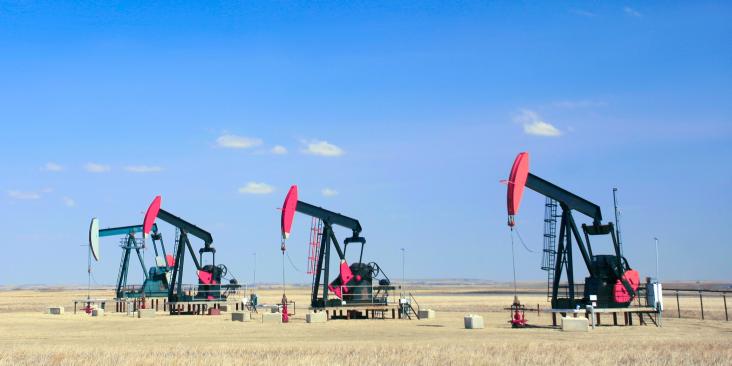
Events such as the Pause and Reflect prove the immense value of bringing together people across the state who are working to help communities adapt to the realities of water scarcity. To achieve groundwater sustainability, 900,000 acres of farmland may need to come out of production in the San Joaquin Valley as part of the transition to sustainable groundwater pumping.
That will not be an easy transition, and MLRP is just one tool in the toolbox to help navigate it. But as the first day of the MLRP block grantee Pause and Reflect came to a close, attendees gathered in a circle and said one word to describe how they were feeling or what they look forward to for the future of the program. “Optimism,” “momentum,” “insight” and “connection” were some words they shared.