Climate change solutions
We deliver game-changing environmental solutions that have a real impact for people around the globe.
Richard Denison, Ph.D., is a Lead Senior Scientist.
Readers of this blog will recall the major concerns EDF, EPA’s science advisors, and many others have raised about the Trump EPA’s systematic exclusion from its risk evaluations of all human exposures to chemicals released to air, water and land. EPA has taken this illegal, unscientific and un-health protective approach across the board in the risk evaluations it has issued to date in draft or final form under the Toxic Substances Control Act (TSCA).
EDF first flagged the emergence of this fatally flawed approach over two years ago, and again when it was applied to the likely human carcinogen 1,4-dioxane, one of the first 10 chemicals undergoing TSCA risk evaluations. Since then the Trump EPA has doubled down, repeatedly defying its own science advisors who have called out this deficiency in virtually all of their peer reviews of EPA’s draft risk evaluations. EPA is clearly refusing to budge, issuing two final risk evaluations for methylene chloride and 1-bromopropane that seek to codify the approach.[pullquote]EPA’s Office of Water is deferring any decision on whether to regulate 1,4-dioxane in drinking water, pending completion of a risk evaluation that expressly excludes that exposure. That exclusion is in turn based on the TSCA office’s claim that the Office of Water already has it covered.[/pullquote]
The asserted basis for ignoring tens of millions of pounds of these chemicals released annually is EPA’s claim that the releases are adequately managed under other laws the agency administers. To bolster that claim, EPA also asserts that it has closely consulted with the EPA offices that administer those other laws to ensure this is the case. Let’s take a closer look at the nature – and apparent effects – of that consultation in one setting: 1,4-dioxane in drinking water, which falls under the authority of the Safe Drinking Water Act (SDWA) administered by EPA’s Office of Water. (more…)
This post originally appeared on EDF Voices.
Maria Harris is an Environmental Epidemi
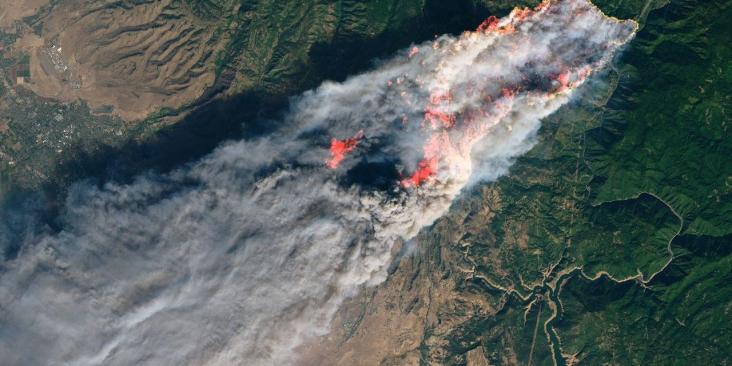
If the risks, hardships and anxiety of life during a pandemic were not enough, my fellow northern Californians are now facing another health crisis.
As I write this, hundreds of wildfires are burning across the state, among them two of the largest ever in California. Together, the fires have burned more than 1.4 million acres, destroyed 2,800 homes and buildings, killed eight people and forced thousands to evacuate their homes.
On top of the acute risks to lives and homes, residents across the state are suffering from highly polluted air as massive plumes of smoke fill the skies above our homes.
Children, seniors and those with lung disease are especially vulnerable
As a mom of two young kids, it’s been a tough couple weeks of anxiously monitoring air quality data and maps to determine if and when it might be safe to go outside, while seeking information on how to keep my family healthy.
As an environmental health scientist, I know that wildfire smoke has been linked to a range of negative health impacts, including asthma exacerbation, which can lead to emergency room visits and hospitalizations, along with increased rates of heart attacks and even death. Children and pregnant women, as well as those with heart disease or respiratory conditions like asthma, are particularly vulnerable to the health impacts of wildfire smoke.
Richard Denison, Ph.D., is a Lead Senior Scientist.
What a mess. That’s the best that can be said from the outside about the process EPA has followed to decide which companies are to pay fees to help defray the agency’s costs of conducting risk evaluations for the next 20 chemicals under the Toxic Substances Control Act (TSCA).[pullquote]EPA’s steps to endanger its ability to collect the fees under TSCA that Congress mandated border on self-sabotage.[/pullquote]
These fees were set forth in EPA’s final TSCA fees rule issued in October 2018. The total fee assigned to each of the next 20 chemicals for which risk evaluations are now underway was set at $1.35 million. That fee is to be paid by manufacturers (including importers) of a chemical. TSCA provided EPA with authority to charge processors of these chemicals a fee as well, but the agency opted to exclude processors from such fees in its final rule (see p. 52,696). EPA also opted not to charge fees to cover any of the costs it incurred for the first 10 risk evaluations (see p. 52,708 of the fees rule), although it had authority to do so.
Last week EPA issued what it calls its “interim final list” of companies obligated to pay fees to cover the costs of the next 20 risk evaluations. The list is dramatically scaled-back from the agency’s earlier list, and it is impossible for the public to understand the basis for the changes. That is in no small part due to the convoluted, opaque, and legally suspect process EPA has followed. (more…)
Richard Denison, Ph.D., is a Lead Senior Scientist.
The Trump EPA’s understating of the risks to workers posed by both existing and new chemicals under the Toxic Substances Control Act (TSCA) has been a frequent topic for this blog. This disturbing, illegal policy continues unabated and, if anything, has accelerated and expanded to outright dismissal of worker health concerns.[pullquote]The Trump EPA’s blatant shirking of its clear responsibilities under TSCA to identify and mitigate the serious risks that chemicals present to workers – who are on the front lines of chemical exposures – surely constitutes one of its most egregious failings.[/pullquote]
In its reviews of new chemicals, EPA now frequently identifies serious risks to workers that exceed its own risk benchmarks, often many times over. How great are the exceedances EPA finds and ignores? Our examination of recent cases, described below, reveals exceedances as high as 25,000-fold. In other words, EPA has found and then dismissed worker exposures to new chemicals at levels as much as 25,000 times higher than it deems acceptable. That is not a typo: In a very recent case EPA found a dermal risk of reproductive effects to workers that exceeded its own benchmark by a factor of 25,000.
Any reasonable new chemical review that identified excess risk would then impose conditions blocking or conditioning the market entry of these chemicals in a manner sufficient to mitigate the identified risks. Indeed, that is exactly what TSCA requires EPA to do.
Instead, the Trump EPA over and over again clears these chemicals entirely, ignoring its own risk findings to assert that the chemicals are “not likely to present unreasonable risk.” This has now been done for hundreds of new chemicals EPA has reviewed in the past two years.
To illustrate what EPA is doing, we examined the 29 new chemicals EPA found “not likely to present unreasonable risk” (“not likely” determinations) since the beginning of June of this year. (more…)
Richard Denison, Ph.D., is a Lead Senior Scientist.
Today, the Trump EPA released its second final risk evaluation and determination under the reformed TSCA, for the carcinogenic solvent, 1-bromopropane (1-BP). [pullquote]EPA has once again ignored expert scientific input it received from its own advisors.[/pullquote]
As was the case with the final document for methylene chloride – which has already been challenged in court (see here and here) – EPA has doubled down on the illegal, unscientific, and un-health protective approach it has taken in all of its draft risk evaluations for the first 10 chemicals reviewed under TSCA.
EDF will be closely examining this final document, but it is already apparent that EPA continues to grossly and systematically underestimate the exposures to and risks of 1-BP to the general public, workers and the environment.
Below are four examples of the flaws; each was raised by EPA’s own Science Advisory Committee on Chemicals (SACC) in its peer review as serious deficiencies – expert scientific input that EPA has simply chosen to ignore in finalizing the document: (more…)
Tom Neltner, J.D., Chemicals Policy Director and Maricel Maffini, Ph.D., Consultant
Last week, the Food and Drug Administration (FDA) announced the phase-out of per- and polyfluorinated alkyl substances (PFAS) used to greaseproof paper and paperboard food packaging made from a specific type of short-chain PFAS known as 6:2 fluorotelomer alcohol (6:2 FTOH). The action, narrow as it is, is welcome news for efforts to protect public health and the environment from the risks posed by short chain PFAS, known as “forever chemicals” because they do not degrade.
FDA secured voluntary agreements with three companies, Archroma, Asahi Glass, and Daikin, to phase-out products based on 6:2 FTOH. A fourth company, Chemours, asked FDA to suspend the agency’s approvals on its products containing the PFAS one year ago. The action affects 15 food contact substance notifications (FCN) approved by the agency between 2006 and 2016. It does not address 13 FCNs for similar greaseproofing uses made from PFAS other than 6:2 FTOH. And, under the agreement, consumers may still find 6:2 FTOH-laden, carry-out containers until June 2025.
The process FDA took, and the time it took to get there, reveals the significant difficulties the agency has in reversing past actions in the face of mounting evidence of a chemical’s risk:
These difficulties reinforce the need for actions being taken by states such as Washington, Maine, New York, and California, by Congress, and by retailers to reduce uses of PFAS in their products. When it comes to food packaging, PFAS are dinosaurs and their time is running out.