Climate change solutions
We deliver game-changing environmental solutions that have a real impact for people around the globe.
What happened
The Good Food Foundation recently announced its annual awards recognizing foods with both superior taste and responsible business practices, sparking controversy when a plant-based blue ‘cheese’ product was initially a finalist in the cheese category, then was disqualified and removed from the list of finalists. According to the foundation, the product was disqualified because one of the ingredients, kokum butter, had not been designated as GRAS (generally recognized as safe) by the Food and Drug Administration.
Why it matters
Kokum butter is derived from the seeds of a kokum tree’s fruit, primarily cultivated in India. The substance is not found in any of FDA’s lists of ingredients either approved or reviewed for safety. Someone somewhere determined that the use of kokum butter in food is GRAS. However, who made that determination, when, and the basis for the decision are unknown. For example, how much of it is safe to eat? Is it safe for anyone—children, pregnant women, people with preexisting conditions? Could it cause allergic reactions or interfere with medication? Does it leave the body quickly? Does it mimic or interfere with hormones? We just don’t know and neither does FDA.
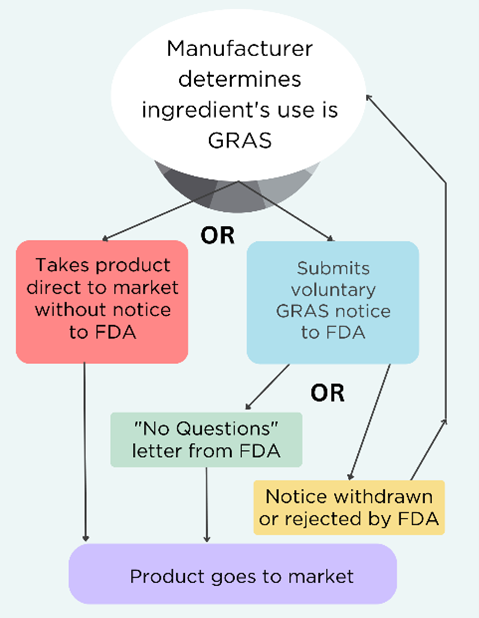
Here’s a quick overview of the GRAS system, which we have written about extensively in our Broken GRAS blogs.
Our Take
Back in 2022, tara flour, another ingredient of unknown safety, caused more than 400 people to get sick. Like kokum butter, tara flour was not approved or reviewed for safety by FDA.
We applaud the Good Food Foundation for requiring that the ingredients used in foods competing for its awards be reviewed by FDA. It is a matter of protecting public health. We fully support, at minimum, company submissions of GRAS notifications and FDA reviews. Although we have been critical of FDA’s outdated science in safety assessment of chemicals, these notifications provide at least some degree of visibility into the food supply that otherwise is not available to the agency in charge of protecting the public.
Next steps
We will continue to engage with FDA to ensure the agency has the tools and resources to strengthen the oversight of companies making GRAS claims without disclosing their safety assessments. The ongoing reorganization of FDA and creation of the Human Food Program is a unique opportunity to fix the broken GRAS program so that all Americans can have confidence in the safety of the food they eat.
By Lindsay McCormick, Senior Manager, Safer Chemicals and Roya Alkafaji, Manager, Healthy Communities
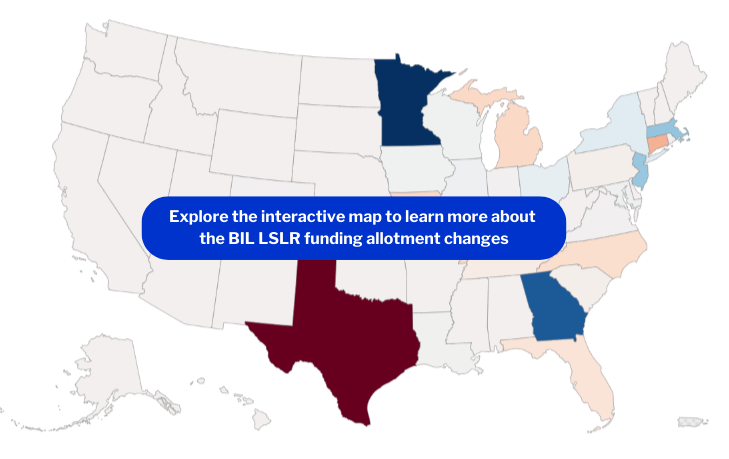
President Biden recently announced $3 billion in federal funding for lead service line replacement. In the third year of this historic $15 billion investment through the Bipartisan Infrastructure Law to replace harmful lead pipes across the U.S., there is an effort to shift where the money is going to better reflect states’ needs. While many saw no or minimal change, others – like Texas, and Minnesota – saw major changes to their funding allotments.
An estimated 9 million homes and businesses in the U.S. still receive their drinking water through harmful lead pipes. To make the best use of the federal funds aimed at protecting public health, it is critical that the money flows to the states with the greatest need, based on their estimated number of lead service lines without delay.
EPA’s 7th Drinking Water Infrastructure Needs Survey and Assessment (DWINSA), which is the best current estimate of lead service lines across the nation, is the driver for FY23 and FY24 funding allotments. To best reflect the latest information, EPA allowed states and water utilities to submit a “one-time update” to service line information in the fall 2023, thus taking advantage of utilities’ ongoing efforts to inventory their service lines. The goal, which was partially achieved, was to more accurately allocate the funding based on need.
EPA reported that 67% of water systems provided a response to the DWINSA update. While we do not know the magnitude of the changes to the state-level lead service line projections as EPA has not yet made this information public *, we do know how it has impacted the funding allotments.
This year, Illinois received the most funding ($241 million), followed by Florida ($229 million), and Ohio ($184 million). Twenty-six states received the minimum allotment of $28.7 million.
Funding allotment changes ranged from minimal to major:
We created a map to visualize the most impactful changes from the FY24 funding allotments, compared with FY23.
Last year, EDF analyzed the data behind the 7th DWINSA and found flaws in three major areas affecting Texas, New York and Florida. EPA’s fall 2023 one-time update to the DWINSA seems to have corrected two of the three issues we highlighted:
When EPA released the initial DWINSA results in April 2023, we described how the new formula would positively impact funding allotments for lead service line replacement needs by state. It is now critical that EPA make the formula available for replication, as requested by State Revolving Fund administrators. This step would enable state policymakers and the public to better understand how funding decisions are made. EPA should also promptly release the state-level LSL projections from the one-time update, which drove the recent changes in funding amounts.
EDF will continue to monitor how these resources are allocated to ensure these hard-fought funds go towards ensuring everyone has access to safer drinking water. Water utilities should aggressively pursue funding and start replacing lead service lines now while this historic funding is available.
Read EPA’s press statement and memo on the funding allotments.
*Updated 5/21/24: Since the publication of this blog, EPA published the state-level service line data from the updated DWINSA.
By Maria Doa, PhD, Senior Director, Chemicals Policy, Maricel Maffini, PhD, Consultant, and Liora Fiksel, Project Manager, Healthy Communities
You may have seen news or online content from FDA about chemicals in our foods, including that our food – and everything else in the world – is made up of chemicals.
FDA’s online content also characterizes toxic chemicals such as lead and mercury simply as naturally occurring or naturally present in our environment. It further fails to distinguish the most harmful chemicals by asserting that for all chemicals, it is the amount of the chemical that matters when determining their harm.
It is true that everything, including our food, is made up of chemicals. However, that does not mean that we should treat all chemicals equally.
Highly toxic chemicals such as lead, mercury, PFAS, TCE, methylene chloride, and BPA are examples of substances that should not be in our food. These toxic metals and synthetic chemicals do not have nutritional benefits and are not equivalent to the chemicals that make up the proteins, fats and carbohydrates that are necessary for a healthy diet. We should not be exposed to toxic chemicals at any level.
The suggestion that toxic metals and synthetic chemicals such as PFAS in our food are just chemicals like essential elements such as potassium in bananas is misleading and harmful.
Unfortunately, FDA accomplished just that. In a webpage released earlier last week, the agency tried to address worries about chemicals in food, an issue that consumers have been concerned about for several years. In its attempt to bring confidence about the safety of the food supply, FDA tried to normalize the presence of toxic chemicals, including neurotoxicants, carcinogens and endocrine disruptors, in our food.
If a toxic chemical such as lead or mercury is naturally occurring, is it OK?
No. While there are very low levels of these metals that are naturally present in our environment the majority of what is now in our environment is not natural background but the result of pollution and other contamination due to human activities. These levels are not “naturally occurring.”
It is also essential to recognize that naturally occurring does not equate with safety. There is no safe level of exposure to lead and mercury which are potent neurotoxicants. They are particularly harmful to infants and small children and exposure to even small amounts can cause harm.
Is there always a safe level of exposure to a chemical?
Treating all chemicals in our food the same way ignores the science. Some chemicals, in addition to lead and mercury, are so toxic that essentially any amount of exposure is of concern:
And being exposed to more than one of these chemicals that cause the same harm, such as cancer, can increase the harmful effects.
Further, Congress also recognized that some chemicals should not be allowed to be added to our food. Period. Congress included a provision known as the Delaney Clause in our food safety laws that states a food additive cannot be deemed “safe if it is found to induce cancer when ingested by man or animal.” Yet unfortunately, some carcinogens continue to be allowed.
How can we be assured of a safe food supply if the agency that is supposed to ensure safety takes the same “it’s the amount that matters” approach to these toxic chemicals as it does to salt?
And how can we have confidence that FDA will fully consider consumers in determining food safety when the agency not only falsely equates toxic chemicals with the chemicals that make up the proteins, fats and carbohydrates in our diet but also takes a patronizing approach to the public by stating that “chemical names may sound complicated but that does not mean they are not safe.”
In the last several years, public interest organizations have petitioned FDA to review the safety of chemicals known to pose risk to health. Many petitions are still unresolved.
FDA should recognize toxic chemicals for what they are – chemicals that can harm our health and well-being – rather than camouflage them just as any other chemical. The science and the law demand that in making decisions about food safety, FDA recognize and act on the most toxic chemicals and fully consider consumers in its decision making.
By Maricel Maffini, PhD, Consultant, and Tom Neltner, Executive Director, Unleaded Kids
On February 9, 2024, the European Commission published a proposed regulation [PDF, 502KB] that would ban most uses of bisphenol A (BPA) in materials that contact food—including plastic and coatings applied to metal cans—and restrict other uses. Interested parties can comment on the draft until March 8, 2024. (You must register to comment.)
This proposed regulation is based on the 2023 European Food Safety Authority’s (EFSA) risk assessment of BPA that concluded that dietary exposures are a health concern. The proposed regulation would impact the following bisphenol-based food contact materials:
In its 2023 reassessment, EFSA estimated that the amount of BPA that could be safely consumed daily is 20,000 times less than its 2015 estimate. Among the health problems associated with BPA exposure are harm to the immune and reproductive systems, disruption of the normal function of hormones and reduced learning and memory.
The draft rule would manage the risk of BPA uses to significantly reduce dietary exposure after considering alternatives that are technically feasible at a commercial scale.
The European Commission’s proposed rule is an excellent example of a risk management decision that considers safety and achievability. The Commission balanced protecting human health by eliminating as many sources of BPA as fast as possible with the implementation challenges. The Commission has included transition periods to eliminate all uses of food-contact articles manufactured with BPA ranging from 18 months for final food packaging (e.g., plastics, can coating) to 10 years for repeat-use, final food contact articles used in food production equipment.
In a previous blog, we stated that Americans’ exposure to BPA from food is similar to that of Europeans. Unfortunately, FDA doesn’t share the same sense of urgency as the European Commission. While Europe is on track to ban most uses of BPA in food contact materials, FDA is failing to take action to protect our families.
EDF and our allies submitted a food additive petition [PDF, 542KB] asking the agency to limit BPA exposure from food by revoking approvals for using BPA in adhesives and can coatings and to setting strict limits on using BPA in plastic that contacts food. FDA filed the petition on May 2, 2022, and has not made a final decision on it, despite a 180-day statutory deadline. It is now more than 600 days overdue.
Once the rules are finalized, compliance would be required within 18 months for most products and within 36 months for:
The rule would also allow repeat-use, final food contact articles used in professional food production equipment to remain in service for up to 10 years.
We will submit comments to the European Commission seeking clarity on some aspects of the proposal. In addition, we will continue to press FDA to make a final decision on our petition, including potentially taking legal action for unreasonable delay in responding to it.
1 The rule is inconsistent regarding status of plastics other than polysulfone. EDF will submit comments seeking clarity.
2 The Commission may expand to more bisphenols if they are added to Annex VI, Part 3 of Regulation (EC) No 1272/2008 due to their harmonized classification as category 1A or 1B “mutagenic,” “carcinogenic,” “toxic to reproduction” or category 1 “endocrine disrupting” for human health.
3 BADGE (CAS No 1675-54-3) – is a type of epoxy resin manufactured from BPA.
4 Rule defines the limit of detection as 0.01 milligram of bisphenol per kilogram of food.
Today, we are excited to introduce the Environmental Defense Fund’s (EDF) latest initiative—the Chemical Exposure Action Map. This tool is designed to spur the Environmental Protection Agency (EPA) to transform the assessment of risks posed by toxic chemicals in our communities.
Our map focuses on multiple high-priority chemicals—making visible the urgent and long-overdue need to assess the risks of chemicals together as they exist in the real-world. Unlike many current methods that look at risks one chemical at a time, our map offers a comprehensive view, highlighting the potential for cumulative risks from multiple high-priority chemicals.
In a world where industrial facilities expose communities to multiple harmful chemicals daily, many have long called for a cumulative approach to assessing the risks from these chemicals. It is crucial that we wait no longer to reassess how we evaluate the health risks they pose.

Earlier this week EDF submitted comments that urged EPA to finalize the strongest possible improvements to the Lead and Copper Rule (LCRI). An estimated 9.2 million lead service lines (LSLs) are still connected to homes and buildings throughout the country. EPA’s proposal is a critical step to protect Americans from the harmful of effects of lead in drinking water by requiring LSL replacement.
The EPA’s proposal, if finalized, would protect public health and yield huge socioeconomic benefits. This rule presents a critical opportunity to fix this longstanding environmental injustice. (more…)