Climate change solutions
We deliver game-changing environmental solutions that have a real impact for people around the globe.

Building resilient land and water systems that allow people and nature to prosper in a changing climate.

There’s some good news in the animal kingdom. Sea turtles, the beloved green jewels of the world’s vast blue oceans, appear to be bouncing back after decades of decline.
Six of seven sea turtle species are currently listed under the U.S. Endangered Species Act (ESA) – the green, loggerhead, Kemp’s ridley, olive ridley, hawksbill, and leatherback – and many of them have been on the list since 1970. Since then, conservation efforts have made significant strides in protecting nesting beaches, reducing mortality in fisheries and establishing marine protected areas.
Recent research suggests there is hope for beleaguered sea turtles. Important recovery in some local populations has shown that we can turn things around for sea turtles, especially with effective endangered species policy and improved management.
This comeback is promising, not just for turtles, but also for marine ecosystems and the marine economy at large.

I spent the summer meeting with farmers, commodity groups and food companies in the Midwest to discuss collaborative conservation approaches. Whether we were in Missouri, Iowa or Minnesota, water quality was top of mind.
Agriculture has a large impact on water quality – the sector is the source of 70 percent of the nutrients that flow down the Mississippi River and cause dead zones in the Gulf of Mexico.
Farmers have made big strides on implementing and scaling conservation measures to improve water quality and agriculture’s overall environmental footprint. Unsung heroes like Tim Richter, Kristin Duncanson and Denny Friest are constantly fine-tuning nutrient and soil management with new efficiency tools, finding better ways to implement cover crops or reduce tillage, installing wetlands and buffers, and introducing new crops into their rotations. (more…)
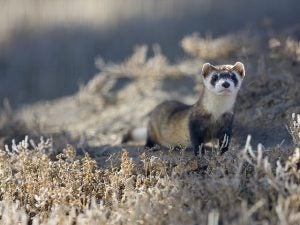
The black-footed ferret, nicknamed the “masked bandit” for its racoon-like markings, is one of the most endangered mammals in North America – so scarce it was once thought to be extinct.
The last of the wild population of black-footed ferrets was thought to have died in 1974 in South Dakota, and the last ferret of the captive breeding program died in 1979.
Somehow, though, a number of ferrets were secretly surviving near the small town of Meeteetse, Wyoming.
In 1981, a cattle dog named Shep brought a dead ferret home to his owners. The ranchers took the ferret to a local taxidermist, who identified it as the once “extinct” black-footed ferret.
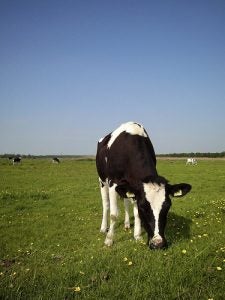
A recent article called milkweed a “yield-robbing weed” for farmers.
Milkweed has a reputation for encroaching on cropland where it can compete with crops for soil and light. The plant can also create a nuisance on ranchlands, as cattle can be poisoned when poor foraging conditions lead hungry cows to milkweed-concentrated areas as a last resort.
This is why milkweed is difficult to find on most farms and ranches today. Along with climate change, it’s also a key reason why the beloved monarch butterfly population has declined by more than 90 percent in the last two decades.
The importance of milkweed
Milkweed is essential for monarchs, since butterflies need the plant to lay their eggs, and caterpillars exclusively feed on the milky sap-filled plant. It’s what makes monarchs poisonous to predators.
Increased herbicide application across the agricultural landscape, as well as mowing in roadside ditches and marginal areas, is eradicating milkweed from rural areas in the Corn Belt and other key regions of the monarch’s migration route.
In order to turn things around for the monarch, we need to change the incentive for landowners from spraying and mowing to protecting and restoring this vital habitat. (more…)
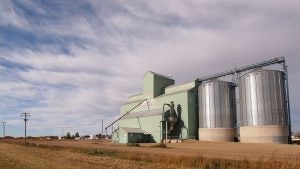
A new study out this week in the Proceedings of the National Academy of Sciences suggests that trying to make supply chains more sustainable is not for the faint of heart, especially when it comes to food – and corn in particular.
Companies are keenly aware that consumers care about where their ingredients come from and how they were grown, and that improving efficiencies along the supply chain can be good for business. But the raw ingredients at the end of those chains are typically produced by a vast network of farmers who bring their corn to regional grain elevators and then sell their crops to grain traders. This is just the start of a lengthy and complicated process that can be challenging for food companies to disentangle and understand, let alone influence to become more sustainable.
That’s why the new study, which focuses on a corn supply chain model developed by the University of Minnesota’s Northstar Initiative for Sustainable Enterprise (NiSE), can be an important tool for empowering food companies with information that can help them tackle the tough job of supply chain sustainability. (more…)

As a student at the George Washington University (GWU), I’ve had the privilege to attend classes taught by Dr. Kathleen Merrigan, former Deputy Secretary of Agriculture and current Executive Director of Sustainability at GWU.
I recently reconnected with Dr. Merrigan at a Washington, D.C. event called Transformers: Food, where she spoke on a panel about how technology and science are changing agriculture, revolutionizing modern food systems and changing the way we consume food.
Afterward, we sat down to talk about how farmers and consumers are adapting to these changes, and what we can look forward to as new movements arise.
At the Transformers: Food event, you mentioned that our society has recently become fixated with food and agriculture. What do you think has fueled this fascination? (more…)

The peregrine falcon is renowned for its ability to reach diving speeds up to 200 mph. It’s also known for having one of the longest migrations in North America, reaching up to 15,000 miles.
Peregrine falcons are one of the most widespread birds in the world, found on every continent except Antarctica. This extensive range is what made the American peregrine’s dive into near-extinction so worrying.
The peregrine’s swift descent
Historically, there were estimated to be approximately 4,000 breeding pairs of peregrines in the United States. Despite its eminent speed and strength, the population reached alarmingly low numbers in the 1970s when the bird completely disappeared from the eastern U.S. and only 300 breeding pairs remained throughout the rest of the country. (more…)
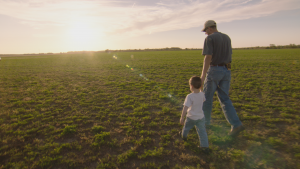 After many years of working to protect the environment, I have come to believe in two big ideas: community and civility.
The first seems simple, but is profound nonetheless: From a tiny frog to a giant grizzly, from a family farmer to the residents of our largest cities, all of us are in this together. We all rely upon the benefits that nature provides to prosper.
That’s not what we hear from some politicians who parrot discredited talking points that claim environmental protection kills jobs and cripples the economy.
The truth is that a thriving economy and high quality of life are inextricably linked to, and dependent upon, a healthy environment. We neglect – or worse, punish – the natural world at our peril. (more…)
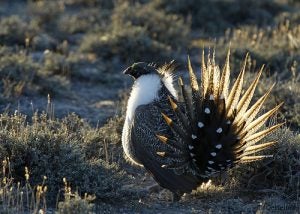
It was a sunny, cool morning – a typical September day in Colorado. I pulled up to the Rocky Mountain Arsenal National Wildlife Refuge and walked towards a stage where the state flags for Colorado, Nevada, Montana and Wyoming waved in the wind alongside the American flag.
It was a good morning. Then-Secretary of the Interior Department, Sally Jewell, had announced earlier that morning that the greater sage-grouse – a bird with habitat spanning parts of 11 western states – was “not warranted” for listing under the Endangered Species Act, thanks to one of the largest collaborative conservation efforts in America’s history.
A success story in the sagebrush sea
Sixteen million sage-grouse once roamed the American West. The Plain Indian tribes lived among the birds, hunting them for food and mimicking the males in their ceremonial dances. Meriwether Lewis spotted them “in great abundance” in 1805 during his expedition with William Clark, providing the first written account of the species.
As of 2010, there were approximately 200,000 to 500,000 birds remaining.
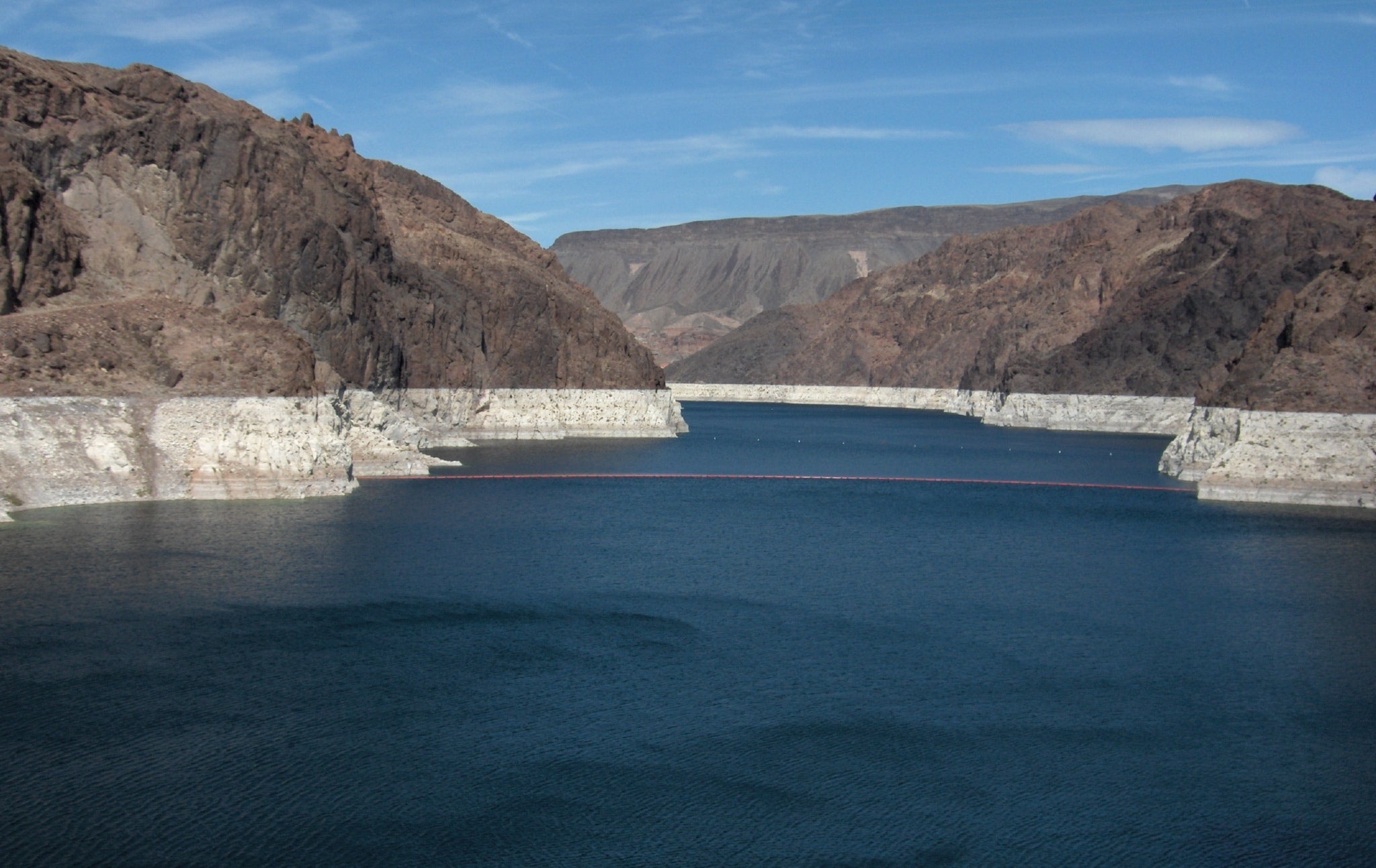
Drought is the new normal in Arizona and the Colorado River Basin. The Colorado River is over-allocated, and potential reductions in Arizona water deliveries have become more and more likely.
Just last summer, we watched Lake Mead drop to one of its lowest levels ever. And even with a wet winter this year, Lake Mead’s elevation remains low. The river that provides 40 percent of Arizona’s water supplies needs our help.
A new deal
This summer, several parties came together to sign a “system conservation” agreement to address the situation. The State of Arizona, City of Phoenix, U.S. Bureau of Reclamation, and the Walton Family Foundation agreed to compensate the Gila River Indian Community to leave 40,000 acre feet of its 2017 Colorado River water entitlement in Lake Mead.
This is about 1.3 billion gallons of water, which is roughly the amount needed to serve 100,000 people in a year. The conserved water is designated as “system water” to help keep Lake Mead from falling below 1,075 feet – the elevation at which a federal shortage declaration is triggered and water delivery reductions are mandated (as stated in the proposed Lower Basin Drought Contingency Plan between Arizona, California, Nevada and the U.S. Bureau of Reclamation).