Climate change solutions
We deliver game-changing environmental solutions that have a real impact for people around the globe.

Building resilient land and water systems that allow people and nature to prosper in a changing climate.
Nearly one year ago, President Trump announced his intention to withdraw the United States from the Paris Climate Agreement. In the absence of federal government leadership, the agriculture sector is making its voice heard in the international climate change discussions taking place this week at the U.N. Climate Change Conference in Bonn, Germany.
Farmers are on the front lines of a changing climate and increasingly extreme weather. They know that climate-smart agriculture is critical to ensuring their operations continue for generations to come. That’s why they’re pulling up a chair to take a seat at the global climate table. (more…)
Louisiana is emerging as a global leader in how to sustainably plan for the future in the face of increased storms, coastal erosion and rising seas. By combining nature-based solutions with traditional flood protection measures, Louisiana is a proving ground for living with climate change.
The lessons Louisiana can teach are not new, but they build upon those first taught by the Dutch. The Netherlands has taught the world innumerable lessons in flood protection – but historically, the Dutch have been primarily focused on building walls to keep water out, rather than finding more sustainable ways to protect coastal communities.
That is until recently, when the Dutch began embracing a more nature-based approach of “living with water,” similar to what is happening in Louisiana.
We can change the way we face coastal flooding challenges if we blend coastal restoration, protection and community resiliency measures. Louisiana’s multiple-lines-of-defense approach is a model for other coastal places, including the Netherlands, that are planning their futures in the face of climate change. (more…)
When the lesser long-nosed bat was first listed as an endangered species 30 years ago, there were fewer than 1,000 bats in existence. Today, the bat’s population has grown to an estimated 200,000 bats living in 75 roosts across the southwestern United States and Mexico.
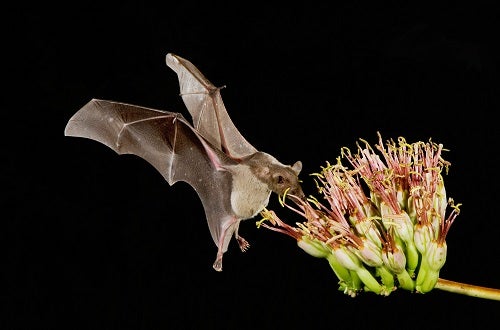
The lesser long-nosed bat is one of only three nectar-feeding bat species in the U.S. – uniquely providing valuable ecosystem services through bat pollination and the dispersal of fruit seeds, including for agave plants used in tequila production.
The relationship between bats and tequila may seem obscure at first, but the bat-plant association is so strong that the disappearance of one would threaten the survival of the other.
The lesser long-nosed bat is the first bat species to be removed from the endangered species list due to successful recovery. How the bat bounced back is not your typical conservation success story. (more…)
Louisiana is in the midst of a catastrophic land loss crisis. The state has already lost over 2,000 square miles of land, and it could lose as much as 4,000 square miles more if nothing is done to restore the coast.
As these wetlands disappear into the Gulf of Mexico, so do the natural protections that shield New Orleans and other coastal communities from rising sea levels and increasingly violent storms.
It’s a dilemma that’s playing out in coastal communities across the United States and around the world.
So it came as welcome news when state and federal regulators this month agreed to shave nearly two years off the five-year permitting process for a diversion project that will allow the mighty Mississippi River to do its natural business of building much-needed land.
It’s an acknowledgment that we’ve no time to lose in preparing for the unavoidable impacts of climate change. (more…)
The House Agriculture Committee meets today to begin markup on the 2018 draft farm bill. While markup is only the first step of a long process, it will tell us a lot about the road ahead.
The farm bill provides the largest source of federal funding for conservation on private lands – and with 70 percent of U.S. land privately managed, the farm bill is a major driver of efforts to improve water and air quality, increase wildlife habitat and build drought resilience.
While much of the focus will be on whether the Conservation Stewardship Program will be folded into the Environmental Quality Incentives Program (EQIP), here are six additional conservation items to keep an eye on during markup. (more…)
Farm accountants have a lot more to offer than advice on how to maximize tax returns. In fact, they play a pivotal role in scaling conservation.
Environmental Defense Fund and K·Coe Isom AgKnowledge, a managerial accounting service for farmers and ranchers, teamed up with three Midwestern grain farmers to study how the adoption of conservation practices affects farm budgets.
These farmers, based in Iowa, Kansas, and Ohio, have all adopted some combination of no-till, crop rotations, cover crops and nutrient management. They were generous enough to open up their books so that AgKnowledge could analyze the financial impact of these conservation activities.
The full report will be out later this year, but initial results show how conservation can benefit farmers’ bottom lines. Here are three lessons we learned from this analysis. (more…)
In places like Nevada, ranching has been a way of life for generations, and industries like mining provide key drivers of economic growth and community stability. But these landscapes also hold economic, historical and cultural values tied to the health and stewardship of natural resources.
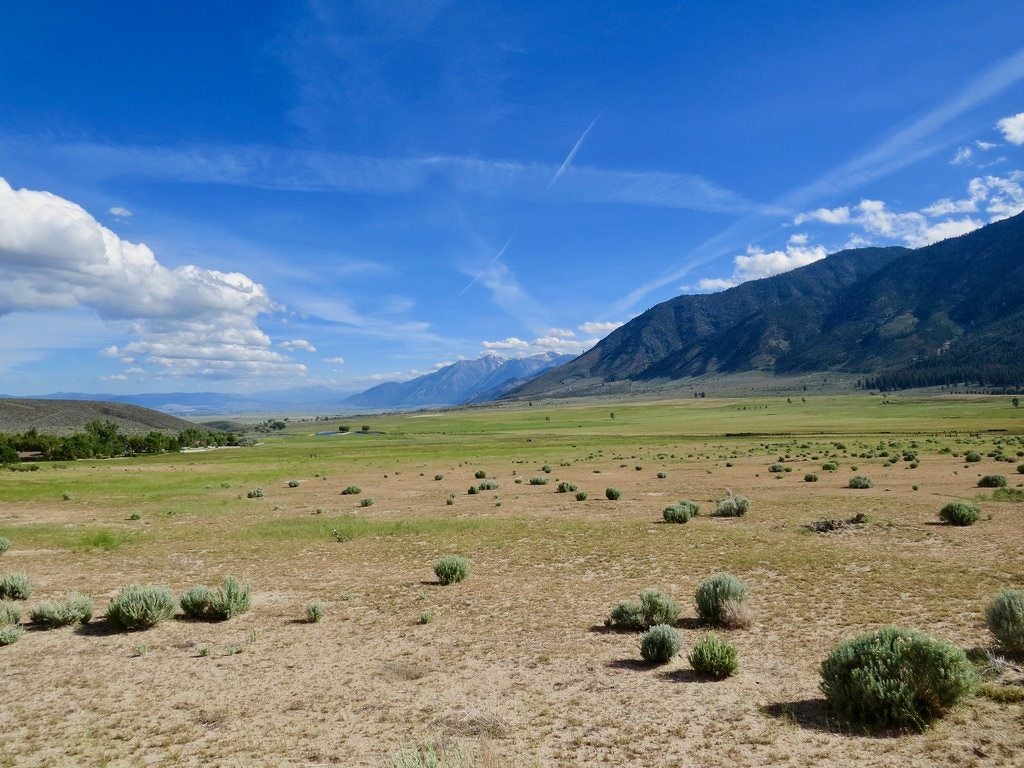
The same is true for other communities across the country that are striving to address growing needs for infrastructure, economic growth, clean air and safe drinking water.
Balancing community resiliency, economic stability and stewardship of natural resources is no easy task. But a new funding mechanism is gaining traction on the ground in key places, providing proving grounds for how communities can make cost-effective investments in their futures. (more…)
This blog was authored by Shannon Cunniff, with contributions from Kate Zerrenner.
The 2017 hurricane season sounded the alarm for coastal communities across the country and across the world that are facing increased exposure to powerful storms.

Nearly 40 percent of the U.S. population lives in coastal counties, where hurricanes are often the most destructive weather phenomena bringing rain, wind, waves and storm surge that too often result in significant loss of life. With a changing climate, we can expect more extreme weather. But we don’t have to expect the same levels of devastation.
There are steps we can take to decrease coastal communities’ vulnerability to storms, lower the risk of damaging floodwaters, and reduce the impacts associated with these disasters. (more…)
It’s hard to believe it’s been nearly a year and a half since Hurricane Matthew delivered devastating floods across eastern North Carolina. With so many families and communities still recovering from that storm, the thought of having to prepare for the next one is daunting, but it’s a necessary reality.
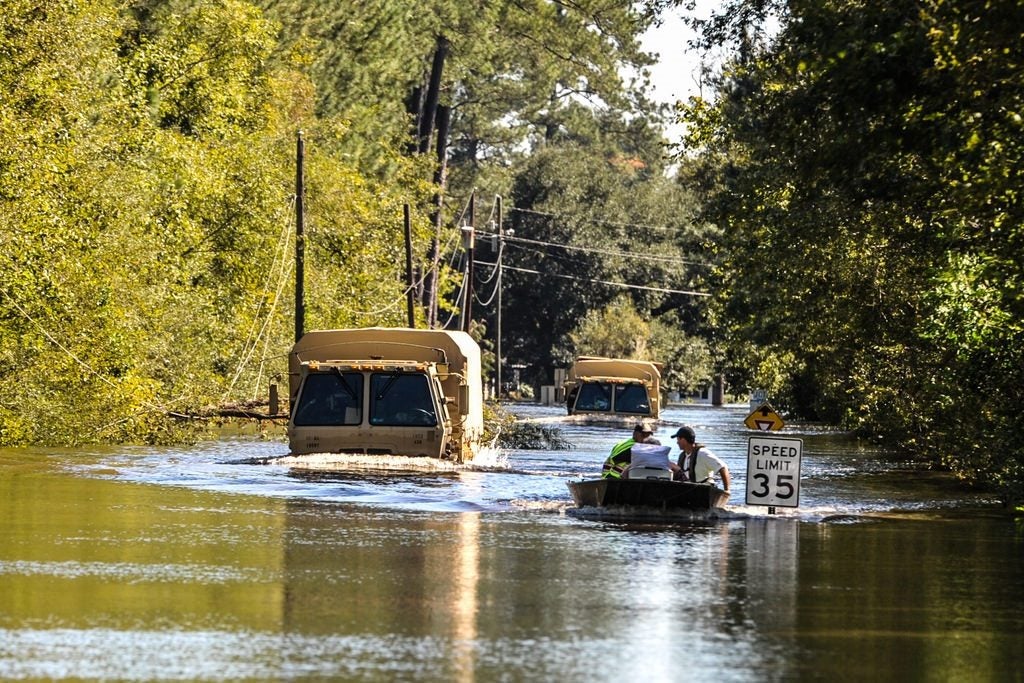
This month, a group of North Carolina state legislators will convene in Raleigh to discuss how to spend the state’s remaining federal disaster relief funds provided in the wake of Matthew.
In addition to the needs of still ongoing recovery efforts, the North Carolina House Select Committee on Disaster Relief is expected to begin exploring investment opportunities related to flood control and risk mitigation. (more…)
This blog was co-authored by Jon Goldstein and Sara Brodnax.
Last week, the U.S. Department of the Interior’s Bureau of Land Management collected comments from citizens and groups concerned about the impacts of a proposed 5,000-well oil and gas project in eastern Wyoming.
The situation has a troubling irony, because as BLM reviews the project’s environmental risks, it is simultaneously working to roll back its own commonsense standards to stop oil and gas companies from venting, flaring, and leaking away pollution and valuable natural gas.
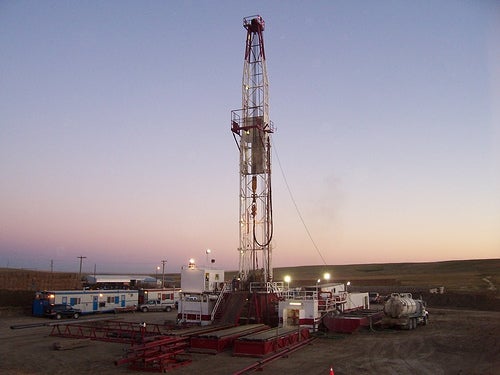
It’s the same story for the greater sage-grouse, which without strong mitigation measures will likely abandon critical breeding sites in the area set to be impacted by the planned oil and gas project. Here, too, BLM has signaled several attempts to unravel the collaborative, decades-forged plans to protect the imperiled bird.
The combination of weakening policies while expanding development could have disastrous consequences for Wyoming and other western states if methane pollution goes unchecked and the greater sage-grouse continues to decline.
[Tweet “Federal rollbacks + huge new oil and gas project = trouble for Wyoming”] (more…)