Climate change solutions
We deliver game-changing environmental solutions that have a real impact for people around the globe.

Building resilient land and water systems that allow people and nature to prosper in a changing climate.
(This post was co-authored by Shannon Cunniff and Grace Tucker)
2019 has been an unprecedented year for extreme weather, and we’re still in the thick of hurricane season. As disasters have increased, so has the popularity of using nature-based solutions to reduce flood hazard and exposure while also benefiting ecosystems and wildlife.
Along our coasts, healthy natural features – such as mangrove forests, wetlands, reefs and barrier islands – can be used to absorb the shock of storm surge, waves and rising sea levels. Further inland, nature-based features along rivers and in their floodplains can slow and retain water to help protect nearby communities.
In terms of public awareness, funding and policy, natural infrastructure is gaining steam as a critical strategy to help people and property become more resilient in the face of extreme weather. (more…)
Arizona just got another temporary reprieve from water cuts in Lake Mead, for the second year in a row. However, sustainable water management — of both the Colorado River and groundwater — remains crucial for communities in the Southwest to become resilient to increasingly arid conditions.
A new, closely watched 24-month study of water levels on Lake Mead, the country’s largest reservoir, means Arizona has managed to avoid substantial water cuts next year. On Thursday, the U.S. Bureau of Reclamation predicted Lake Mead’s elevation will be 1,089.4 feet on Jan. 1, thanks to an unusually wet winter and seven states reaching a historic agreement on how to conserve Colorado River water. (more…)
Gov. Gavin Newsom has signed long-overdue legislation to dedicate up to $130 million a year to provide clean, affordable drinking water to more than 1 million Californians who still lack access to this vital resource. The legislation creates the Safe and Affordable Drinking Water Fund to help cash-strapped, smaller water systems, which primarily serve rural, low-income communities.
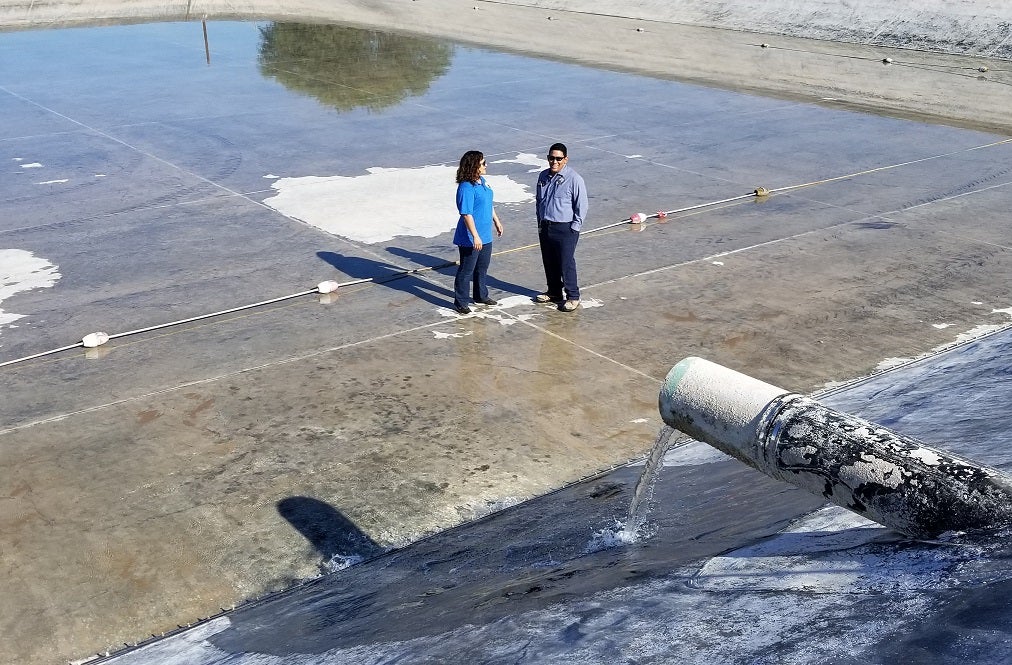
The Seeley County Water District, located in Imperial County approximately 20 miles from Mexican border, is one of these communities.
Miriam Rosales and Aaron Garcia call Seeley home and have made it their mission to provide better water service to the town’s 2,000 residents. Miriam, a 46-year resident of Seeley, began at the district as the board’s secretary and became administrative general manager in 2017. Aaron began working in the water sector after being laid off as a music teacher and worked his way up to become Seeley’s chief operator in 2018.
Both participated in the Leadership Institute, a program originally developed by the Rural Community Assistance Corporation (RCAC), Self Help Enterprises and Environmental Defense Fund (EDF) to help disadvantaged communities more effectively engage on water-related decision-making and policy. RCAC, EDF, and Imperial County’s Community and Economic Development Office customized the program to address the issues of Imperial County.
Understanding Miriam and Aaron’s challenges is helpful to understanding how a state as prosperous and innovative as California can struggle to provide safe drinking water to all its residents. Here are some excerpts from a recent conversation I had with them about their work.
Tyler Ortego reaches over the side of his boat and grabs the top of a wooden stake that protrudes just above the waterline. Lifting it high, he reveals a dark cluster of what looks like small rocks, attached to the stake’s muddy end.
“Oysters,” he says and smiles. (more…)
The Bonnet Carré Spillway will finally close this week after two separate openings totaling an unprecedented 120 days. The spillway was built to protect New Orleans and surrounding parishes from Mississippi River flooding as part of the Mississippi River and Tributaries system designed after the Great Flood of 1927.
This comes on the heels of another first when, earlier this month, Hurricane Barry was the first tropical storm to make landfall while the Mississippi River was at flood stage. This one-two punch — tropical storm combined with high river — was previously only a nightmare scenario with the potential to send storm surge upriver, overtopping levees, inundating the city and surrounding region, and shutting down globally significant commerce.
Mercifully, that scenario did not occur—Barry shifted westward, river levels never reached projected heights and rainfall diminished. However, the river remains dangerously high into the thick of hurricane season. During Hurricane Katrina, storm surge in the river increased the water level by 13 feet, but the river was so low that it wasn’t a threat. The combination hurricane-river flood scenario could play out again – and next time we may not be so lucky.
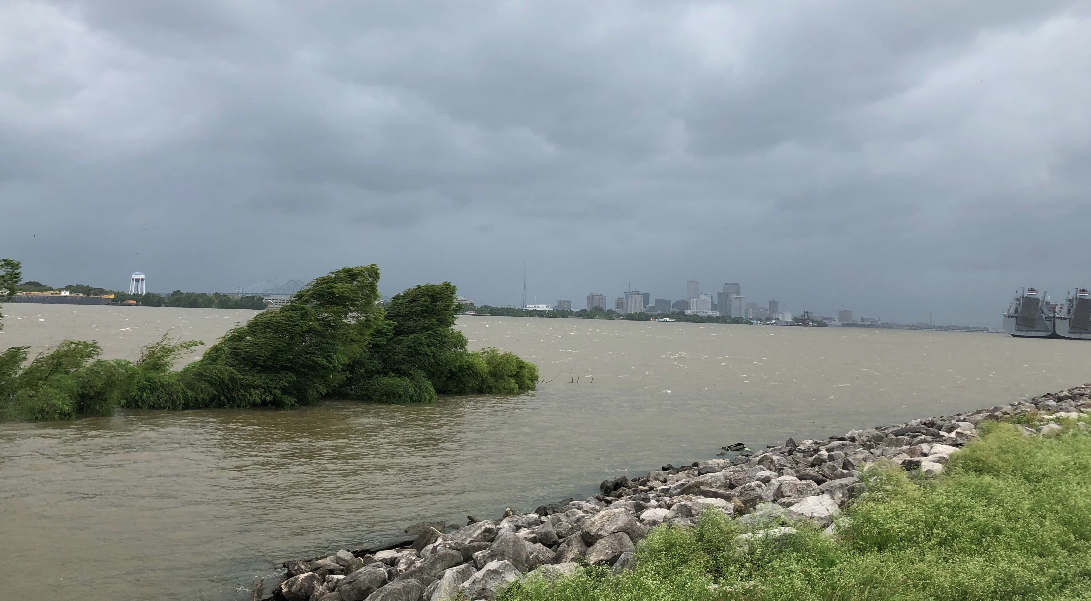
Louisiana floods in three ways: 1.) From water flowing down the Mississippi and other rivers; 2.) From storm surge and rising seas from the Gulf of Mexico; 3.) From rainfall, now increasing in intensity and overwhelming existing drainage systems. With Barry, for the first time ever, we faced all three threats at once, and climate change will only compound them.
Going forward, we must learn to live with water. On the Mississippi River specifically, the current management system no longer meets the needs of the future. Here are four strategies to help us get there: (more…)
Eastern monarch butterfly populations rebounded last year, largely thanks to favorable weather conditions during the butterflies’ 3,000-mile migration. To help make those increases permanent and reduce chances of an endangered species listing, we need to plant 1.5 million more acres of milkweed, native grasses and wildflower habitat on farms and ranches.
Farmers like Tim Richter, who manages a grain and hog operation in Iowa and Missouri, are stepping up provide monarchs with vital breeding and nectaring habitat.
I sat down with him to discuss what inspired him to restore monarch habitat, and to ask him what he wants other farmers to know about pollinator conservation. (more…)
One evening, at a community center in the Sacramento Valley, a teacher, a civil engineer, a tomato farmer and a local foundation board member found themselves standing above a table, feverishly competing to scoop the most glass beads from a large, communal bowl.
But there was a catch. (more…)
As the struggling U.S. farm economy continues to make the news, agricultural organizations, government agencies and conservation groups are rightly focusing their attention on the affordability of conservation adoption.
A 2018 report from EDF and agricultural accounting firm K·Coe Isom, Farm Finance and Conservation, found that farmers who adopt conservation practices such as no-till, nutrient optimization, cover crops and diverse rotations improved their profitability and were more resilient.
Despite these benefits, the costs of transitioning to conservation management practices can be a barrier to adoption. In addition, any change carries some risk, and farmers are likely to be reluctant to take on additional risk in the current economic climate.
For these reasons, it is more important than ever to provide farmers with practical guidance on how to minimize the costs and risks of conservation adoption. Fortunately, a new technical bulletin from the Sustainable Agriculture Research and Education (SARE) program at the U.S. Department of Agriculture does just that.
Cover Crop Economics: Opportunities to Improve Your Bottom Line in Row Crops [PDF] describes seven different management scenarios in which farmers can speed their transition to cover crops and achieve profitability more quickly — in some cases within the first year of adoption. (more…)
California’s Central Valley has reached a fork in the road.
By January 2020, areas where groundwater demand far outstrips supply must submit plans to bring their groundwater basins back into balance within 20 years. These plans are required by the Sustainable Groundwater Management Act, or SGMA, which was signed into law in 2014 during the state’s latest multiyear drought.
SGMA inevitably means less water for irrigating farms. Worst-case estimates forecast as much as 780,000 acres of farmland — out of more than 5 million acres of total irrigated land — will have to be taken out of production. How local decision makers and community members navigate this transition to sustainable groundwater management will significantly shape the future of the region, known as the country’s fruit and nut capital.
On one path, the valley could become a patchwork of dusty barren fields, serving a huge blow to the agriculture sector and rural communities and further impairing already poor air quality. Active farms could become surrounded by fields of invasive weeds and pests, threatening productivity.
On another path, the valley could transform into a pioneering agricultural region that not only puts food on our nation’s plates but also supports thriving wildlife habitat, outdoor recreation, soil health, groundwater recharge and flood control.
EDF is working to help communities achieve this second vision through our Central Valley Resilience Initiative, which features three key strategies: conversion of farmland into wildlife corridors, water trading and community engagement. Of course, all three strategies will require additional funding at the state, regional and local levels. (more…)
Call 2019 the year of the flood.
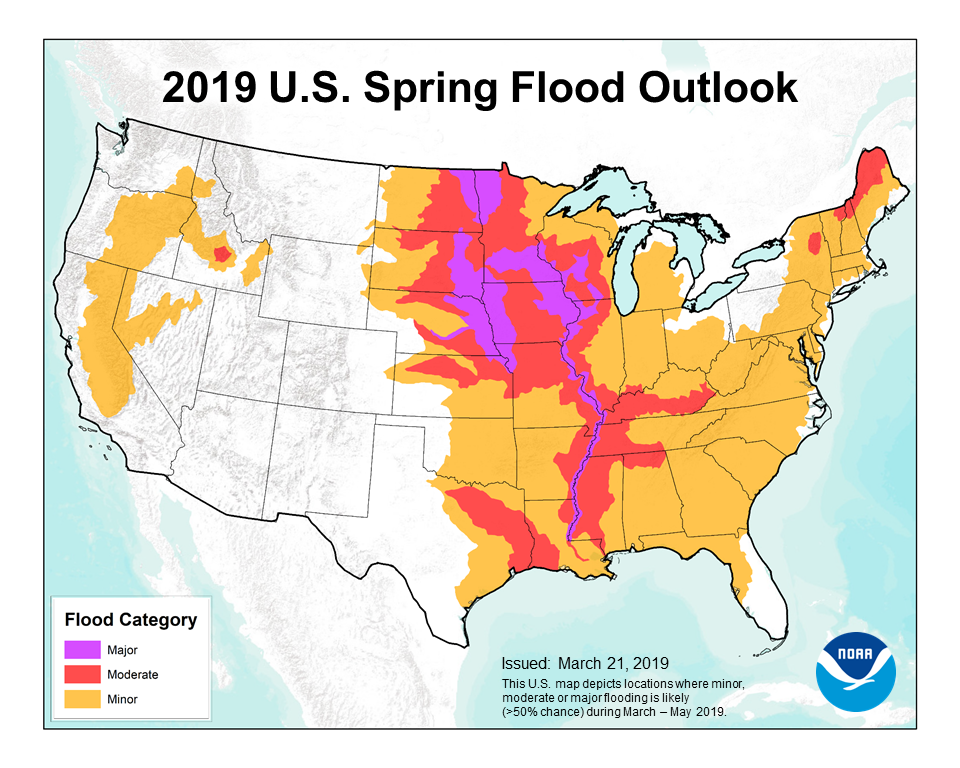
This spring large swaths of the nation experienced moderate to severe flooding – and the rain isn’t stopping. In California, record rainfall and snow persisted into May. In Louisiana, for the first time ever, the Army Corps of Engineers just released water through its Bonne-Carré spillway twice in a single year to avoid flooding. And hurricane season is just beginning.
The deluge of floods is hardly a coincidence.
Land-use changes and extreme weather driven by climate change are delivering a one-two punch that heightens flood risk. We’ve increased impervious surfaces – think asphalt and concrete – and at the same time we’ve removed wetlands, prairies and forests, which can absorb water and slow runoff. We’ve also built hard infrastructure such as bridges, urban and agriculture drainage networks, and even, ironically, flood “protection” projects that often alter watersheds, floodplains and stream hydrology and increase the severity of floods.
So how do we better protect critical infrastructure and communities in the face of increased flooding? (more…)