








Three major ways Florida’s new law will boost coastal resiliency
Posted: in Coasts and Watersheds
Written By

Share
Last week, Governor DeSantis signed SB302 Coastal Resiliency into law, elevating the use of nature-based solutions and hybrid approaches to improve coastal resiliency across the state. This marks a huge step that few states if any have taken and marks Florida as a leader in addressing resilience statewide with long-term solutions.
As extreme weather has increased in the past several decades, Florida has experienced large-scale coastal community disasters from hurricanes, tropical storms and severe downpours totaling over $270 billion in the last ten years.
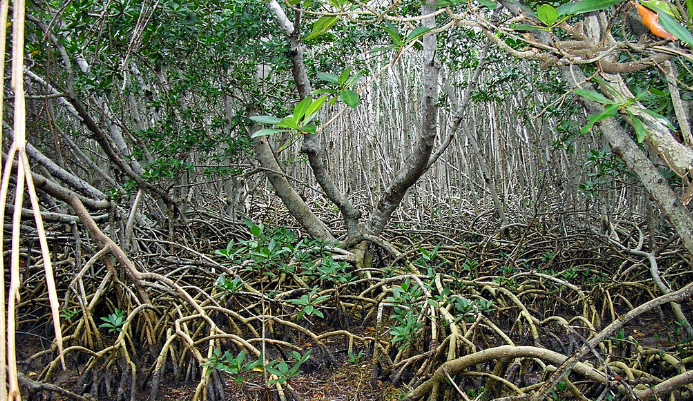
Despite the proven effectiveness of nature-based solutions like living shorelines, mangroves, and wetlands in reducing flooding and coastal damage and erosion from major storm events, they remain underutilized in resiliency development. That lack of clarity and consistency in the development, permitting, and implementation processes were barriers to implementation.
This new law championed by EDF and partners, which had full, bi-partisan support among legislators, aims to address shortcomings and bring nature-based solutions into the mainstream by:
Standardizing nature-based solutions design and implementation
Nature-based solutions projects have often seemed like one-off “unicorn” projects – highly tailored to specific local conditions, which can make them a challenge to permit, evaluate and replicate. Under this new Department of Environmental Protection (DEP) will develop design guidelines and standards to improve project consistency, fast track implementation and scalability of nature-based resilience solutions. It will also clarify when and how nature-based approaches, and green-gray hybrid approaches, should be applied, making them a more routine part of standard resilience practice.
Establishing statewide permitting for nature-based solutions
Permitting has been one of the biggest hurdles facing nature-based projects. The absence of clear standards, along with no consistent approval process, has made permitting slow and unpredictable. Combined with the urgency to rebuild after storms, agencies often default to traditional “gray” infrastructure—even in cases where nature-based solutions or green-gray hybrids could be more cost-effective and equally or more effective. With this new law, the DEP will be required to establish a statewide permitting process and procedure specifically for nature-based solutions. This will establish predictability and help expedite the permitting process across jurisdictions. The law will also change existing permitting processes that allow failed coastal infrastructure to be replaced with nature-based infrastructure following storm events.
Improving public awareness and support for nature-based solutions
Despite the effectiveness of nature-based solutions, their benefits to coastal resiliency are often not widely known by the public, which is necessary to gain robust support from citizens. A key benefit of this is the requirement that DEP and local governments promote public awareness and education of the benefits and value of these solutions, especially during the rebuilding period.
Making nature-based solutions easier to implement and scalable across Florida, making them more favorable options in line with traditional measures will make Florida communities safer. After years of advocacy, we at EDF are pleased to see this legislation adopted by the state of Florida and look forward to helping put into action.