






State legislators highlight the value of nature-based solutions In Mississippi River Basin resilience
Posted: in Coasts and Watersheds
Written By

Share
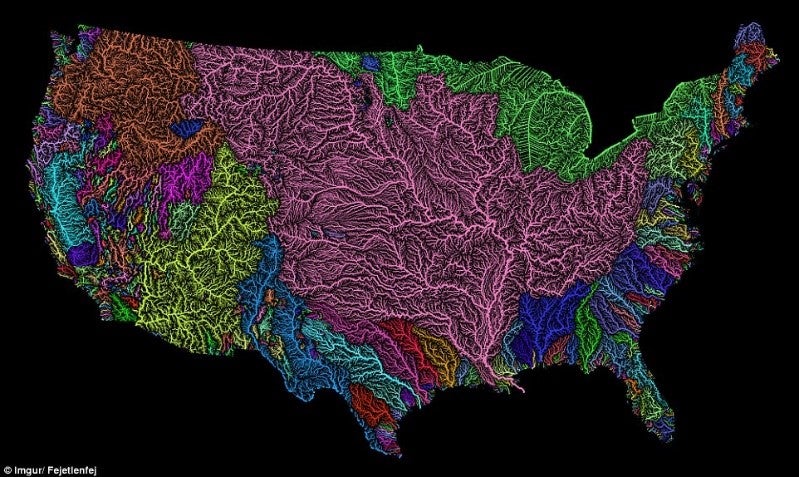
The Mississippi River Basin is one of the nation’s most expansive and vital natural systems, stretching across 31 states and supporting millions of Americans every day. Its waters provide critical drinking supplies, sustain wildlife habitat, and underpin local economies—from agriculture and manufacturing to recreation and transportation. At the same time, the very proximity of its rivers and streams to farmland and development creates complex challenges, including declining water quality, increased flood risk, and habitat loss. State action is critical to solving these challenges. Because the system itself is deeply interconnected—from the headwaters in the north to the river’s mouth in the Gulf—no single state can solve the Basin’s challenges alone. Addressing them effectively requires a coordinated “whole river” approach.
Over the past year, encouraging momentum has emerged through the leadership of the National Conference of State Legislatures (NCSL) with the support of Environmental Defense Fund. A bipartisan group of legislators from the ten mainstem states—Minnesota, Wisconsin, Iowa, Illinois, Missouri, Kentucky, Tennessee, Arkansas, Mississippi, and Louisiana—formed the Mississippi River Basin Legislative Cohort. This group convened to discuss major challenges, exchange ideas, learn from technical experts, and discuss potential solutions. Their collaboration culminated in a practical roadmap, The Mississippi River Watershed State Policy Options for Risk Reduction and Resilience, which outlines strategies to strengthen the Basin’s long-term resilience.
Two highlights from this report stand out:
First, state leaders agree nature-based solutions offer significant potential to reduce flood risk while delivering additional benefits. States increasingly recognize that effective flood risk management requires a blended approach—pairing traditional engineered (or gray) infrastructure with nature-based strategies. Practices such as wetland restoration, floodplain reconnection, and riparian buffer improvements offer dynamic and cost-effective options that help communities build defenses against changes in climate and weather patterns, while also providing critical co-benefits to nature and communities. These approaches are particularly valuable upstream of major economic centers, where absorbing and slowing floodwaters before they reach urban areas can substantially reduce downstream impacts.
Related, the report recognizes that nature-based solutions will take collaboration with private landowners, especially in predominately agricultural regions, and require enhanced sources of funding and financing. States are already exploring ways to ignite voluntary action with landowners by leveraging existing conservation programs to provide incentives—whether it’s to restore wetlands or adopt innovative practices like drainage water recycling. States are also creating new funding and financing like the STORM program that matches federal funding with local repayment streams to create a revolving loan fund. These partnerships are essential to unlocking the full potential of natural solutions across the Basin.
Second, reducing flood risk is fundamentally an economic development strategy. Extreme weather will continue to increase pressure on states. Without proactive investment, governments risk falling into a costly cycle of disaster response and recovery. By contrast, proactive risk mitigation protects lives, safeguards critical assets, ensures business continuity, and can make insurance more affordable and accessible. Notably, nature-based solutions have been shown to deliver returns six times greater than their initial investment, making them a fiscally responsible component of long-term planning.
Cedar Rapids illustrates what is possible. Following the devastating floods of 2008—which caused more than $6 billion in damages and economic disruption—the city committed to a comprehensive flood management strategy. By using a hybrid gray and green infrastructure approach and coordinating efforts across jurisdictions, Cedar Rapids has significantly strengthened its resilience while protecting its economic base. A recent study by EDF illustrates how nature-based practices upstream can reduce floodwaters downstream, saving cities such as Cedar Rapids up roughly one-quarter (25%) of the damage costs.
The NCSL report lays out key actions state leaders should take to advance this work. Strengthening intergovernmental coordination across local, state, tribal, and federal partners can help accelerate long-term infrastructure and resilience initiatives.
We are encouraged that states across the Basin are exploring opportunities nature-based solutions offer for risk-reduction and economic prosperity. By prioritizing watershed health and cross-sector collaboration, states have a shared opportunity to reduce flood risk, improve water quality, and increase resilience to both floods and drought.