









Immediate steps for North Carolina policymakers to reduce flood risks and build resilience
Posted: in Coasts and Watersheds
Written By

Share
As the moment of crisis recedes in memory, it would be easy to shift our collective focus away from last year’s hurricanes. But we must remember that the work of rebuilding homes and livelihoods along the coast and across the coastal plain is really just beginning.
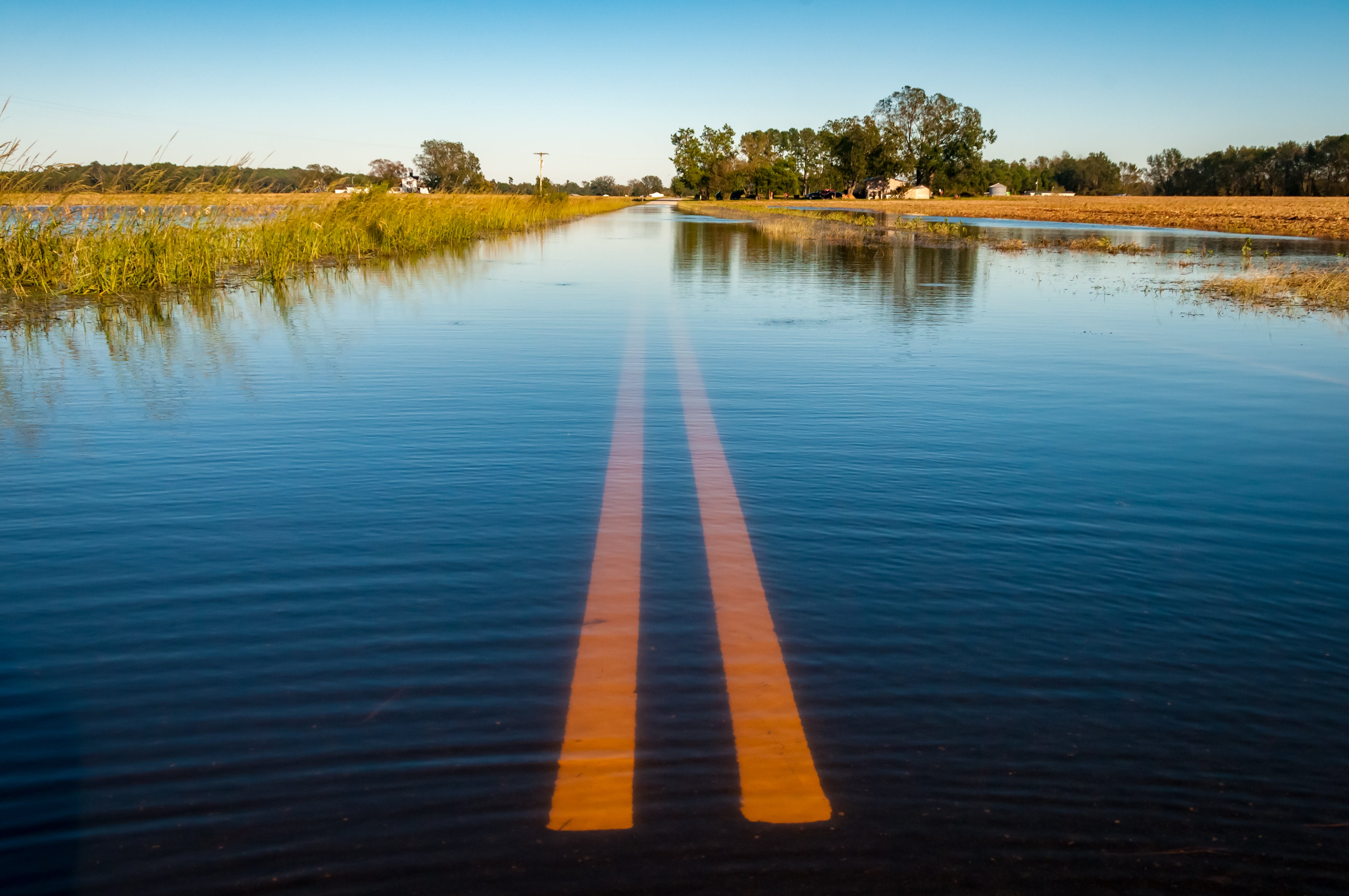
In the aftermath of Hurricanes Florence and Michael, with rainfall totaling in the trillions of gallons, numerous recommendations were put forward to address the risks posed by flooding and extreme weather in North Carolina.
Those recommendations included targeted solutions such as clearing debris from rivers and streams that may address flooding in one community, but exacerbate it elsewhere. Others offered engineered approaches such as dams that can take decades to build, require state acquisition of private lands, and, once built, are fixed in place eliminating flexibility.
While some stream dredging or construction of levees in key locations may need to be part of a solution set, there are other immediate steps that we can take to reduce flood risks.
Flood protections required now
State policy and government funding should focus on two concurrent efforts.
First, the state should invest in buyout programs to move people, homes and critical infrastructure out of the floodplain. A recent report from the University of North Carolina provides an excellent discussion and policy recommendation on buyouts.
Second, policymakers should prioritize efforts to reduce riverine and coastal flooding in downstream communities.
Here are three ways North Carolina policymakers can achieve this second objective.
1. Rapidly deploy natural infrastructure
As flooding is among the most costly impacts of natural disasters worldwide, an effective approach to reducing flood risk is to retain water on the landscape where trees and vegetation absorb the water or allow it seep back into the water table. Commonly referred to as natural infrastructure, this approach uses existing or restored floodplains, streams and wetlands to slow and store stormwater.
Importantly, natural infrastructure can be rapidly deployed by North Carolina’s existing private ecological restoration industry in the locations where data indicates it will provide the greatest benefit to downstream communities.
By working with nature, instead of attempting to control it, we can provide meaningful benefits to the environment, communities and landowners alike.
How to accelerate the use of natural infrastructure to aid climate change adaptation
2. Empower the private sector
In the late 1990s, as North Carolina’s economy and population were growing, construction of new highways, neighborhoods and other critical infrastructure were impacting waterways, and the state was falling behind in meeting its obligations to avoid loss of streams and wetlands impacted by this development. To tackle this problem, the state established what is now known as the Division of Mitigation Services (DMS).
DMS was set up with an eye toward effectively leveraging the power of the private sector to address the backlog of required environmental restoration projects by awarding competitive contracts to private businesses in the mitigation industry. The program is still effective today, relying on commonsense market principals to deliver cost-effective projects to restore degraded streams or wetlands. Importantly, firms receive full payment only after projects have been successfully completed.
Working through DMS, the state can empower the private sector ecological restoration industry to help bolster community preparedness for flooding. But one more step is needed, first.
3. Revise policy to rebuild stronger and smarter
To fully leverage the private sector, state lawmakers will need to make some minor statutory adjustments authorizing DMS to use its contracting mechanism and existing network of restoration providers to deliver cost-effective natural infrastructure solutions. Once these adjustments are made, the now-mature restoration industry can use its scientific knowledge and construction capability to restore the streams and wetlands that can help reduce downstream flooding. By working with nature, instead of attempting to control it, we can provide meaningful benefits to the environment, communities and landowners alike Share on X
While no single step or solution will eliminate flood risk from a hurricane the magnitude of Florence, natural infrastructure provides a rapid approach for communities to reduce and more effectively manage both seasonal and extreme flooding.
This year, lawmakers and administrative officials have the opportunity to pioneer new approaches – ones that build on previous successes and leverage the private sector’s expertise and competitive spirit.
With these steps in place, state leaders can rapidly deploy environmental restoration projects that reduce flood risks while providing year-round benefits to families, farms, communities and nature.

One Comment
Thanks for the article, it was very helpful.