









Smart policy must keep pace with rapid agricultural innovation
Posted: in Agriculture
Written By


Share
Summary
- U.S. agriculture is innovating fast, but policy must keep pace to help farmers stay globally competitive and turn new technologies into real on-farm gains.
- America leads the global agtech market, but sustained investment and smart policy, including funding AgARDA, are essential to move innovation from the lab to the field.
- With the right mix of policy, research and investment, agricultural innovation can boost productivity, cut emissions and strengthen rural economies for the long term.
With rising costs, tighter margins and more uncertainty on the farm, it’s harder than ever for America’s farmers and ranchers to stay competitive. Historically, innovation has helped U.S. agriculture do more with less through increasing yields while managing costs. But today, producers are not only navigating domestic pressures. They are also facing intensifying global competition from countries like Brazil, where productivity levels, while not yet on par with U.S. growers, are improving and benefit from multiple growing cycles per year.
As new agricultural technologies continue to emerge across the sector, U.S. policy must keep pace to ensure producers can translate innovation into real, on-the-ground gains and remain globally competitive without being undercut by uneven market conditions.
This is a critical moment of opportunity for Congress to spur growth in rural economies
Our analysis of nearly 400 companies and their innovations — from early-stage startups to large enterprises — shows that American agriculture can play a transformational role in accelerating emissions-reducing practices and technologies. We identified five key areas that demonstrate both market-readiness and strong potential to increase farm productivity:
- Nutrient and fertilizer solutions: Improved crop nutrient products that improve nutrient-use efficiency, such as ammonia and enhanced-efficiency formulations, and microbial and waste-based approaches to nutrient management.
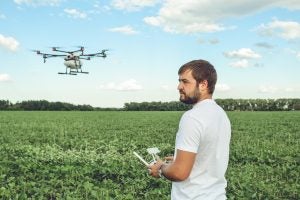
- Smart sensing and precision analytics: In-field sensors paired with AI analytics to optimize inputs, reduce waste and track real-time farm metrics.
- Agronomic data and measurement platforms: Software solutions that combine technical assistance, data platforms and carbon-market support to help farmers adopt innovative conservation farm practices at scale.
- Biotech and genetic innovation: Advanced biological tools like gene-editing technology and crop-microbiome engineering that enable more resilient, efficient crops and reduce reliance on conventional pesticides and inputs.
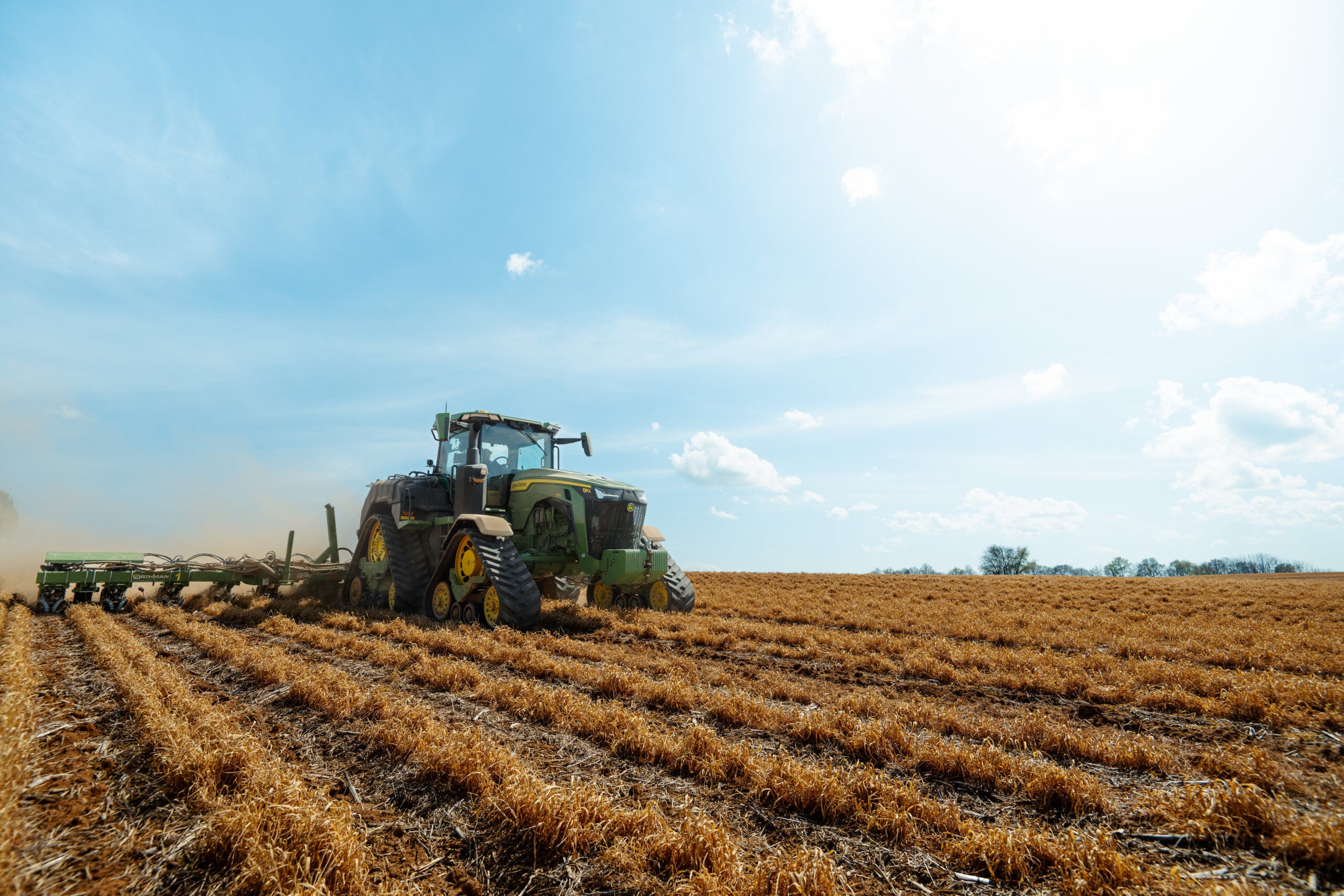
- Automation and machinery: AI-enabled or precision-sensor farm machinery that boosts efficiency, lowers costs and reduces emissions.
Continued investment is essential for maintaining the U.S. innovation advantage
To support both the adoption of existing innovations and the development of new ones, Congress has an opportunity to expand funding for research and on-farm adoption, advance supportive legislation, and invest in emerging technologies that help farmers boost productivity and strengthen the long-term resilience of U.S. agriculture.
The U.S. has captured 41% ($6.6 billion) of the $16 billion global agtech market, underscoring investor confidence and America’s leadership in the industry. Maintaining this position in a rapidly evolving global economy is not self-sustaining without continued investment.
Much of the existing investment targets technology and outputs that are already defined and clear, which leaves an opportunity gap to accelerate innovation from the lab to the field.
When I first came back to the farm, one of the first challenges my dad gave me was to try to get our soybean yield above 50 bushels to the acre. And so I went to work collecting harvest data from our equipment. We started taking grid samples of the whole farm and started finding hot spots. It’s easy doing precision. And within two years, we’re averaging closer to 60 [bushels per acre] now.
Ty Graham is part of the American Farmers for Conservation affiliation and is a rice, corn and soybean farmer of G&G Farm in Arkansas.
Policy can accelerate adoption and keep farmers competitive
One key opportunity to do this is fully funding the Agriculture Advanced Research and Development Authority (AgARDA). Modeled after successful research agencies at the Departments of Defense and Energy, AgARDA was authorized at a level that reflects its potential, but has yet to receive sufficient appropriations, leaving a powerful tool that could provide high risk, high reward results for farmers underutilized.
At the same time, scaling up AgARDA alone is not sufficient. Breakthrough research only delivers value if it is paired with the infrastructure needed to test, validate and scale promising technologies. Fully funding AgARDA is a critical first step in building this broader ecosystem — so technologies don’t stall between the lab and the field.
Farmers and ranchers need practical tools that deliver real returns on the ground. Bipartisan solutions like the EMIT LESS Act would strengthen USDA’s capacity to test and validate enteric methane-reducing products and practices, expand on-farm innovation trials and support voluntary adoption through existing conservation programs. All of this will help producers improve efficiency while managing risks to their operations.
A path toward a more productive and sustainable future
With the right mix of tools, investments and policies, U.S. agriculture can meet today’s challenges and seize tomorrow’s opportunities. Strategic public and private investment can help farmers adopt innovative conservation practices that lower costs, improve efficiency and strengthen environmental outcomes.
By supporting research and scaling proven solutions, the U.S. can ensure our agricultural sector continues to lead globally in productivity and innovation, securing economic stability for rural communities while protecting air, water and soil for future generations.