








3 ways drones can help take agriculture to new sustainability heights
Posted: in Agriculture
Written By

Share
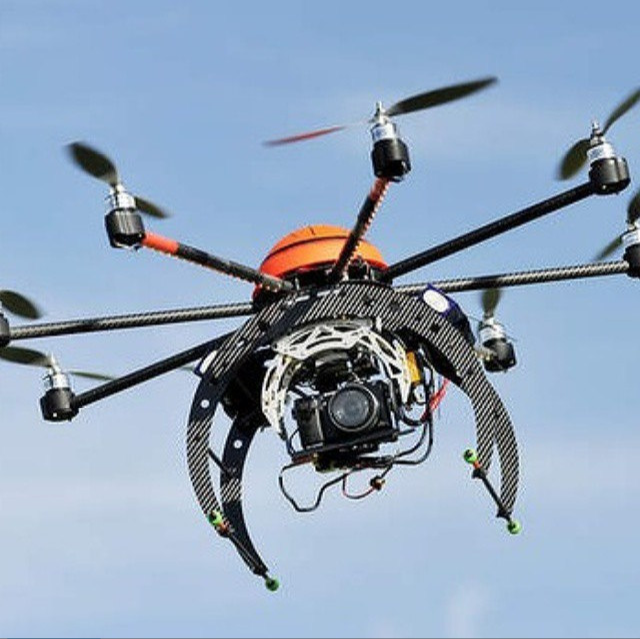
Drone technology has been around for decades, taking to the skies to capture movie sequences, collect scientific data and scout territory. But there’s another industry where drones are really beginning to take off: farming.
Agriculture is on tap to make up 80 percent of the market for unmanned aircrafts in the next couple of decades. With the invention of newer, more effective technologies, drones have the potential to launch the agriculture industry into a future of sustainability.
4 ways drones are helping people and nature prepare for climate change
Rules of the sky
In February of this year, the Federal Aviation Administration proposed long-awaited rules on the commercial use of small drones in the agricultural sector. The new regulations require operators to be certified, fly only during daylight and keep their aircraft in sight. Although this proposed legislation could take one or two years for final adoption, it marks a major step for the industry, as the guidelines provide the formal structure needed to legitimize drone use and advance the market for their production.
Although drone technology is still modifying production to increase ease of use and lower prices, these machines already have the potential to go a long way towards improving farmers’ bottom lines – and the environment. Here are three key benefits of drone use in agriculture:
1. More information, less time
One of the major benefits of drones is their ability to scout farm fields both quickly and efficiently. Rather than having growers evaluate fields manually on foot or by tractor, this technology allows farmers to gain immediate knowledge about the status of their fields in shorter periods of time.
This information can be gathered whenever and wherever it is needed, minimizing the response time required to address issues and maintain crops.
2. Improving crop health and efficiency
New drone technology is very effective at collecting data to help farmers improve crop health. Equipped with sensors, drones flying over a field can collect plant height measurements by gathering range information from the plant canopy and the ground below. By measuring near infrared wavelengths through a multispectral sensor, drones can also create vegetation index images, indicating which plants are healthy and absorbing maximum sunlight.
Drones also create satellite maps that can help farmers make decisions about fertilizer – a major concern of farmers, as fertilizer represents up to 50 percent of input costs. By using high-tech sensors to absorb near infrared wavelengths, drones make maps that can show where phosphorous and nitrogen might be needed – or where there is an excess of nutrients. In this way, more nutrients are being applied where they are needed most, as more fertilizer is absorbed by plants when it is applied precisely. This level of detail can help farmers increase production and efficiencies that lead to higher yields.
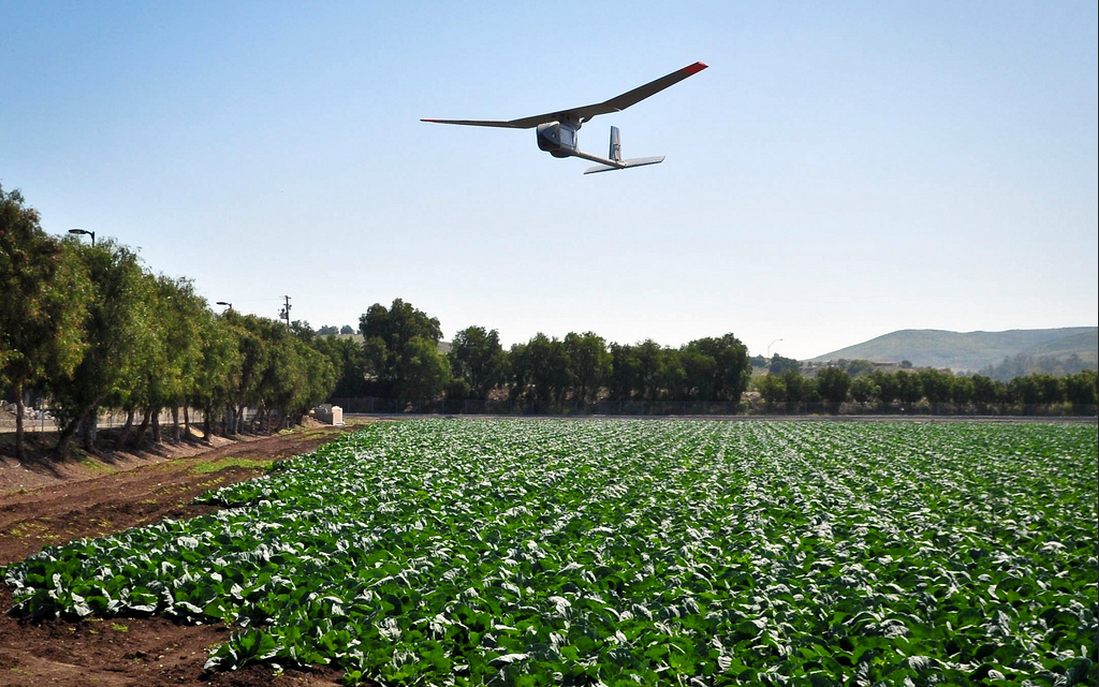
3. Water efficiency and other environmental benefits
Thermal cameras are able to detect cooler, well-watered field regions as well as dry hot patches. Farmers can use this data to adjust field irrigation and avoid wasting excess water. This ability to increase water optimization is particularly valuable in drought-stricken areas, such as California.
And by increasing water and fertilizer efficiency, drone technology also helps reduce excess fertilizer that runs off into nearby rivers and streams. Less runoff decreases the algal blooms and dead zones in our water systems.
Most drones currently available for use in the agriculture industry are very costly. However, with new developments and further innovation, drones may start to prove their value in agriculture.

2 Comments
Great insight into this new technology!
Excellent article on an exciting technological application.