







Future Energy – Needed Now
Posted: in Grid Modernization
Written By

Share
By: Richie Ahuja, Regional Director, Asia, and Andy Darrell, New York Regional Director and Deputy Director of the Energy Program
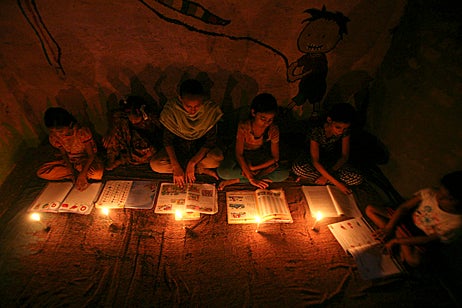
“Leopards and elephants often wander in…”says the manager of a tea plantation in India, left in the dark without electricity after the near total collapse of India’s electric grid. Trains stopped, miners were stuck underground, traffic lights went out, and homes and businesses were left without electricity. It was the world’s largest blackout, affecting more than 600 million people.
The truth is, the electric grid in many parts of the world is fragile, often struggling to match supply and demand. The United States is no stranger to blackouts either, as the Washington post reports. “My house lost power for four days,” notes a fellow EDF’er living in Washington, DC in regards to an outage earlier this July.
Yet technology is available to make grids much more resilient, nimble — and climate friendly. From sensors that identify weak spots in advance, to ways to store wind power in electric cars overnight, and buildings that make money by selling “negawatts” into the grid at peak times, we know how to get this right.
Globally, trillions of dollars are poised to be invested into electricity systems in developed and developing countries. Surprisingly, a lot of the medicine to cure the grid is remarkably similar across the world – deploy sensors that gather data that can be used for both reliability and pollution reduction, make it easy to plug renewables into the network, and reward efficiency and demand response. Build a data-driven, flexible network that uses technology to harness the power of information.
What’s holding us back is not technology or the will to innovate: it is outdated regulation and policy. Like most markets, the electricity market is governed by many rules – rules that frame what’s welcome to enter the market, access to data, how much any of us can make by putting solar panels on our house, etc. With so much investment about to happen, isn’t it time we took a hard look at those rules, to make sure we end up with a network that welcomes the future and rewards reliable, clean energy?
Austin’s Pecan Street project is pioneering a new way of doing business, one that works for families, for businesses, for people – and the planet. EDF is taking what we learned from that project and developing ideas for how to open much larger markets to innovation, like California and parts of the Midwest.
Leopards and elephants seem a long way away from our homes here in the U.S.… but reading about this crisis in India makes us realize how related the solutions to our energy futures really are. And how important it is, in each country, to get it right.