






Four levers that can unlock hydrogen demand today
Written By

Share
Summary
- Low-emissions hydrogen is essential for decarbonizing hard-to-abate sectors like fertilizers, refining, shipping and aviation, but many projects are struggling to reach final investment decisions because demand signals, offtake agreements and market structures have not kept pace with industry ambition.
- Four key levers that can be used to accelerate hydrogen demand and deployment are: book-and-claim systems, buyers’ alliances, product standards and public financial support — coordinated use of these tools can reduce risk, create credible demand and help scale global hydrogen markets toward net-zero goals.
Across major economies, from the U. S. to Germany and India, governments and industry are working to scale low-emissions hydrogen as a substitute for fossil fuels in hard-to-abate sectors such as fertilizers, refining, shipping and aviation.
Low-emissions hydrogen remains a critical option for energy security and deep decarbonization. Yet despite widespread interest and clear use cases, many projects are stalling before final investment decisions because offtake commitments and bankable market structures have not kept pace with market ambitions. Delayed action risks slowing decarbonization and prolonging dependence on volatile fossil fuel markets.
Building on EDF analysis of hydrogen use in US fertilizer and refining markets, this blog outlines four market and policy levers that can help create hydrogen demand even under today’s uncertain conditions.
Book and claim – unlocking demand by separating physical use from climate value
Book and claim systems offer a practical way to address cost premiums in today’s low-emissions hydrogen market. Under this market-based approach, companies with a higher willingness to pay — for example, consumer-facing food brands – cover the added cost of low-emissions hydrogen and claim the associated emissions reductions, helping to meet their climate targets, even if they may not use the hydrogen directly themselves. The hydrogen can then be steered to sectors, such as fertilizer production, that urgently need to reduce emissions but may struggle to absorb the green premium between clean and fossil-based fuels.
This type of book-and-claim system is being piloted in Minnesota, where Pepsi and others can purchase certificates for low-emissions fertilizer made from green hydrogen-based ammonia. Similar accounting systems exist elsewhere. CertifHy – a European voluntary hydrogen book-and-claim system – has been operational since 2018. Renewable electricity markets have used similar systems for decades, through Renewable Energy Credits in the U.S. and Guarantees of Origin in the European Union. These programs offer useful lessons for future book and claim design, including the importance of robust, verifiable and transparent emissions accounting.
Buyers’ alliances: aggregating demand to create bankable signals
Buyers’ alliances are another market-based tool that can help create the early demand signals that producers need to get projects off the ground. By pooling their purchasing power and committing to buy low-emissions hydrogen, companies can give producers and financial backers more confidence to move projects forward.
This approach is already being used across a range of sectors needing to decarbonize. The World Economic Forum’s First Movers Coalition is a leading example, targeting hard-to-abate sectors such as shipping, aviation and steel. In its first five years, the coalition helped generate more than 130 offtake agreements and investments, demonstrating the power of buyers’ alliances to create credible demand signals.
Hydrogen industry members and policymakers can build on this momentum by expanding existing alliances, such as ZEMBA and SABA, while also developing sector-specific initiatives like the alliance for Low-Emission Ammonia-based Fertilizers, launched at COP30. These groups are helping to create the demand certainty that hydrogen producers and investors need to accelerate deployment.
Product standards: mandating demand through regulated markets
Product standards use regulation to create predictable demand for low-emissions hydrogen. The standards can require a certain amount of low-emissions hydrogen to be used during production. For example, the EU has set targets requiring a growing share of industrial hydrogen use to come from renewable electricity by 2030.
Alternatively, a limit might be set for the carbon intensity of fuels or end products, as seen in Colorado’s Buy Clean standard for publicly funded construction materials. This creates predictable demand for low-emissions hydrogen or its derivatives, reducing risk for early projects and encouraging investment.
Public financial support: closing the cost gap to enable demand
Public financial support strengthens demand by bringing down hydrogen costs to be competitive with fossil fuels. Government support can take the form of production or end-use tax incentives where producers or end-users must meet a minimum emissions intensity threshold, or Contracts for Difference where the government sets a guaranteed price floor or ceiling for clean fuel options.
The U.S. and Australia have introduced federal clean hydrogen production tax credits, while Colorado and Illinois have implemented clean hydrogen tax credits aimed at hard-to-abate end uses. Meanwhile CfDs have been the preferred policy in the EU (European Hydrogen Bank auctions), Japan (Green Transformation (GX) scheme), and the United Kingdom (Low Carbon Hydrogen Agreement).
Both tax incentives and CfDs improve project affordability and strengthen demand. Some forms of CfDs, like those in the EU and India, can further address demand by matching offtakers and producers directly, resulting in signed offtake agreements.
Looking ahead
Hydrogen markets are facing barriers to uptake, but these challenges are not insurmountable. The tools are out there, yet the absence of coordinated action to deploy at scale remains a constraint.
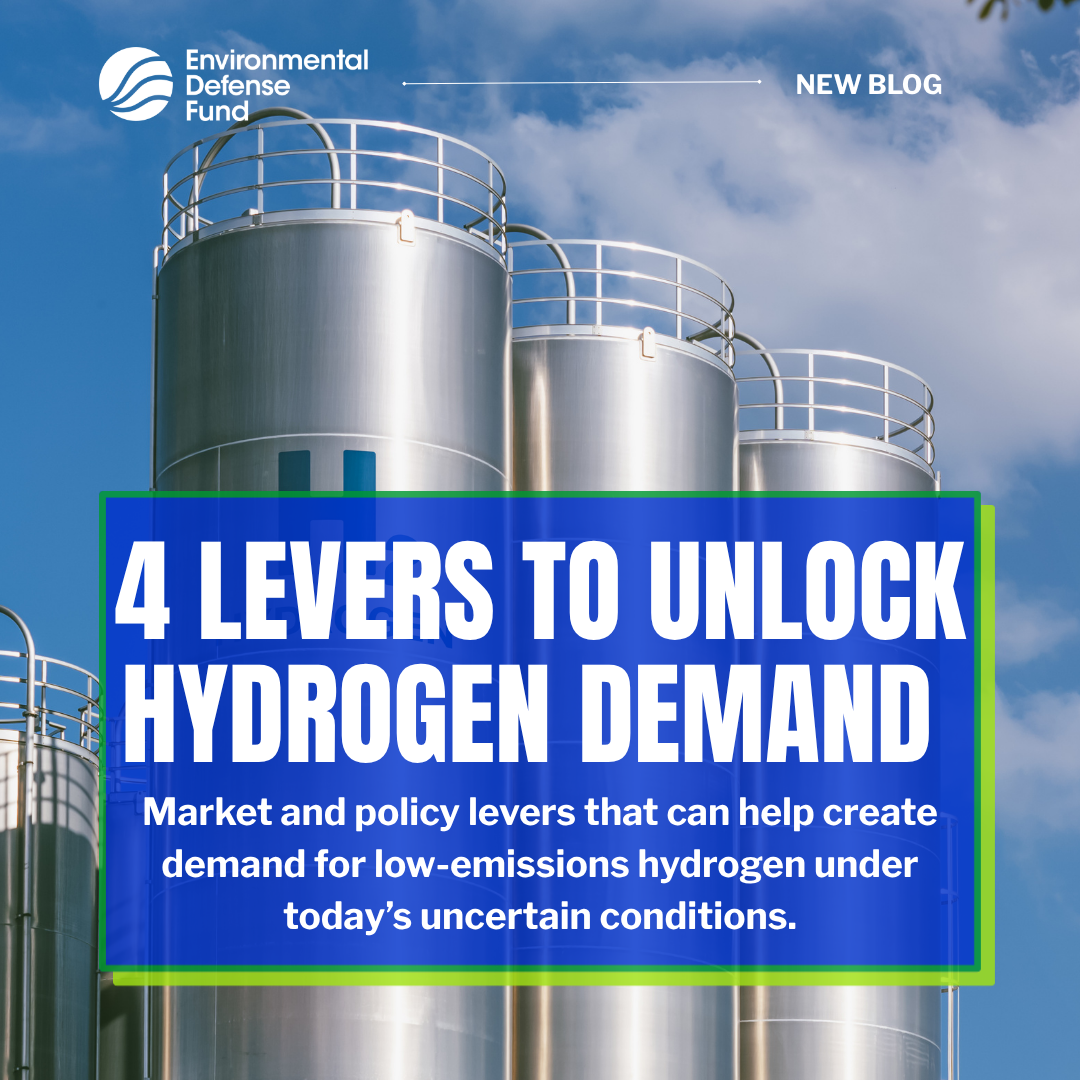
The four levers outlined in this blog — book and claim systems, buyer alliances, product standards and public financial support — already exist in different forms across jurisdictions and sectors. The challenge now is scaling and aligning these approaches to build credible demand.
These levers are most effective when deployed together: market coordination, regulatory certainty and financial support each address different barriers to demand formation.
Achieving net zero by 2050 will require this kind of early market leadership. Policymakers and industry members do not need to wait for perfect market conditions to emerge; they can begin shaping the market through the decisions they make today.