






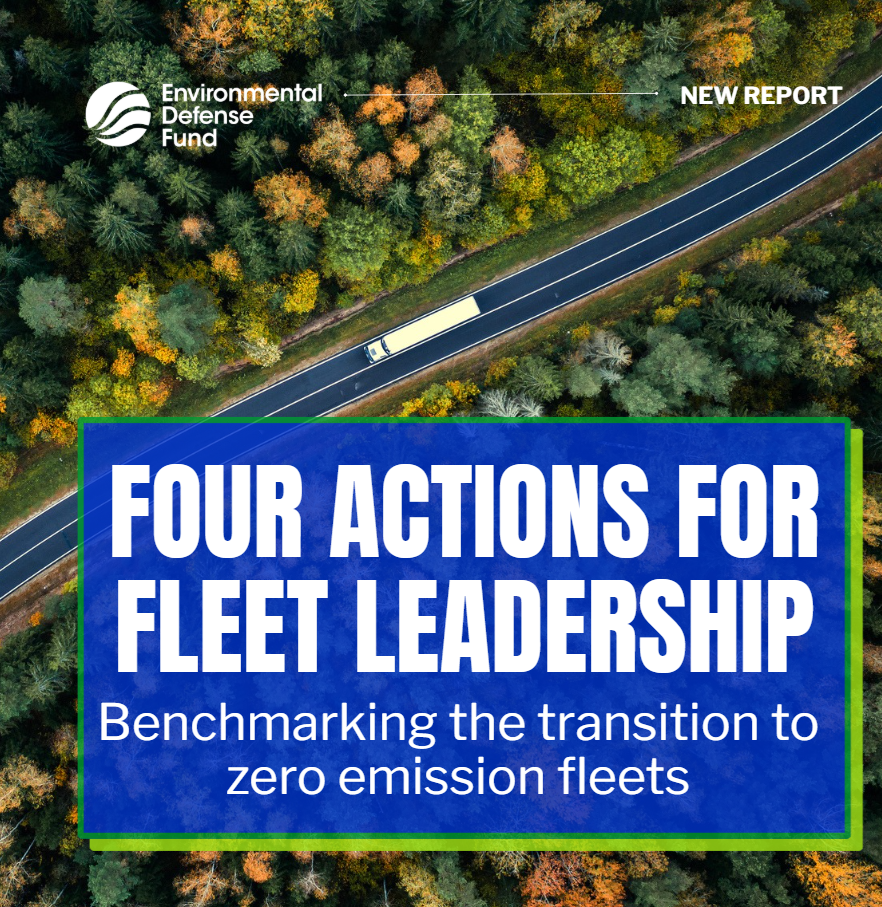
New report examines what it takes to be a sustainability leader among America’s top fleets
Posted: in Electric Vehicles
Written By

Share
Summary
- Freight sector leaders are increasingly tying sustainability to business performance, using zero-emission strategies to reduce fuel cost volatility, improve efficiency and strengthen competitive positioning.
- A new Environmental Defense Fund report finds that while many top U.S. fleets have set sustainability goals, true leadership comes from aligning commitments with concrete planning, deployment and industry engagement to turn ambition into measurable progress.
By Elizabeth Sturcken & Marissa Nixon
A new model of leadership is developing across the freight sector. Industry leaders are moving decisively and setting a new standard of efficiency through sustainability initiatives, while others risk falling behind. The transition to zero-emission transportation is no longer just an environmental consideration — it is quickly becoming a defining factor in operational performance and competitive positioning.
A new report from Environmental Defense Fund is showcasing where leadership is taking shape across top companies, and where quiet competition is underway. The report, Four actions fleets must take to be sustainability leaders today: Benchmarking the transition to zero-emission fleets, summarizes analysis of public reports and practices among the top 100 U.S. fleets. The report demonstrates how top fleets are thinking about sustainability, and how they plan to turn ambition into action.
Why the shift matters: fuel volatility is a business risk
Fuel cost volatility is a significant business risk. Diesel, already one of the largest components of fleets’ operating expenses, has recently exceeded $5 per gallon nationally, underscoring how rapidly energy costs can shift. For companies managing large transportation networks, these price swings create real business risks, leaving freight operators exposed to external market forces and volatility. Fuel costs affect operating margins, supply chain planning and long-term investment decisions.
Sustainability is no longer separate from financial performance. Price swings affect operating margins, supply chain planning and long-term investment decisions. Transitioning to zero-emission technologies, such as electrification, offers a path to reduce fuel cost volatility, improve energy efficiency and stabilize long-term operating expenses.
Where fleet leadership is taking shape
EDF’s Four Actions for Fleet Leadership provides a practical framework for turning transportation sustainability into operational practice. Analysis in the report shows that leadership is not defined by any single action, but how companies align commitments, planning, deployment and industry engagement to reinforce progress and enable long-term success.
The report also highlights examples of how leading fleets are approaching this transition. For example, of the 100 companies reviewed, 60 have publicly stated transportation-related sustainability goals and 26 have committed to transitioning to zero-emission fleets or broader net-zero operations. Most companies with stated goals include timelines and interim milestones, though fewer provide detailed transition plans or deployment strategies.
These findings suggest that while progress is underway, fleets have an opportunity to strengthen execution and reinforce progress across all four leadership areas. Here, leadership is not defined by any single initiative, but by how effectively organizations align commitments, strategic planning, deployment and industry engagement to drive measurable progress.
This report highlights companies, including NFI, PepsiCo and US Foods, that are demonstrating this approach in practice by pairing long-term goals with deployment milestones, operational pilots, or supplier engagement strategies to advance transportation sustainability.“Sustainability covers more than just emissions reduction; it also includes lowering freight costs and increasing efficiency,” shares Mike Roeth, Executive Director at NACFE.
“The companies making the most progress are those connecting real-world action with longer-term planning to build more efficient and sustainable operations over time. Analyses like this help identify what leading fleets are doing differently and where the industry is headed.”
Assess and strengthen your fleet strategy
EDF’s latest report highlights where fleets are making meaningful progress, and where greater ambition is needed. For fleet operators and corporate leaders, this is an opportunity to understand how peers are navigating this transition, assess how current efforts align with emerging best practices and identify where to go further.
Amid ongoing pressure to improve cost efficiency and manage energy risk, leading companies are prioritizing transportation sustainability as a core business priority. Expectations from customers, investors, and employees are reinforcing the need for credible net-zero and zero-emission transportation strategies. Companies that align ambition with execution will be well positioned to mitigate volatility, enhance operational performance, and remain competitive as market dynamics and policy landscapes continue to evolve.
Read the full report to explore the data, see how your company compares, and identify the next steps to strengthen your fleet strategy.