






Two years after Hurricane Maria, community leader stresses the need for long-lasting solutions
Posted: in Clean Energy
Written By

Share
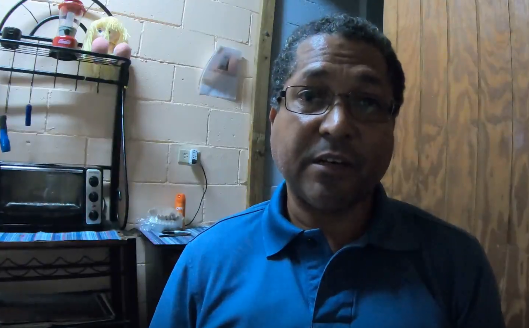
Cristobal Jimenez is a community leader in Fajardo, Puerto Rico. He is one of the many survivors of Hurricane Maria. Recently, Cristobal and members of his community have been working to find long-lasting solutions to their energy challenges, effective ways to address the needs of their families and preparations for the future in the wake of superstorms.
Below is an edited version of the conversation we had with him.
How did Hurricane Maria affect you and your community?
Surviving Hurricane Maria was easy. It’s the aftermath that was a challenge. In Fajardo, we spent about two months without power. We had water because we had reserves. But, the issue was that because we receive most of our power from the south part of the island — Costa Azul — just to make sure that we have the distribution lines across the island to get the proper power was very hard. It wasn’t constant, it wasn’t reliable and it wasn’t something that you keep your groceries fresh. There was not sanitary place to keep insulin or any other type of medicine that needed refrigeration.
In addition, it was a challenge to get to any gas stations because there were long lines. Everybody required power generators and other necessities.
Two years after Hurricane Maria, community leader stresses the need for long-lasting solutions Share on XWhat has your and your community’s recovery process been like? Was there anything in particular that helped you push forward?
When we started considering the alternatives we have to make sure we supply the proper needs for our community, one of the things we have considered deeply is microgrids. That will give us the opportunity to have a reliable, manageable system that we can localize by regions to identify how we can keep moving forward with proper solutions — to treat our elderly, to make sure our families have the proper groceries and they can recover faster. We do not want to rely on a centralized grid that has affected us all the time.
Those are several of the main reasons why I consider that microgrids are necessary for all the regions of the island, so we can sustain ourselves and be resilient for the events that are going to happen next.
In your view, what needs to be done to ensure something like this never happens again?
We live here, and we will still live here after we rebuild. But, we need to make sure we do it faster. So, a microgrid or an electric system that is localized is something that we have considered and are looking forward to making a reality.