





How solar technology is transforming India’s small-scale fisheries
By: Jacob Eurich, EDF’s Small-Scale Fisheries Solutions Scientist
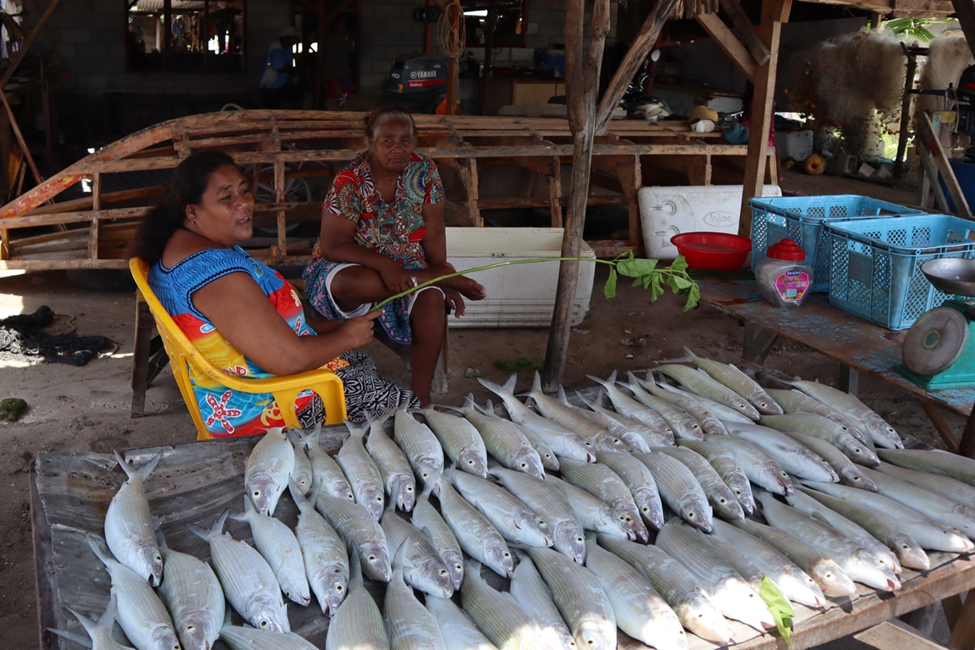
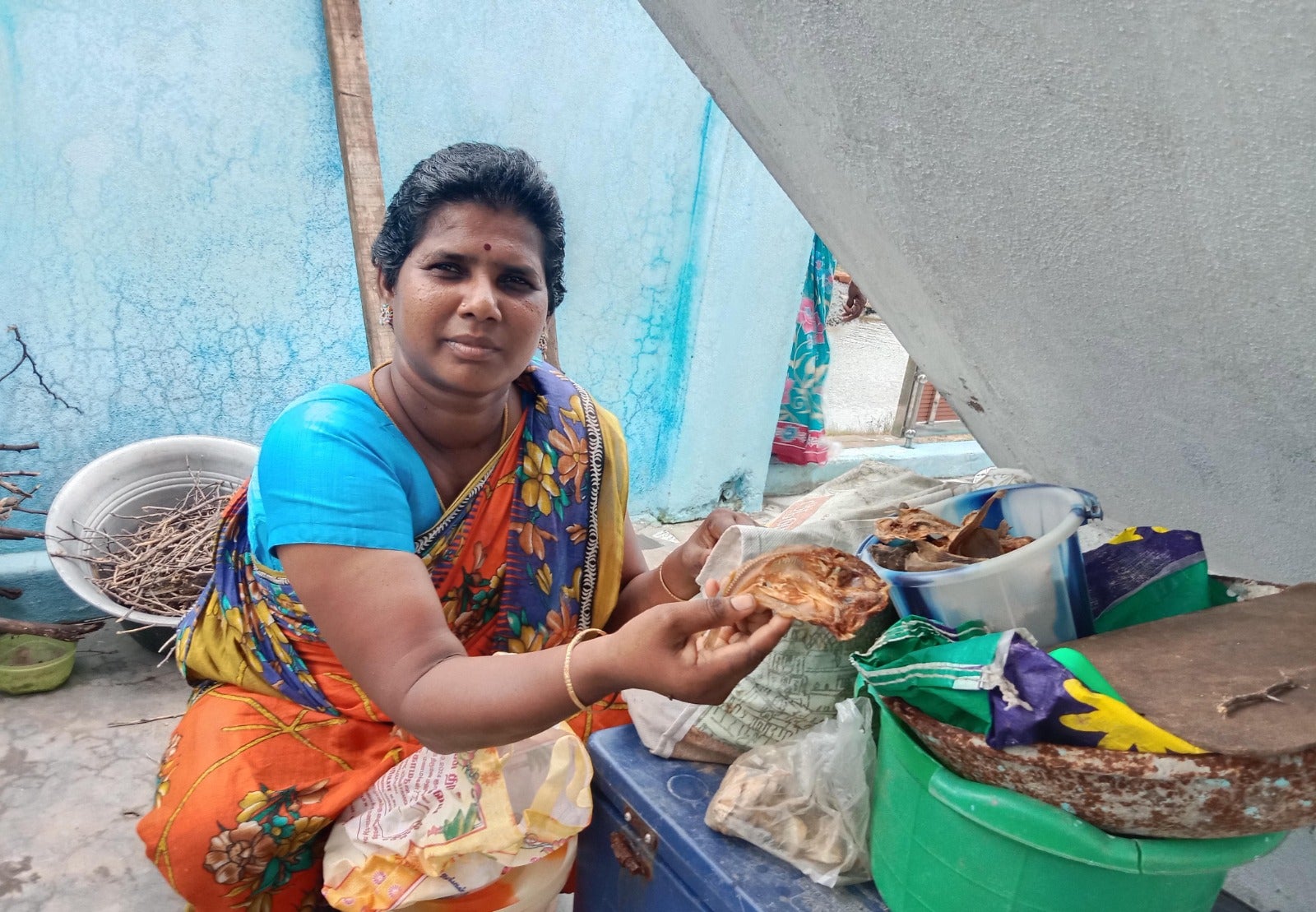
In fishing villages along the coast of Tamil Nadu, India, dried fish, known locally as karuvadu, is an important dietary staple and source of income. Traditionally, women dry fish on open beaches under the sun, spending long, strenuous hours monitoring the catch. The resulting product is high in salt, contaminated by sand, dust, and insects, and because of this, there is a reduced shelf life and sales are limited to local markets where it fetches low prices. But a simple, portable technology is beginning to change that.
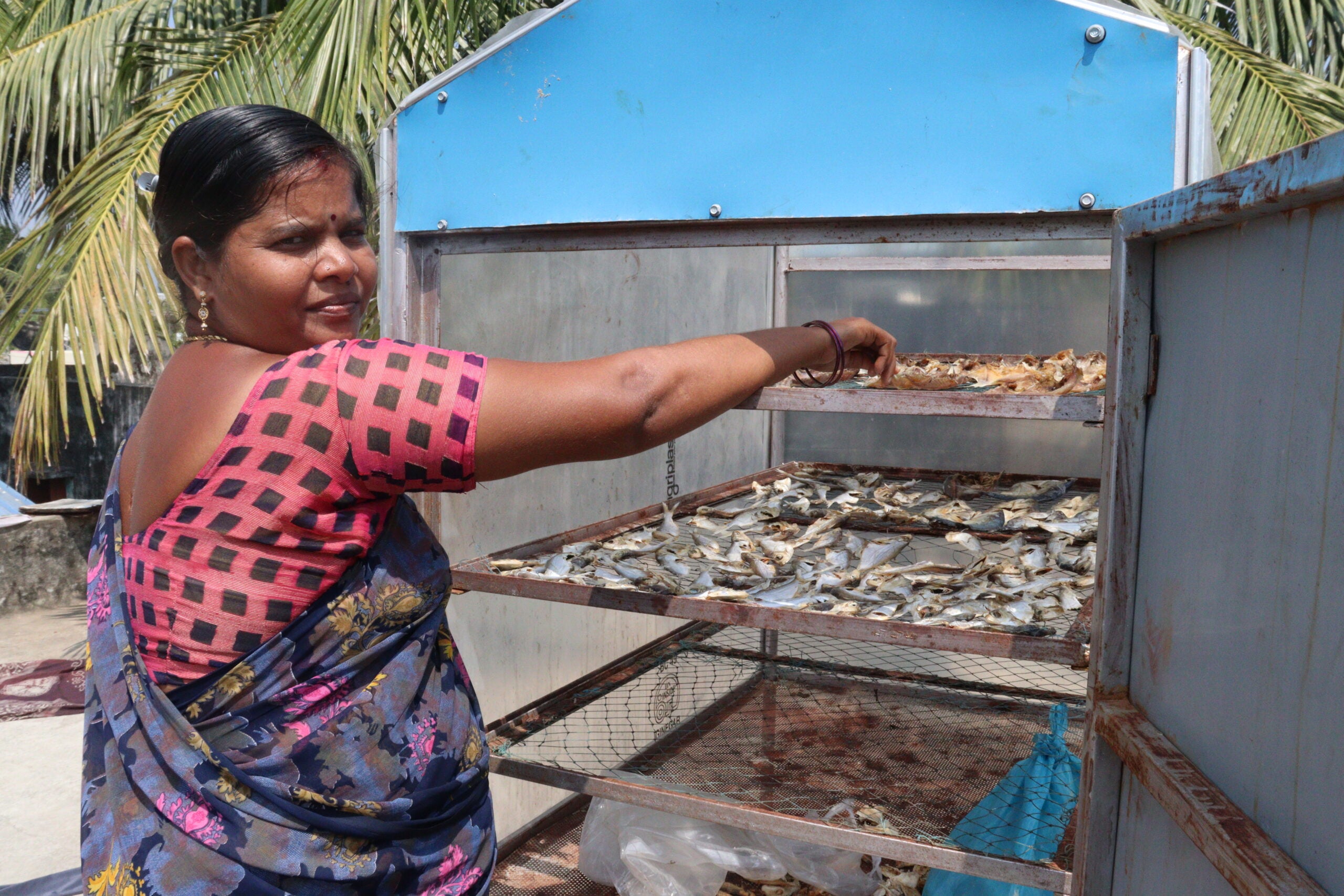
Portable mini solar dryers installed near fisherwomen’s homes in a Tamil Nadu fishing village allow hygienic fish drying without the need for constant supervision. Photo credit: MSSRF.
New research on solar drying and women’s livelihoods
In a new paper published in Environmental Research: Food Systems, Environmental Defense Fund (EDF), Environmental Defense India Foundation (EDIF), and the M. S. Swaminathan Research Foundation (MSSRF) examined the introduction of portable mini solar dryers to fisherwomen in two Tamil Nadu villages: Madathukuppam and Vanagiri. The study documents how this low-cost technology, designed by MSSRF, is reshaping post-harvest fish processing while supporting the women who do the work.
The solar dryers, which are small structures that can be set up beside a fisherwoman’s home, use solar energy to dry fish in a controlled and enclosed environment. Compared to traditional open-air methods, the dryers produce fish with a longer shelf life and improved hygiene. The result is a product that appeals to a broader consumer base, including inland and urban buyers who had previously avoided traditionally dried fish due to concerns about quality.
But the project found that the benefits extend well beyond product quality. Women using the solar dryers reported significant time savings, freeing hours previously spent guarding fish from birds on open beaches. That time was redirected toward family, rest, and other economic activities. The dryers also reduced women’s exposure to extreme heat and the physical toll of traditional drying. In a sector where women’s contributions are often undervalued, the technology created a pathway to improved wellbeing and economic independence.
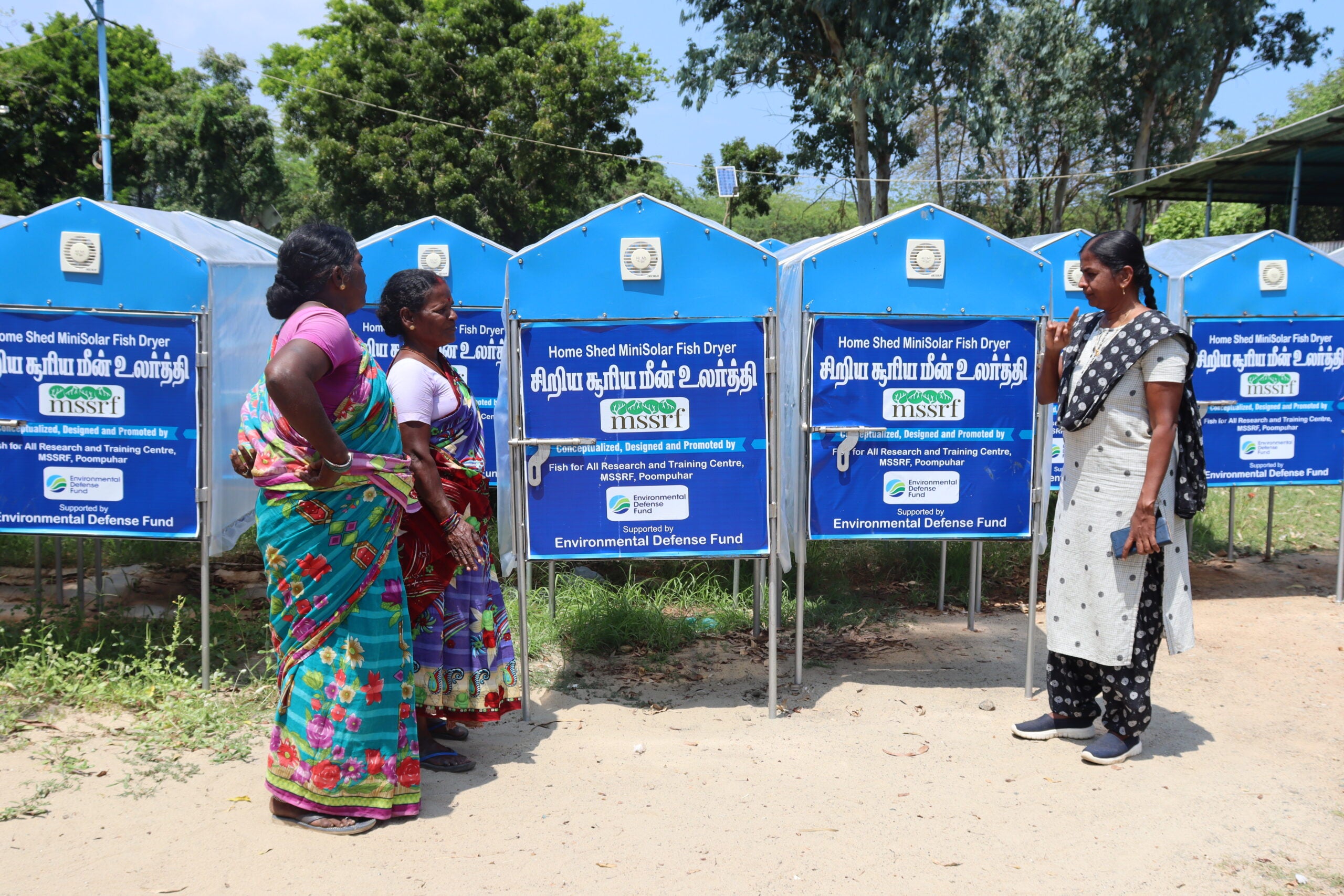
The portable solar fish dryers use the sun’s energy to dry fish in a controlled and enclosed environment. Credit: MSSRF.
Why it matters for blue food systems
India is one of the world’s largest fish-producing nations, and dried fish is a critical source of affordable protein and micronutrients. Yet post-harvest loss remains high across India’s small-scale fisheries. This work demonstrates that relatively simple, locally appropriate innovations can reduce those losses while strengthening the role of women in fisheries value chains.
The solar dryer model also speaks to a broader challenge in small-scale fisheries worldwide: how to improve livelihoods and nutrition outcomes without requiring large-scale infrastructure investments. By meeting fisherwomen where they are and building on existing practices, the approach offers a scalable template for other coastal communities facing similar issues.
Connecting research to action
This research is part of EDF and EDIF’s growing engagement with India’s fisheries sector, working alongside partners in Tamil Nadu and Maharashtra to develop climate-resilient, community-centered approaches to fisheries management. The goal is ambitious: demonstrate scalable models that benefit 50,000 fishers by 2030, and support all nine of India’s coastal states in adopting sustainable fisheries management by 2040.
Scaling innovations like the solar dryer will require supportive policy. A recent policy brief by EDIF’s Dr. Vijai Dharmamony shows how fragmented governance across India’s coastal states, with varying regulations on gear and licensing, can complicate efforts to adopt and scale good approaches. Coordinating fisheries governance while being flexible for local contexts will be key to ensuring that innovations for fisherwomen in Tamil Nadu can eventually benefit coastal communities across the country.
###
Eurich, J. G., Turner, C., Simaachana, S., Shwetha Tony, A., Anbuvahini, N. A., Thamizhazhagan, E., Selvarasu, T., Bhogte, A., Dharmamony, V., Kelso, K., Velvizhi, S. (2026). Solar drying blue foods supports women and strengthens value chains, equity, and climate resilience in India. Environmental Research: Food Systems. 3: 023002. https://doi.org/10.1088/2976-601X/ae708b