







Reducing Threats to Ocean Wanderers is Key to Their Protection
Written By

Share
By Tommy Clay and Gemma Carroll
Some of the ocean’s most charismatic species are among its most vulnerable. From sharks and whales to sea turtles and albatrosses, many species of ‘marine megafauna’ traverse vast distances, crossing ocean basins between feeding and breeding grounds. As they undertake these epic migrations, they play vital roles in ocean ecosystems—regulating food webs, recycling nutrients, and connecting distant habitats.
But these ocean wanderers are facing unprecedented threats from human activities. When they encounter fishing vessels, they risk being ensnared in fishing gear and drowned as “bycatch.” They navigate seas crisscrossed by shipping traffic, search rapidly warming oceans for shifting prey resources, and visit areas that are littered with plastic pollution.
Marine Protected Areas: Part of the Solution, But Not the Whole Answer
Marine Protected Areas (MPAs) have become a cornerstone of ocean conservation. Designed to reduce damage from activities like industrial fishing, MPAs cover only about 8% of the global ocean. The Kunming-Montreal Global Biodiversity Framework sets a bold new target: protecting 30% of the ocean by 2030. But can area-based protection alone safeguard wide-ranging marine megafauna?
Alongside a coalition of nearly 400 scientists from around the world, we recently coauthored a study published in the journal Science that provides an important reality check. By mapping the distributions of over 120 species of marine megafauna ranging from penguins to polar bears, this global collaboration showed that even meeting the 30% MPA target would leave many critical habitats unprotected.
The paper’s message is clear: MPAs must be paired with strategies to reduce threats—particularly from fisheries—to achieve meaningful conservation outcomes.
Fisheries Bycatch: A Deadly but Solvable Threat
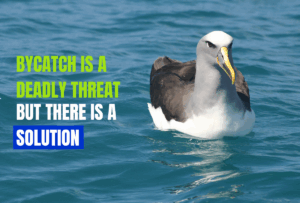
Reducing fisheries bycatch is one of the best actions we could take to protect marine megafauna. Seabirds like albatrosses stand to benefit most—of the 22 albatross species, 15 are threatened with extinction, and bycatch in longline fisheries is one of the leading causes. Tens of thousands of albatrosses are hooked and drowned each year by longline vessels fishing for tuna, and many populations are in steep decline.
Armed with this information, we have been leading a project for the past three years to map bycatch risk in the North Pacific based on the areas and times that albatrosses and fishing activity have high overlap. We recently presented our findings at the Inter-American Tropical Tuna Commission (IATTC) – the multilateral body responsible for managing tuna fisheries from Hawai’i to Chile—to advocate for meaningful action to reduce seabird bycatch.
The IATTC still relies on 15-year-old seabird bycatch regulations that are outdated and insufficient to protect endangered albatrosses. Over the next year, EDF and partners are advocating for two urgently needed updates to IATTC regulations, that will be deliberated by countries that are signatories to the IATTC:
- Require fishing vessels to implement at least two measures that are effective at reducing seabird bycatch: setting hooks at night when birds are less active, using hooks that sink faster to depths where birds cannot reach them, and using bird scaring lines that deter birds from feeding around fishing boats.
- Expand the spatial scope of the regulation to include all high-risk areas for seabirds within the IATTC management area.
Global Frameworks, Local Action
While protecting 30% of the global ocean would represent a major win for conservation, MPAs must be coupled with management actions that reduce threats to wildlife in the places that matter most. Enacting simple but proven conservation measures in high-risk places within MPAs or international management areas like the IATTC will have lasting benefits for seabirds and other marine megafauna around the world.