









SmartPass and Smartphones: An Innovative Approach to Small-Scale Fisheries Monitoring in Lampung Province, Indonesia
Written By
Share
By Harlisa and Dustin Colson Leaning
In Lampung province, Indonesia, a few smartphones and three well-placed cameras are revolutionizing the way that small-scale fisheries are monitored. In a previous blog post, we introduced how smartphone-based catch reporting and the SmartPass camera system could have the potential to play a fundamental role in sustaining small-scale fisheries. A few years later, these two technologies have been implemented to generate reliable estimates of total effort and total catch in Lampung’s blue swimming crab fishery – metrics often hard to come by in a small-scale fishery characterized by limited resources and many fishers.
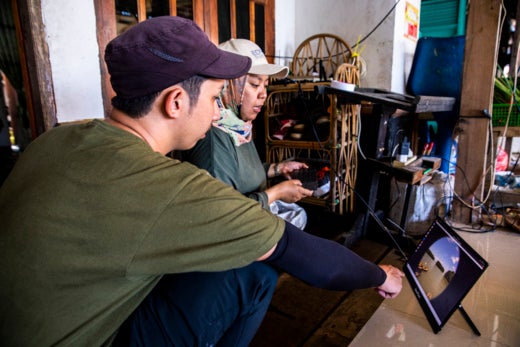
SmartPass is crucial for monitoring fishery performance and informing sustainable management of the blue swimming crab fishery. Makmur Hidayat, Secretary of the Marine Fisheries Office in Lampung Province, agrees, “Using technology, like SmartPass, to support data collection makes work easier and can increase the accuracy of the data. Future planning can be accurate and precise using reliable data, reflecting communities’ needs and solving problems.”
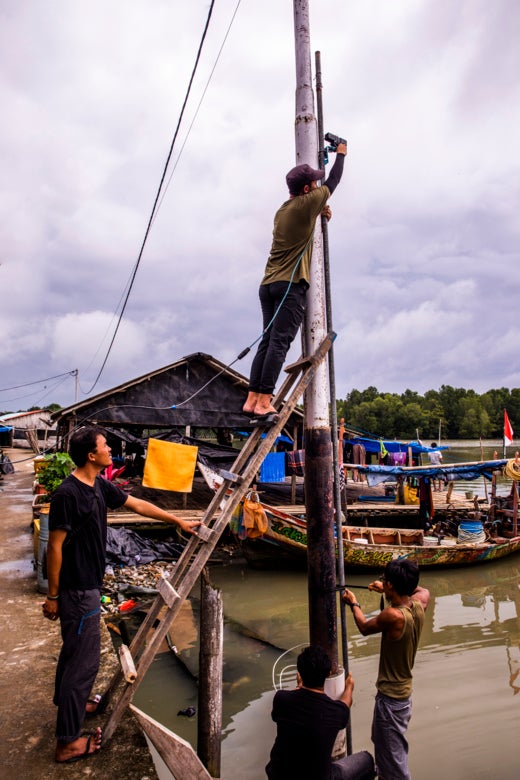
In early March, EDF installed three smart cameras in three major landing sites of blue swimming crabs. These cameras are strategically located on narrow passes in ports, ensuring a clear cross-channel view of all fishing vessels coming in and out of the harbor. Crucial considerations were providing access to a reliable power source, a stable internet connection, and a location with a low chance of theft. Through engagement with and support from the local community, securing access to a power source and secure housing was possible.
Once the smart cameras are up and running, the video footage is wirelessly transmitted to a local computer, where an algorithm works to detect boat traffic and count vessels leaving and returning to port. The approximate number of vessel trips provides half of what is needed to produce estimates of the total catch of blue swimming crab. To obtain information on the catch rate, dock samplers (also called enumerators) conduct interviews with fishers offloading their catch to record what was caught on each trip and measure key biological parameters that help inform stock status.
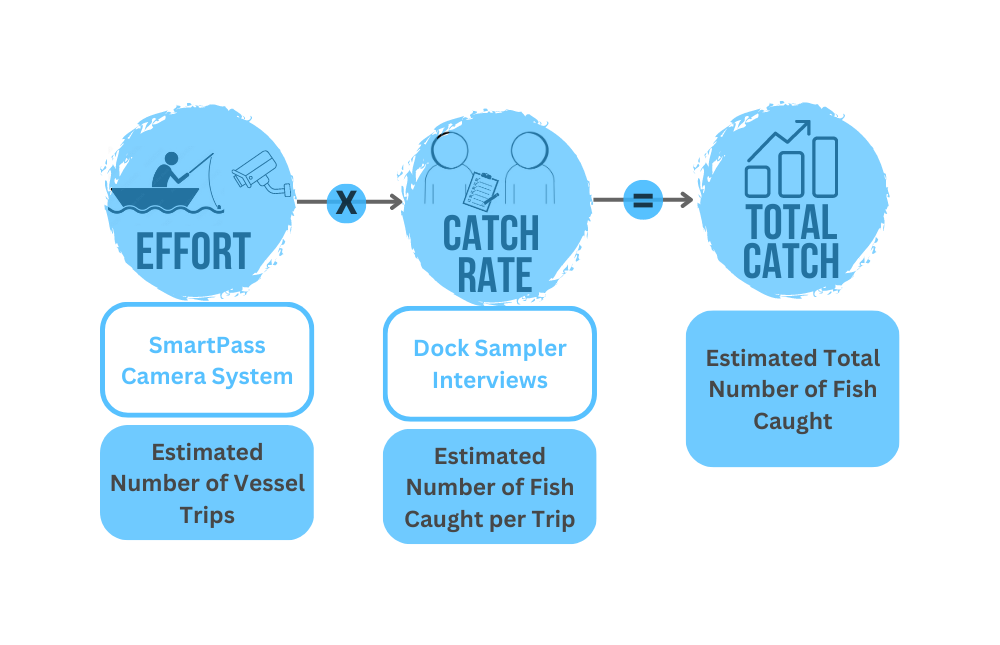
The total catch estimates produced are not as precise as census-level data seen in industrialized commercial fisheries. Still, this estimation process has been shown to work quite well in other fisheries where many vessels have relatively small catches per vessel.
To date, small-scale fisheries are all too often characterized by unassessed stocks and unreported catch. Once small-scale fishery managers better understand how much fishing effort is taking place and how many fish are being caught, management decisions can be better informed to help increase climate resilience and sustainability. SmartPass is helping to improve data collection in the blue swimming crab fishery in Lampung, but its potential for application in small-scale fisheries worldwide is limitless.
To learn more about the applications of SmartPass, check out this video.