







Social Entrepreneurs Saving the Ocean
Posted: in International, Science/Research
Written By

Share
*Re-Posted from Huffington Post Blog
Social change requires the harnessing of social forces, and the more powerful the force, the more fundamental the change. Moral outrage, a yearning for justice, and the desire for connection are all forces that have propelled social change movements throughout history. They will continue to fuel social change now and in the future.
But there is a very powerful force shaping the world we live in today that is not yet aligned fully with the environmental values that many of us hold, and that is the search for profit and well being through the investment of capital and labor — the profit motive. Indeed, the profit motive has prevailed time and again over countervailing forces like ethical commitments to environmental stewardship, the desire for long-term economic well being, and even over the force of government regulation.
In a previous blogpost, I summarized a recent publication that lays out a strategy for aligning the profit motive with the conservation of coastal ecosystem services like carbon sequestration, storm surge protection, and recreational value — services that are usually unpriced by conventional markets, and so become subject to degradation. The goal is to reverse alarming trends in mangrove deforestation, salt marsh dredging, and nearshore pollution by shaping markets that value these services, allowing people to do well by doing good.
This strategy for scaling up coastal conservation depends not only on the new kinds of rights and social contracts that we describe in our paper, but also on social entrepreneurs who see value in conservation and lifting people out of poverty, as well as in conventional return on investment. The concept of social entrepreneurship is articulated by Nobel Prize winner Muhammed Yunus, founder of the Grameen Bank, in his book “Building Social Business“.
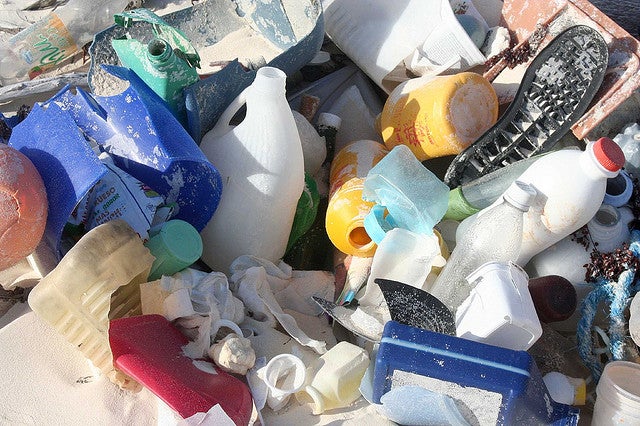
So it’s always heartening to learn about social entrepreneurs who care about the ocean, and are using their ingenuity to promote conservation. An article in the Philadelphia Inquirer describes one such entrepreneur: Brian Linton, founder of United by Blue. For every article of clothing sold, United by Blue removes one pound of trash from the ocean by organizing beach cleanups. While environmental groups have been organizing beach cleanups for years, it’s great that a company is getting engaged, creating the potential for a sustainable source of financing for cleaning beaches.
The key to ensuring that any conservation strategy achieves real and lasting change is to point the strategy at first causes, rather than at symptoms. Asking “why” repeatedly can help identify first causes. Why is there so much trash on the beach, and why do we have to clean it up repeatedly? Because while some of it originates locally from garbage dumps, sewer overflows, and just plain littering, a lot of it drifts in from other parts of the ocean, where it concentrates in large eddies and gyres that sometimes disperse water (and the garbage in it) into surrounding currents. Why is there garbage in these eddies and gyres? Because container ships sometimes lose containers at sea, because fishermen in some fisheries discard large amounts of gear, because too much plastic that is resistant to decomposition is being used on land and at sea, and eventually ends up as garbage. Why is so much stuff discarded? Because it’s cheap, easy and unaccountable.
Everything that is discarded anywhere on earth eventually winds up in the ocean. Strategies to reduce trash on beaches must link to larger strategies to reduce the use of materials, like plastics, that persist in the environment and to hold polluters accountable, perhaps by embedding a “fingerprint” into materials likely to end up as ocean garbage, so that even when the ocean manages to break it into pieces, the source can still be identified.