Kemp’s Ridley Sea Turtle Nesting Season is Here Again
Posted: in Gulf of Mexico
Written By

Share
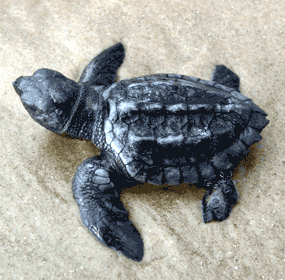
Kemp’s ridley sea turtle nesting season is here again, and I’m happy to report that nest numbers are well on their way to beating last year’s number! While the Kemp’s ridleys have the lowest population of all sea turtles, they have begun a huge come back in recent years.
Until half a century ago, tens of thousands of Kemp’s ridleys would surge onto Mexico’s Gulf of Mexico beaches in a few large nesting events each year to lay their eggs. At the turn of the 20th century, turtle meat and eggs became popular delicacies, causing the turtle’s population to crash. Later, accidental catches in fishing gears kept their population down. Read more about the turtle’s history and steps taken in recent years to help the Kemps ridleys population recover.
Today, Kemp’s ridleys are rebounding due in part to protections that government, fishing industry and EDF and other conservation groups helped win. In Mexico, the numbers are up from 700 in 1985 to more than 12,000 nests in 2010. In Texas, the nests have climbed from 1 in 1978 to a high of 197 in 2009 due to extraordinary steps taken to establish a secondary nesting site at Padre Island National Seashore.
This year’s total already stands at 85 nests (in just eighteen days of recording findings) and is on track to surpass last year’s number. Check back at the end of the summer for an update! At this time, it is hard to know what impacts the BP oil disaster may have had on the population. Kemp’s ridleys don’t return to nest until after the age of seven years old, so the fate of last year’s hatchlings will remain unknown for several years.