






Oil Spill’s Impacts on Fishing Industry Varies for Inshore and Offshore Businesses
Posted: in Gulf of Mexico
Written By

Share
The Gulf of Mexico oil spill is threatening inshore and offshore fishing industries, families and ocean life. Its long-term impacts are still unknown. Here’s the latest:
- Closed fishing grounds – about 7.3% percent of the Gulf – from the Mississippi River to Pensacola are closed, in addition to many inshore Louisiana waters that support family-run shrimping and oyster businesses.
- Scientists and volunteers are searching for and helping recover oiled birds and other animals; several have been documented so far.
- Dispersants, chemicals that break up the oil slick, are being used in the Gulf. They can harm offshore ocean life including fish, their spawning and feeding grounds, and other offshore habitat.
Concern: Louisiana shrimpers and coast are hard hit
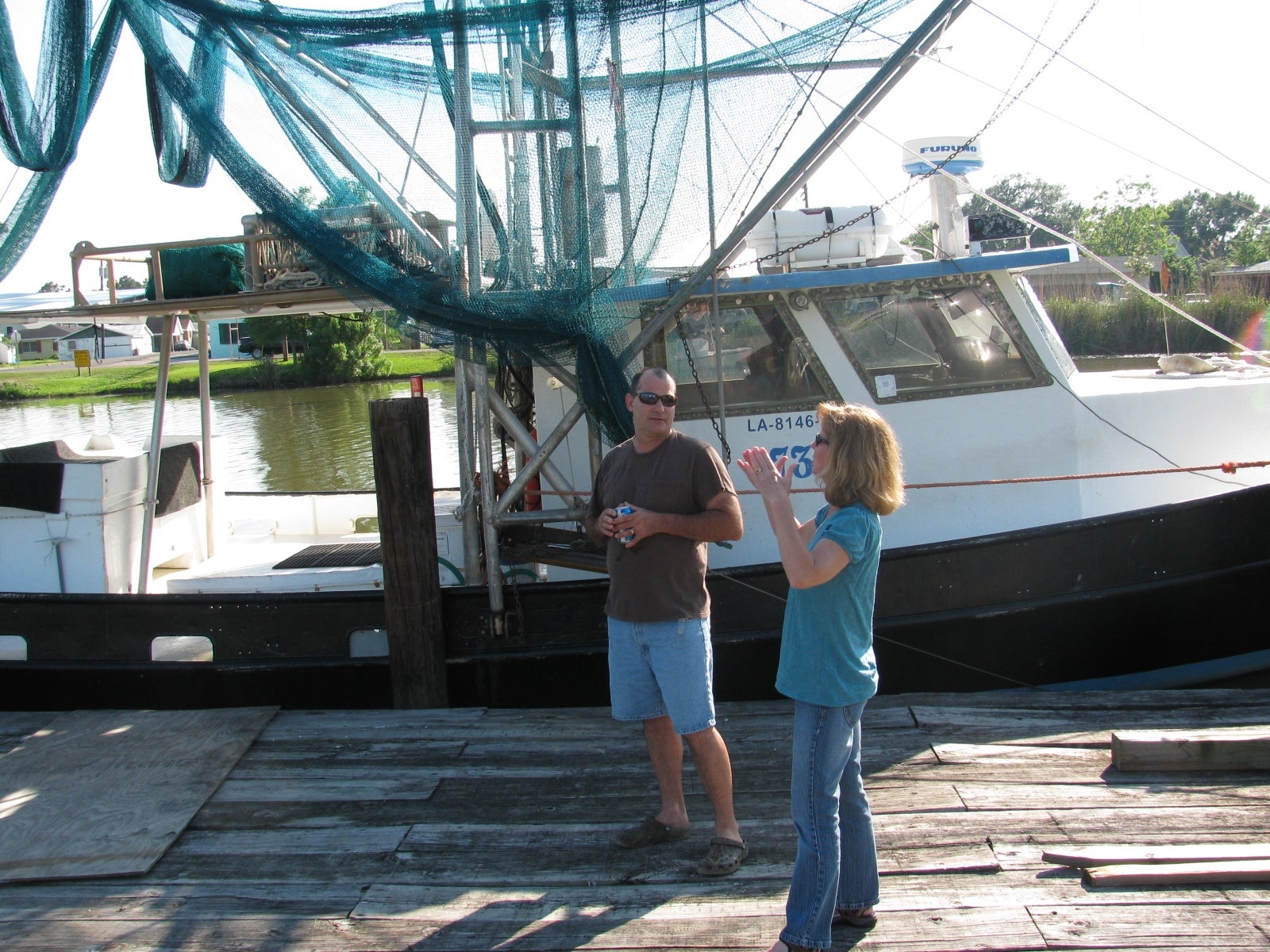
James Bruce, a red snapper and shrimp fisherman from Cut Off, Louisiana headed out to catch shrimp earlier this week in the few open inshore shrimping areas in his area. He’s unsure how long the opening will last, but is taking advantage of the opportunity. He told us that very few fishermen are working now. “If the well doesn’t stop, we’re history,” James said. “But if the oil gets into the estuaries, we’re really history.”
Good news: Large areas of the offshore Gulf are still open for fishing
Despite the uncertainty about stopping the spill and clean-up, there is some good news: Many federal fishing grounds are still open and offshore Gulf charter and commercial fishing is still safe.
| httpv://www.youtube.com/watch?v=YRYoQ1wqkes |
Some more good news is that demand and prices for commercial fish caught offshore are stable so far, and the fishermen under an individual fishing quota program—one type of catch share management—are able to work around the problem for now.
Fishermen know that this good news could change quickly if the spill isn’t stopped soon.
Unintended consequences of media coverage
We learned last week while visiting the Gulf coast that news stories about the oil spill have hurt fishing businesses located in areas still unaffected by the spill. A few examples include:
- Last week and this past weekend, we heard that while only a small percent of the Gulf is closed to fishing, charter fishermen told us that they have lost most of their clients for May and trips for coming months have also been cancelled.
- On Friday a city leader and seafood business owner in the Florida Panhandle reported that the media has created a “panic,” and that occupancy in some Florida panhandle hotels has dropped from 70 to under 20 percent.
- Several folks in Louisiana, Alabama and Florida told us that, regardless of the actual impacts, the general public will be scared to eat Gulf seafood or risk taking a fishing trip.
EDF is working to understand impacts of the spill
EDF is trying to understand the impacts that the oil spill is having on the oceans and fishing industry. We care because a healthy fishing industry and oceans are better able to support healthy fish populations.
Help us out by explaining how the oil spill is affecting you and your business. You can respond with a comment on this blog, or send us an email.
Never miss a post! Subscribe to EDFish via a email or a feed reader.