









Natural disasters are no longer purely natural
Posted: in Basic Science of Global Warming, Extreme Weather, News, Science, Setting the Facts Straight
Written By

Share
You may have heard the alarming news that weather and climate disasters in the U.S. killed 362 people in 2017 and caused a record $306 billion in damages.
But also alarming is the fact that many news outlets are still referring to these events as “natural disasters.”
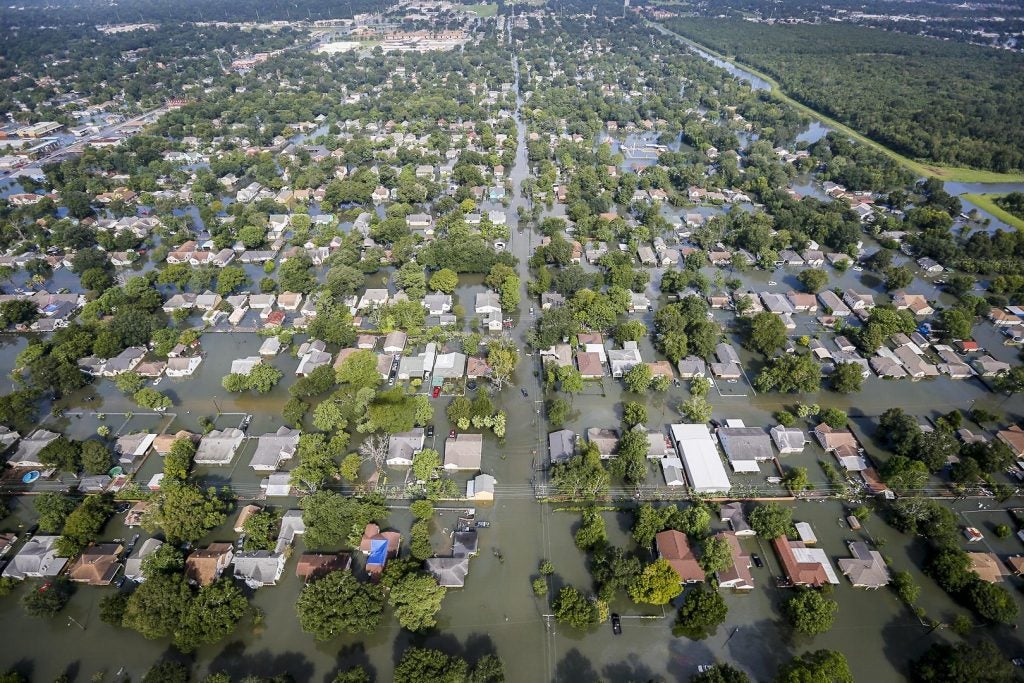
With recent advances in science, researchers have found that human-caused climate change plays a major role in making certain events occur and/or making them worse. That means that many “natural disasters” are no longer purely “natural.”
Here is a look at some not-so-natural disasters:
- Hurricane Harvey 2017: human-caused climate change made record rainfall over Houston around three times more likely and 15 percent more intense
- European Extreme Heat 2017: human-caused climate change made intensity and frequency of such extreme heat at least 10 times as likely in Portugal and Spain
- Australian Extreme Heat 2017: maximum summer temperatures like those seen during 2016-2017 are now at least 10 times more likely with human-caused climate change
- Louisiana Downpours 2016: human-caused climate change made events like this 40 percent more likely and increased rainfall intensity by around 10 percent
- European Rainstorms 2016: human-caused climate change made probability of three-day extreme rainfall this season at least 40 percent more likely in France
- UK Storm Desmond 2015: human-caused climate change made extreme regional rainfall roughly 60 percent more likely
- Argentinian Heat Wave 2013/2014: human-caused climate change made the event around five times more likely
By employing the term “natural disasters,” news outlets and others are inadvertently implying that all of these events are just misfortunate incidences – rather than consequences of our actions.
This seemingly innocuous phrase supports the idea that dangerous weather is out of our control.
But, we do have some control over their frequency and intensity, and that control is through our emissions of heat-trapping gases.
We need to act on climate, and we need to do it now. Pointing out that we worsen and may even cause these weather disasters may help convince people to do what needs to be done.


One Comment
Illsa, since burning methane was never “purely natural” – or even remotely so – why does EDF continue to promote it?