





Climate, security and prosperity: Connecting climate action to our economic realities at COP31
Written By

Share
As the United Nation’s climate conference, COP31, begins next month, the world is gathering under sobering circumstances: The latest UNEP Emissions Gap report underscores the growing risk of warming past 1.5°C, and the widening gap between our current actions and where we need to be.
At the same time, shocks to energy markets, food systems, supply chains, and public finances have reinforced a false narrative that climate action should take a backseat to economic development and energy security.
Against this backdrop of economic turmoil and dire science, what should we expect from COP31?
Once again, this COP is being billed as an “implementation COP”. Every COP since Paris has been described in some way as an “implementation COP.” After so many uses, it begs the question: what is an implementation COP?
Perhaps a better way to label a COP is by how well it addresses the challenges that surround our daily lives. This doesn’t mean these questions will get resolved over two weeks in Türkiye—that is unrealistic. It’s not about new decisions or announcements, and that is not what the world wants or needs at the moment.
Instead, grappling with these challenges means honest conversations that grow our collective understanding of the obstacles ahead. It means mobilizing the stakeholders needed to tackle them, and building momentum behind solutions that can be implemented long after delegates return home. It’s about supercharging action on existing initiatives and commitments to ensure they’re delivered.
The questions we face at COP31 are heavy, indeed: At a moment when short-term pressures are competing with long-term climate goals for political attention, how can we demonstrate that climate action is not separate from economic resilience, energy security, affordability, and public well-being, but essential to all of them? Can we scale proven climate solutions quickly enough to deliver tangible benefits for people who face pressures on their wallets and livelihoods?
My colleagues at Environmental Defense Fund are showing up to face these questions head-on. Here’s what we’re bringing to Antalya:
Delivering near-term results through methane and superpollutants
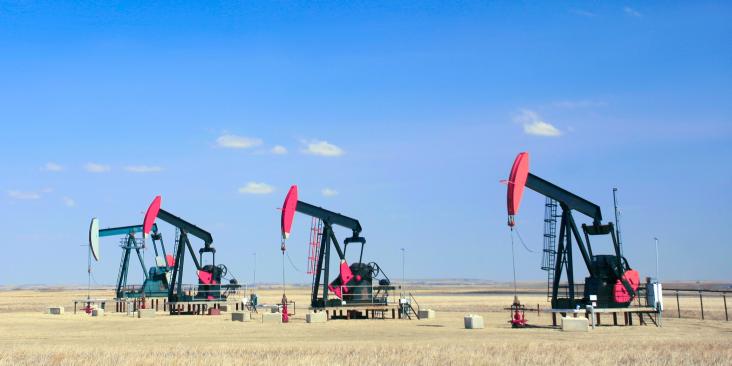
At a moment when energy security concerns are reshaping climate policy and fuel prices remain volatile, one of the biggest energy opportunities is being wasted in plain sight: methane. Cutting methane remains one of the fastest ways to slow warming while delivering benefits people can feel today through cleaner air, improved health, and stronger energy security. Meaningful progress at COP31 would mean moving from pledges to implementation: countries showing concrete policies, projects, financing, and measurable emissions reductions, not just announcing new targets.
Methane action is one of the clearest opportunities to advance the COP30 Presidency’s roadmap for transitioning away from fossil fuels (TAFF). Success on methane requires many of the same ingredients we will need for the broader energy transition: strong data systems, effective regulation, access to investment, transparency, and international cooperation. Methane reduction is not separate from our broader energy transition. It is an early building block for delivering it, and an opportunity to demonstrate to the world that we can translate ambition into action.
The technologies needed to detect and reduce methane emissions are ready to be used now—but we still face obstacles to mobilizing these solutions into action at the speed and scale we need. Our work at EDF is focused on eliminating those hurdles: making transparent data available to accelerate accountability; helping governments design policy and regulations to reinforce energy security, affordability, and economic development; and unlocking the finance needed to drive methane action, particularly in emerging and developing economies. At COP31, EDF’s scientific, policy and market expertise to advance methane action and transition finance across oil and gas, agriculture and waste.
Building collaboration around multifaceted challenges
COP31 also offers an opportunity to continue working together on increasingly interconnected challenges. Energy security, food security, affordability, and climate change are becoming harder to separate. Rising fuel prices affect fertilizer costs, which in turn affect food production and prices.
Rather than tackling these challenges individually, a successful COP can help stakeholders identify solutions that make fuel and fertilizer systems simultaneously more secure, affordable, resilient, and lower-emitting. Our EDF team is bringing expertise across energy, agriculture, transportation, and industrial systems to Antalya, aiming to contribute practical insights and convene conversations on emerging solutions such as low-emissions ammonia and hydrogen-based e-fuels. We can no longer solve just one piece of the puzzle in silos; we need stakeholders across multiple sectors and initiatives working together to identify and adopt the solutions that deliver and endure.
Rethinking climate finance to unlock the needed resources
Finance remains one of our biggest barriers to implementation. The challenge is not simply mobilizing more capital, but improving the quality and accessibility of finance. This includes lowering the cost of capital, strengthening local financial ecosystems, and scaling tools such as high-integrity carbon markets and Article 6 cooperation as part of a broader capital stack. It also means ensuring that finance reaches the communities most affected by climate change and the transition itself, including Indigenous Peoples and Local Communities (IPLCs). Strengthening benefit-sharing approaches and improving access to finance for underserved regions can help ensure that climate investments deliver both emissions reductions and tangible development outcomes.
EDF brings decades of experience helping shape carbon market policy and transition finance approaches. By advancing market integrity, supporting innovative financing models, and identifying pathways to attract investment into emerging economies, EDF can help contribute practical solutions to a challenge that remains central to global climate progress. For example, financing structures that support methane capture technologies can be repaid through revenues from recovered gas sales, while additional income streams from high-integrity carbon credits can further improve project economics. These approaches help de-risk investment, attract private capital, and demonstrate how targeted methane abatement can deliver both near-term climate benefits and measurable financial returns.
Global Stocktake 2: a moment for reflection and recalibration
Finally, COP31 marks the start of the next Global Stocktake cycle. GST 2 provides an opportunity to assess where implementation is succeeding, where progress is falling short, and what needs to happen next.
EDF’s ability to connect science, policy, economics, and on-the-ground implementation positions it to help inform these discussions. By bringing evidence and lessons from work across methane, energy systems, and climate finance, EDF can help ensure the Global Stocktake serves not only as a measure of progress, but as a guide for accelerating action in the years ahead.
The greatest outcome of COP31 will not be found in the headlines, nor even in the closing text. It will be whether we leave with a clearer pathway to deliver solutions that reduce emissions, strengthen economies, and improve lives.
At a time when immediate challenges are competing for attention alongside long-term climate goals, the real task is not choosing between them. It is demonstrating that climate action can help address both.