









Texas tries to answer key questions about upcoming data center boom
Written By


Share
Summary
- Data centers are booming in Texas, with 335 currently in operation and 247 in development.
- Peak electricity demand in Texas is projected to grow by nearly 60% through 2030, with much of this being driven by data centers.
- Environmental Defense Fund has submitted several comments to the Public Utility Commission of Texas, arguing that more can be done to ensure data centers pay their fair share and that Texans are protected from higher costs due to increased demand.
Texas has quickly become a new epicenter for data center development, on track to pass Virginia as the largest data center market in the U.S. in the coming years. As of right now, there are about 335 data centers in operation in the state, with at least 247 projects in development.
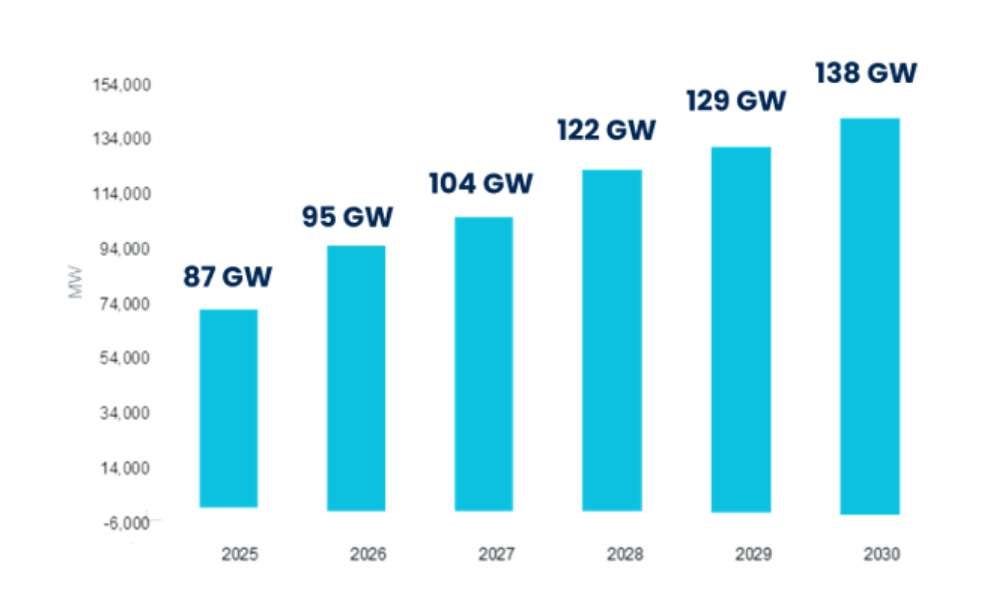
These facilities will need enormous amounts of electricity, with demand in the state projected to skyrocket by nearly 60% in less than four years. Already, there are 32 polluting gas-fired plants planned in the state to supply power for data centers — more than in any other state.
Data centers are causing and exacerbating serious pollution, water use and cost impacts on communities, leading to strong local pushback. While there are plenty of challenges to address, some of the major questions being determined by state officials right now focus on who will be responsible for paying for all this build-out caused by data centers? Without the right safeguards, Texas families and businesses could end up footing the bill for the massive energy, transmission and grid upgrades needed to serve new data centers.
While some public officials, including Governor Abbott, are raising the alarm about costs, a law passed in the 2025 legislative session (Senate Bill 6) is already setting some guardrails for how large load projects — which includes data centers — will connect to the Texas grid while minimizing costs and maintaining power reliability.
It is now up to the Public Utility Commission of Texas, the state utility regulator, to determine how Senate Bill 6 gets implemented. The rules it adopts will determine whether data centers pay their fair share and help keep the grid reliable — or whether the costs unfairly fall onto Texas families and businesses. Those decisions will also shape the next round of legislative proposals in 2027.
Here, we break down why these highly technical rules matter, how they can ensure that data centers pay their own way and preview the many other guardrails that Texas needs.
How will data centers connect to the Texas grid?
What it is: As Texas sees a surge in data center development, this rulemaking (PUCT #58481) will determine the rules for connecting these massive new electricity users to the grid, including what requirements they must meet and how much of the costs they must cover. In March of 2026, PUCT published a draft rule which proposed a fee structure and potential financial penalties for large load projects that are delayed or cancelled to help regulators predict the amount of load anticipated to come online and discourage “speculative” applications.
Why it matters: Utilities rely on predictions of future loads to plan and build out the grid. If they build facilities to serve an anticipated new data center but then the data center fails to materialize, Texans could be the ones footing the bill. EDF’s comments argue that prospective data centers should pay both refundable and nonrefundable fees to connect to the grid, which would help deter speculative projects while ensuring that data centers pay for all transmission costs they trigger.
How will Texas maintain grid reliability during peak demand?
What it is: Many large electricity users, including data centers, can temporarily reduce their electricity use or switch to onsite power for short periods, known as “demand flexibility.”
The Public Utility Commission of Texas is considering a program that would reward data centers for briefly reducing their power consumption when the grid is under stress. Known as the Large Load Demand Management Service (PUCT #58482), the program is designed to use demand flexibility as a grid reliability tool, helping meet peak power demand while reducing costs.
Why it matters: Maintaining grid stability is a balancing act, and there are different ways to manage it by adding power or subtracting demand. Instead of relying solely on building expensive new power plants to bring more power into the grid or over-relying on expensive, dirty “peaker plants,” PUCT can call on data centers to power down. In other words, subtracting power demand in these high stress periods can reduce costs for everyone.
In EDF’s comments, we recommended design features intended to maintain robust customer participation while controlling costs, including commitments from large customers on a seasonal basis — ensuring there’s enough flexibility during the times it’s needed the most. Maintaining strong participation from large electricity users is critical because every megawatt of flexible demand is a megawatt Texas doesn’t have to serve with new power plants or emergency measures. The more large customers that can reduce their electricity use during periods of grid stress, the more reliable and affordable the grid can be for everyone. We also encouraged regulators to consider how to expand demand management opportunities beyond large loads to smaller customers as well, in light of the enormous, untapped savings potential they represent.
How will Texas allocate transmission costs?
What it is: As electricity demand grows, utilities must build new transmission lines to reliably deliver power to customers — including data centers — and those costs are ultimately paid by all electricity customers. Under the state’s current transmission cost rules, many large electricity users can avoid paying millions in transmission costs by reducing their demand during a few peak hours each summer. That means data centers can substantially lower their transmission bills while still requiring the grid to build enough infrastructure to serve them the rest of the year. This rulemaking on the evaluation of transmission cost recovery (PUCT #58484), seeks to update the rules regarding how these costs are allocated to ensure data centers are paying their fair share.
Related to this issue: During these peak periods, large commercial and industrial customers receive far greater financial benefits for reducing electricity use than residential customers. One analysis found that reducing one megawatt of demand saves a commercial or industrial customer about $68,550 in annual transmission costs, compared with just $94 for a residential customer — a 727-to-1 disparity for providing the same grid benefit.
Why it matters: EDF argued that the state should assign transmission costs to retail energy providers serving residential customers on a demand basis. This would give households more opportunities to reduce their costs by avoiding peak periods, thereby incentivizing use of grid-benefiting behaviors and technologies, like smart thermostats and batteries. As more customers reduce demand when the grid is most constrained, the amount of transmission infrastructure needed — and the costs that must be recovered from all customers over time — can also be reduced.
Other areas of importance
Grid load forecasting: As Texas braces for an onslaught of new large load customers joining the grid, it is essential that Texas regulators have an accurate way to forecast demand. An accurate forecast allows the state to assess reliability and determine transmission and infrastructure investment needs. In October, EDF submitted comments on PUCT #58480, which aims to update how Texas projects future grid supply and demand.
In a step forward, PUCT recently decided to improve large-load forecasting by incorporating adjustments based on the actual baseline electricity use of early projects (known as “Batch Zero”). Taking more time to refine these forecasts will help ensure future reports accurately reflect how much new demand is likely to come online and when.
Transmission cost recovery in the long term: There is another key rulemaking that is currently open for comments ahead of Senate Bill 6 implementation in late 2026 (#58000) that seeks to determine how large electricity users should be charged for transmission service along with determining if/for how they should remain responsible for full costs if their usage is not as high as expected or declines over time. This rulemaking may impact who gets shouldered with the cost of infrastructure in the long term, since data centers may be obligated to pay less over time, and that may mean that costs get shifted onto other Texas customers.
Looking ahead
These rulemakings are just a slice of what Texas must address with regard to data centers. The PUCT’s Senate Bill 6 implementation may resolve some of these issues but certainly not all of them.
Policymakers, tech companies and utilities should create enabling conditions for data centers to realize bring-your-own clean power solutions that can serve their load, reduce costs and reduce stress on the grid. They should also expand access to distributed energy resources — such as residential battery storage, rooftop solar and energy efficiency — to support data center growth and increase reliability. At the same time, they should ensure data centers strengthen, rather than strain, local water resources, and take further steps to protect ratepayers from price increases spurred by data centers.
As Texas prepares for unprecedented growth in electricity, state officials have a choice right now: create rules that ensure data centers pay their fair share, keep the grid reliable and continue the rapid deployment of affordable clean energy — or risk shifting the costs onto families and businesses.